



News:
Brokerage
Posted: April 12, 2010
Savills US names Jenkins as senior VP
Brian Jenkins has joined Savills US as a senior VP in the firm's medical real estate team.
With the arrival of Brian Jenkins, the team will directly advise hospitals and healthcare systems on real estate monetization and development capitalization strategies, in addition to providing general strategic real estate advisory services.
"Savills's superior record in medical real estate demonstrates our ability to anticipate, analyze and solve the key issues facing hospitals and health systems today," said Jeffrey Cooper, executive managing director of Savills LLC. "With his specialized expertise, Brian Jenkins will help us better meet the capital needs and requirements facing health systems in a challenging and evolving market."
Jenkins brings two decades of real estate and health care experience to his new role at Savills. He most recently served as equity investment officer of medical real estate for the National Electrical Benefit Fund, where he developed an investment platform in medical facilities and worked on third-party medical development opportunities.
He has also acted as the primary development partner on more than 250,000 s/f of outpatient medical office projects, including several multi-tenant projects on behalf of market-leading for-profit and not-for-profit health systems. Prior to that, Jenkins was a health care lawyer for McGuire Woods LLP.
He earned an undergraduate degree in Finance from the College of William and Mary. He holds a law degree from the University of Richmond and a master's degree in Health Administration from the Medical College of Virginia - VCU, from which he graduated cum laude.
Savills' medical real estate team has assisted clients on multiple complex and large-scale transactions throughout the United States. Noteworthy transactions include the development capitalization of a 455,000 s/f cancer center at Baylor University Medical Center, recapitalization of a 1.7 million s/f office portfolio comprising 24 individual assets, sale of a majority interest in a new specialty hospital in St. Louis, sale of a 1.2-million s/f medical office portfolio comprising 30 buildings, and the complex unwinding of a joint venture ownership of a four-million s/f medical office portfolio consisting of 55 properties.
Tags:
Brokerage
MORE FROM Brokerage
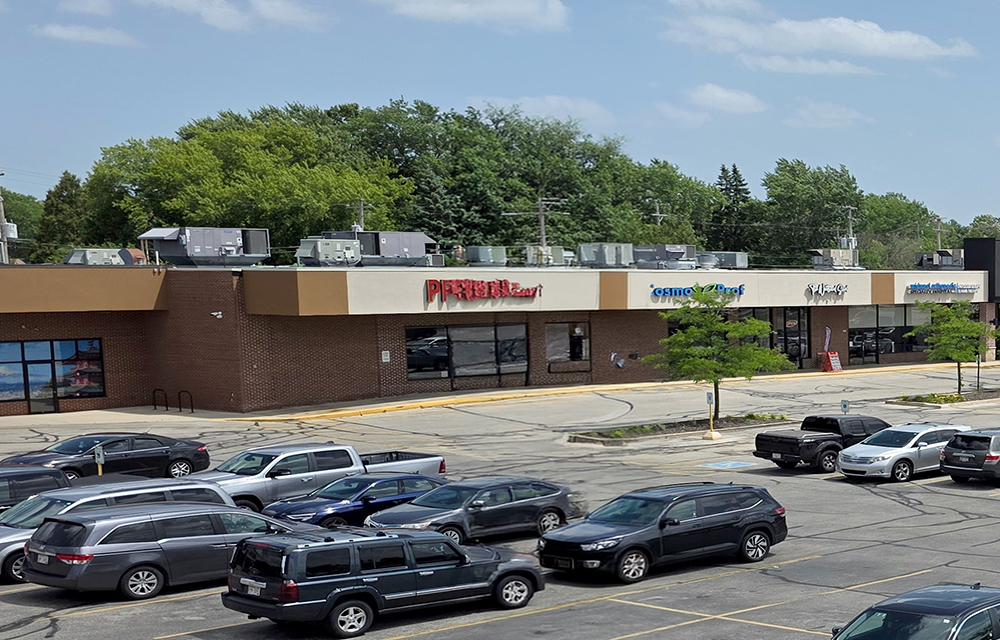
United Properties Corp. expands Wisconsin and Illinois retail presence adding 200,000 s/f
West Allis, WI United Properties Corp. completed two retail acquisitions totaling $27.4 million across Illinois and Wisconsin, adding 205,000 s/f of shopping center space to its portfolio







Columns and Thought Leadership

New York’s streets are full again, and the retail numbers prove it - by Noam Aziz
Walk down any New York block this year and you can feel it. The sidewalks are crowded, the storefronts are lit, and the energy that defines this city is back at full volume.

Positive forecast for New York’s pro-housing push? - by Philip Butler
New York’s housing crisis remains a hot button topic despite growing consensus that varied and affordable housing is desperately needed statewide. Governor Hochul has recently introduced several initiatives to overcome N.Y.’s anti-housing

A guide to finding the right NYC property management company - by Sanjay Gandhi
Being a small to midsize landlord in NYC is an increasingly demanding endeavor. From navigating complex regulations, increased compliance demands to dealing with tenant issues and remediating violations. It is wise to enlist the assistance of a partner, a professional

Hunt commercial real estate question and answer: Fortune 500 wisdom - by David Hunt
Yes, there are lessons to be learned from the largest companies in America when comes to managing your real estate. But the decision to buy or lease real estate may not be one of
.gif)