



News:
Brokerage
Posted: April 22, 2025
Rudin secures two law firm renewals at One Battery Park Plaza

Manhattan, NY Rudin has finalized long-term renewals with law firms Skarzynski Marick & Black (Skarzynski Marick) and Gordon Rees Scully Mansukhani (GRSM) at One Battery Park Plaza, its 35-story, 870,000 s/f office tower.
Skarzynski Marick, co-headquartered in New York City and Chicago, focuses on the specialized practice of insurance coverage law. In the five-year renewal, the firm will continue to occupy 28,307 s/f spanning the entire 32nd floor of the building.
GRSM has been an industry leader for over five decades and is the first and only law firm with offices in all 50 states. As part of an 11-year lease, the firm will occupy 22,409 s/f on the 28th floor at One Battery Park Plaza.
These renewals continue Rudin’s law firm leasing momentum at the tower. Last fall, Sacks & Sacks LLP signed a six-year lease for 9,526 s/f. Earlier in 2024, Romano Law took 8,335 s/f and Barry McTiernan & Moore LLC grabbed 18,464 s/f.
“We are grateful to Skarzynski Marick and GRSM for choosing One Battery Park as their New York City home,” said Thomas Keating, director of commercial leasing for Rudin.
Keating, along with vice president of office leasing, Kevin Daly, represented Rudin in both transactions. Chris Mongeluzo, Hal Stein and Adam Weinblatt of Newmark represented GRSM. Andrew Peretz of Newmark represented Skarzynski Marick.
Constructed by the Rudins in 1971, One Battery Park Plaza features original architecture by Emery Roth & Sons and a renovated Italian marble lobby in 2015.
One Battery Park Plaza has achieved the WELL Health-Safety Rating, is WiredScore Platinum certified and utilizes Nantum AI, the world’s most advanced building operating system. Nantum AI focuses on using artificial intelligence to improve efficiency, decrease carbon emissions and optimize tenant comfort.
Major tenants at the tower include Nationwide Mutual Insurance, Cullen and Dykman, Hughes Hubbard & Reed, Seward & Kissel, The Partnership for New York City, and CetraRuddy.
Tags:
Brokerage
MORE FROM Brokerage
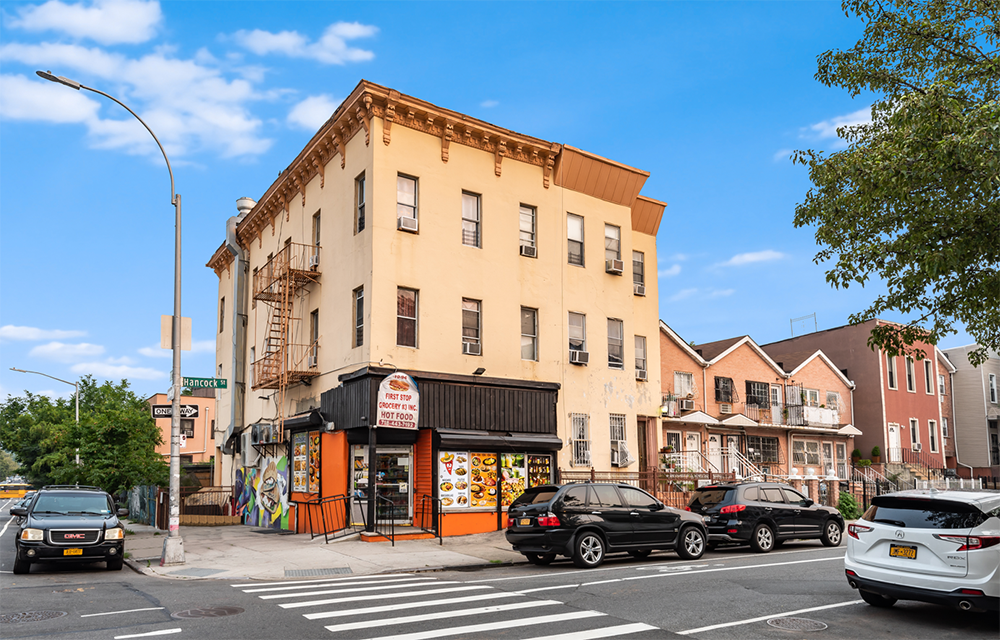
Investment Property Realty Group closes $1.75 million sale of 1094 Hancock Street in Brooklyn
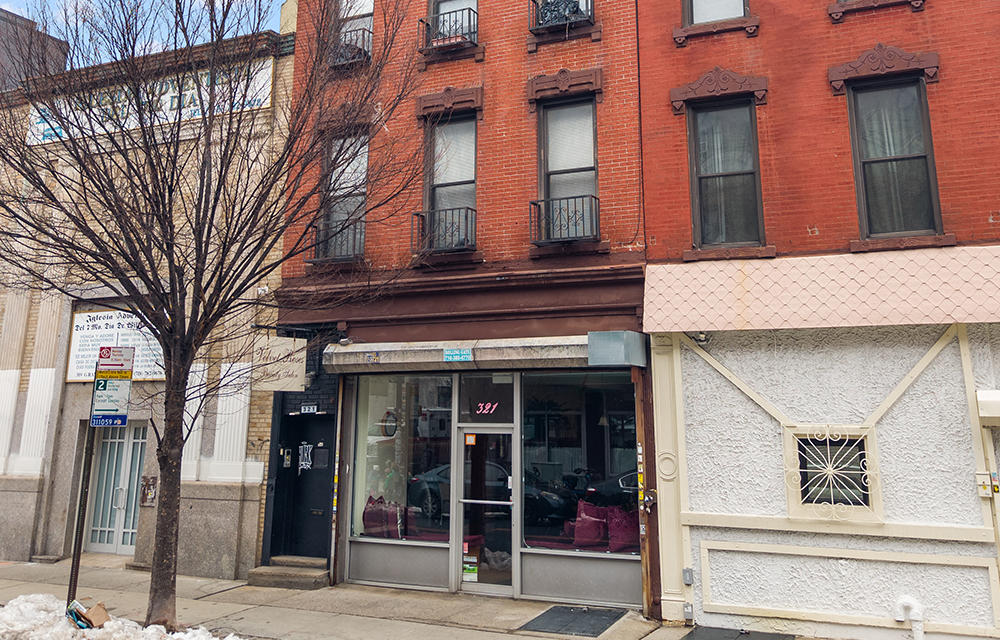
Brooklyn, NY Investment Property Realty Group (IPRG), a New York-based commercial investment firm, has closed the sale of 1094 Hancock St., a mixed-use building in the Bushwick section, for $1.75 million.


Quick Hits

Columns and Thought Leadership

Hunt CRE question and answer: Choosing a real estate agent - by David Hunt
First, we will only work with one agent exclusively. The primary reason is that we want that agent to legally represent our client’s interests. In New York State, a real estate agent has a fiduciary

A guide to finding the right NYC property management company - by Sanjay Gandhi
Being a small to midsize landlord in NYC is an increasingly demanding endeavor. From navigating complex regulations, increased compliance demands to dealing with tenant issues and remediating violations. It is wise to enlist the assistance of a partner, a professional

Hunt commercial real estate question and answer: Fortune 500 wisdom - by David Hunt
Yes, there are lessons to be learned from the largest companies in America when comes to managing your real estate. But the decision to buy or lease real estate may not be one of

New York’s streets are full again, and the retail numbers prove it - by Noam Aziz
Walk down any New York block this year and you can feel it. The sidewalks are crowded, the storefronts are lit, and the energy that defines this city is back at full volume.
.gif)