



News:
Brokerage
Posted: March 6, 2009
Rudder of TEI arranges $1.7 million sale of 2,337 s/f office condo at 820 Second Ave.
Time Equities, Inc. (TEI) completed the $1.7 million sale of a 2,337 s/f office condo to K&A Medical Management LLC, a spine and sport-medicine specialist headed by Weill Cornell Assistant Attending Physiatrist Dr. Andre Panagos, M.D. Long Island Development Corp. and Banco Popular provided the financing for the purchase. Also known as the Diplomat Centre, 820 Second Ave. is owned by Diplomat Centre LLC, a group of investors headed by TEI's director of office leasing and sales Michael Rudder.
"Medical professionals continue to be an active purchaser of office condominiums" said Rudder, who also served as the sales broker for TEI. "Doctors and dentists are attracted to the opportunity to own their space so they can amortize the expense of their costly construction over a long period of time, rather than being tied to a five or ten year lease."
820 Second Ave. is a 19-story office-condo building located two blocks from Grand Central Station and the United Nations Headquarters. The tenant roster includes Dr. Barron Lonner, Government of Croatia, the Republic of Angola, several not-for-profit organizations and medical professionals.
"820 Second Ave. is an ideal opportunity for medical groups who wish to own their space in a first class building and within close proximity to Grand Central Station, the United Nations headquarters and several hospitals," continued Rudder. "K&A Medical Management's purchase reflects the continued demand from the medical community for prime office condominium opportunities."
Founded in 1966, TEI has been in the real estate investment, development and asset & property management business for more than 40 years. With properties in 25 states, four Canadian provinces and Germany, the TEI portfolio consists of approximately 22.1 million s/f of residential, industrial, office and retail property. TEI is implementing portfolio-wide sustainability initiatives aiming to reduce the carbon footprint associated with the operation of its buildings by 20% by 2010. TEI will be carbon neutral in its corporate operations by the end of 2009.
Tags:
Brokerage
MORE FROM Brokerage
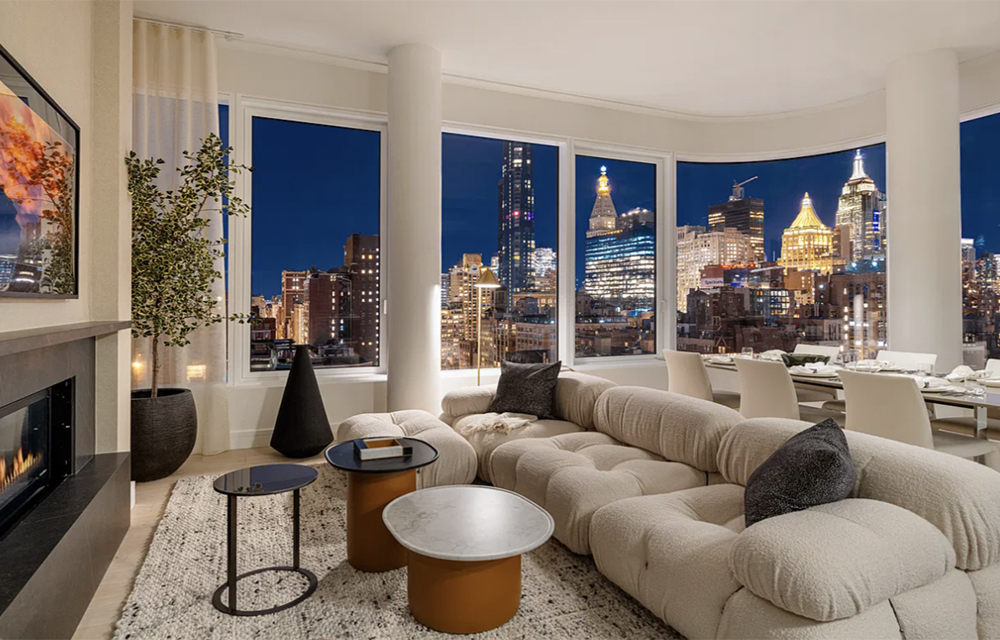
200E20TH sells out in Gramercy, penthouse A closes out sales at the CetraRuddy-designed condominium residences
Manhattan, NY 200E20TH, the CetraRuddy-designed architectural masterwork that brought a curved, contemporary sensibility to Gramercy’s Beaux-Arts streetscape, has



Quick Hits
 (2).gif)

Columns and Thought Leadership

New York’s streets are full again, and the retail numbers prove it - by Noam Aziz
Walk down any New York block this year and you can feel it. The sidewalks are crowded, the storefronts are lit, and the energy that defines this city is back at full volume.
The art of investing in real estate - by Thomas Donovan
Real estate investing is as much an art as it is a skill. No one can time the market, or the factors that drive it, perfectly. Location, zoning, size, transportation, and neighborhood density give you a baseline for

Hunt commercial real estate question and answer: Fortune 500 wisdom - by David Hunt
Yes, there are lessons to be learned from the largest companies in America when comes to managing your real estate. But the decision to buy or lease real estate may not be one of

Hunt CRE question and answer: Choosing a real estate agent - by David Hunt
First, we will only work with one agent exclusively. The primary reason is that we want that agent to legally represent our client’s interests. In New York State, a real estate agent has a fiduciary
.gif)