


News:
Owners Developers & Managers
Posted: October 13, 2015
Road to going green paved with incentives: Save money, enhance marketability, among others - by Schleider
 Steven Schleider, Metropolitan Valuation Services
At this point in time, we’ve grown comfortable with green best practices and the process of green retrofit, as well as the technologies and techniques employed.
Every smart building owner and manager, architect and engineer, designer and broker knows going green saves money, enhances marketability, provides a healthier environment, increases tenant retention and builds property value. They also know that extensive retrofits often entail the expenditure of very large amounts of capital that will break most operating budgets.
Although green retrofits are outstanding long-term investments, in the short-term, building owners may need public and private incentives as well as financing in order to reap the benefits of going green.
The time to move forward with going green, especially with regard to energy consumption, is now. According to the U.S. Energy Information Administration (EIA), buildings consume 47.6% of all energy produced in the U.S. and 75% of all electricity. That 75% figure also applies to New York City buildings being responsible for 3/4 of the city’s carbon emissions.
As – or more – significantly, the most recent International Panel on Climate Change emphasizes the urgency for “immediate and sustained action on climate change…the time has arrived for taking the necessary steps to preserve livable conditions….”
Numerous resources, from technical support to tax rebates and financial assistance, are available at the federal, state and local levels to help building owners move forward with green retrofits,
The U.S. Department of Energy Office of Energy Efficiency and Renewable Energy provides financial assistance for green building and energy efficiency projects with the goal of increasing use of renewable energy and energy efficient technologies.
The New York State Energy Research & Development Authority (NYSERDA) offers a variety of programs for business and industry, among them the Commercial Existing Facilities Program which supports design teams and building owners with regard to building energy efficient structures; Demand Management Program which helps businesses optimize energy usage, manage costs, and reduce peak demand. (This is a Con Edison and NYSERDA partnership for which Con Edison electric customers in New York City and Westchester are eligible.); and FlexTech which provides cost-shared technical services to create assessments for reductions of energy and cost.
New York State’s CLS Tax 19 is a green building corporate tax credit for owners of buildings that meet certain green standards for energy efficient improvements. The program offers up to $2 million per building.
New York City allocated $37 million of its American Recovery and Reinvestment Act funding to create the New York City Energy Efficient Corporation (NYCEEC). The NYCEEC is a not-for-profit finance company that works with building owners, financial institutions and energy service companies to provide financing solutions for energy efficiency and clean heat projects in the five boroughs.
With the Energize NY program, Property Assessed Clean Energy (PACE) financing is available for commercial buildings, financing up to 100% of project cost that is paid back by taxes over a specific terms period with amortization of costs up to 20 years. As PACE programs are tied to the property, they can be transferred should the property is sold. Eligible improvements include lighting HVAC, chillers, boiler conversions, pumps, furnace upgrades, insulation, windows and smart controls in the category of energy efficiency and solar PV, solar thermal geothermal and wind in the category of renewable energy.
Financing may also be available from private sources such as solar companies, LED lighting installation firms and similar.
It’s impossible in one article to summarize all of the incentives available to undertake deep energy improvements. (One good source for information is Energy-Grants.net - Get Paid to Go Green). But it behooves a building owner to explore the realm of available financing and tax incentives to reap the long-term benefits of having a green(er) building.
Steve Schleider, MAI, LEED-AP BC+D is president of Metropolitan Valuation Services, New York, N.Y.
MORE FROM Owners Developers & Managers
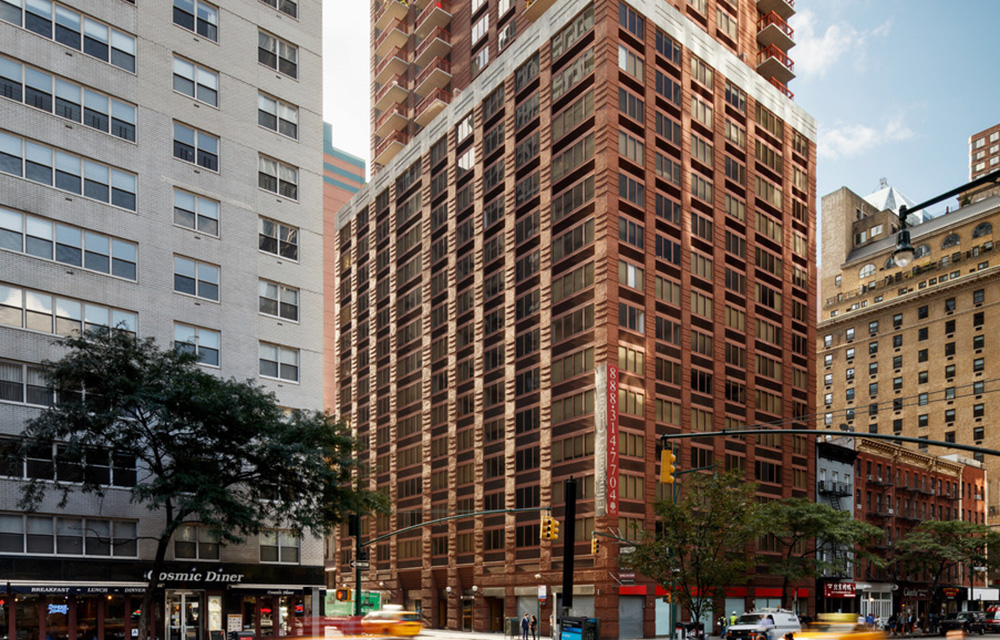
Rose Assocs. partners with Morgan Stanley Real Estate Investing to recapitalize The Ellington
Manhattan, NY Rose Associates, Inc., the New York-based multifamily real estate developer and manager, has partnered with a fund managed by Morgan Stanley Real Estate Investing (MSREI) in the recent recapitalization


Quick Hits


Columns and Thought Leadership

NYC's Community Opportunity to Purchase Act is back - and multifamily owners should pay attention - by Ron Cohen
New York City’s Community Opportunity to Purchase Act (COPA) is back, and this latest version could have a much better chance of becoming law. The proposal would give qualified nonprofit organizations
New York City’s historic rent freeze now rests with the courts - by Ron Cohen
New York City’s first-ever two-year rent freeze is now in the hands of a state Supreme Court judge, and the decision could reset income for owners of roughly one million rent-stabilized apartments housing some 2.4 million residents.

Hunt Commercial Real Estate Q&A: Location, location, location? - by David Hunt
In working with our clients, we break down our search objectives into two categories. The first category involves the specific needs of your business such as warehouse height, amount of office space and number of loading

Don’t leave severance damages behind - by Sebastian Jablonski
When the government takes a portion of a landowner’s property, most assume just compensation stops at the value of the land taken. However, in partial takings, that is only half of the equation.