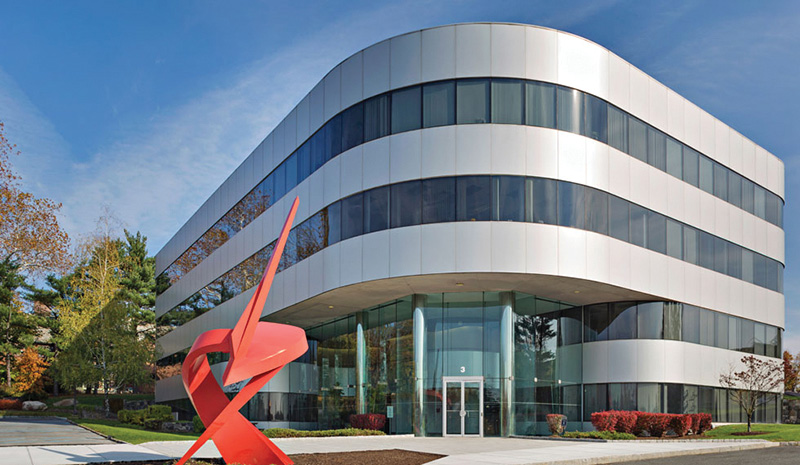




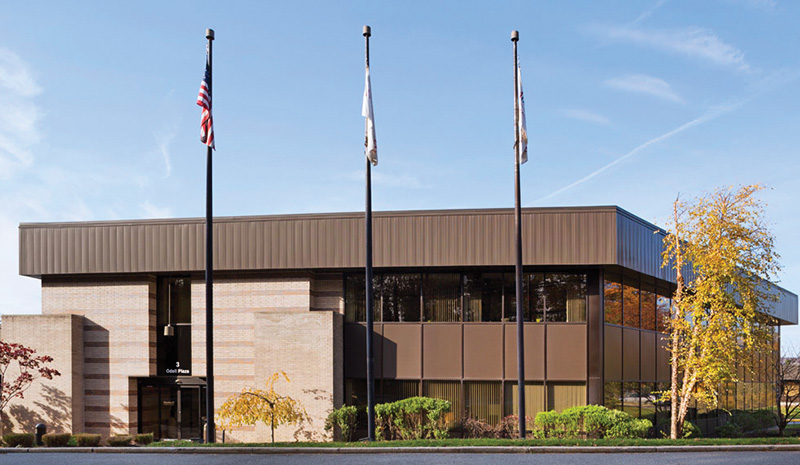
Yonkers, NY According to Robert Martin Co., one of the largest real estate management and development firms in Westchester County, completed the sale of 3 Executive Blvd. (59,542 s/f) and 3 Odell Plaza (71,065 s/f) – totaling 130,607 s/f of office space.
The selling price was $36.6 million, which represents a new record price for suburban Westchester County office sales at $280 per /f.
Both properties are leased through 2032 to Montefiore Medical Center, a wholly owned subsidiary of Montefiore Health System, one of the largest healthcare systems in the NYC region with 10 hospitals and a primary and specialty care network of over 200 locations. The two buildings are part of Robert Martin’s South Westchester Executive Park, where the company continues to own and operate nine buildings totaling 650,000 s/f of primarily flex/industrial space.
CBRE’s Capital Markets and Institutional Properties Group of Stamford, CT—represented by vice chairman Jeffrey Dunne, senior VP Steven Bardsley, senior VP David Gavin and VP Stuart Mackenzie—marketed the property.
“Today’s announcement reflects Robert Martin’s continued formula for success, which is seizing upon emerging business opportunities - developing, managing, or selling - that enhance the value of the company’s overall portfolio,” said Robert Martin Co. CEO Tim Jones. “These are two, strong assets leased by one of the region’s leading healthcare providers, but by selling the buildings at a premium, we are providing a greater financial return for the firm as we look towards strengthening our investments in high-growth sectors in the Westchester market such as flex/industrial space and multifamily residential rentals.”
Robert Martin Co. president Greg Berger said, “We are not the company we were nearly 65 years ago. Real estate development and management today is far more demanding and complex. The tenants’ needs are changing with the times, and we remain uniquely positioned with our portfolio and strong personnel to accommodate their requirements and additional demand.” He added, “We value our core competencies that successfully got us this far and will continue pursuing those strategic opportunities that will propel us into the future.”


 (2).gif)





.gif)