



News:
Brokerage
Posted: August 12, 2013
Rising interest rate's value effect
At the beginning of the year I forecasted that interest rates would increase and put upward pressure on overall capitalization rates. The result would be a negative effect on values by the end of the year. After all, mortgage interest rates were at some of the lowest levels in modern history. It was inevitable! The economic recovery has been modest over the last four years fueled primarily by low interest rates and stimulus spending. However, this came with a steep price. Over the past four years, with federal yearly budget deficits averaging approximately $1.2 trillion per year, our federal debt is now approximately $16.75 trillion. The "contingent" national debt is approaching $60-$90+ trillion depending upon the sources you believe. The "contingent" national debt considers future entitlement obligations. In order to spend at such a high level, federal borrowing and printing money was put into motion. The various Quantitative Easing (QE 1-3) programs instituted by the Federal Reserve was spending $86 billion per month to purchase U.S. treasuries and mortgage backed securities in order to keep interest rates down. This was an artificial market intervention. Something had to give!
Without this and other artificial intervention; interest rates would be substantially higher and the economy would be at a much lower level. This artificial intervention actually started during the boom President Bush's years highlighted by 2005 under Federal Reserve chairman Alan Greenspan and continued with Ben Bernanke beginning in 2006. President Bush combined substantial fiscal measures such as tax cuts which did not necessitate as much Federal Reserve intervention. But since 2009 artificial monetary intervention has exploded with no overall tax cuts and the results have been modest positive results. There is no question that the economy and real estate market has improved substantially since 2009. However, much of it has been driven by the artificially low interest rates over the last 3-4 years and the rock bottom markets of 2009. Thus, there was no way to go but up! Within the last few weeks rates have been increasing because the Federal Reserve has slowed down the Quantitative Easing programs.
With the increase in the interest rates comes an increase in capitalization rates. However, the % increase will not be to the level of an interest rate % increase. It will be more aligned with the % increase of the mortgage constants. A few months ago a good quality suburban apartment project could get financing of 4.5%, 30-year amortization or an annual constant of 6.08022%. If the value is based upon the sum of the separately valued equity position and mortgage position respectively and using a $10 million mortgage; the annual debt service is approximately $608,022. If the interest rate increases to 5% with a 30-year amortization, an annual constant of 6.44186% or $644,186 annual debt service results. This is an annual decrease in cash throwoff of $36,164. Using the mortgage constant of 6.44186%, the capitalized decreased mortgage value is $561,391 or a decrease of 5.61% based upon the $10 million of mortgage value. The absolute interest rate increase was 0.50% or 50 basis points or an 11.11% increase from 4.5% to 5%. The absolute mortgage value decrease was 5.61%. Thus, this shows that there is not 100% correlation with absolute changes in interest rates and value. The value % decrease only reflected approximately 50% of the absolute interest rate change. Using the equity dividend band of investment build up method, the overall capitalization rate using 4.5% is 7.14%. The overall capitalization rate with 5% interest rate was 7.46%. The cap rate differential was 32 basis points or % change of 4.48% which is near the change in the mortgage value outlined above.
In conclusion, higher interest rates certainly will have a negative impact on value but only at a fraction of the absolute interest rate change. The good news is any increases in rents, decreases in vacancies and decreases in natural gas costs will offset some of the negative effects on values precipitated by higher interest rates.
John Rynne, MAI, SRA is the president and owner of Rynne, Murphy & Associates, Inc., Rochester, N.Y.
Tags:
Brokerage
MORE FROM Brokerage
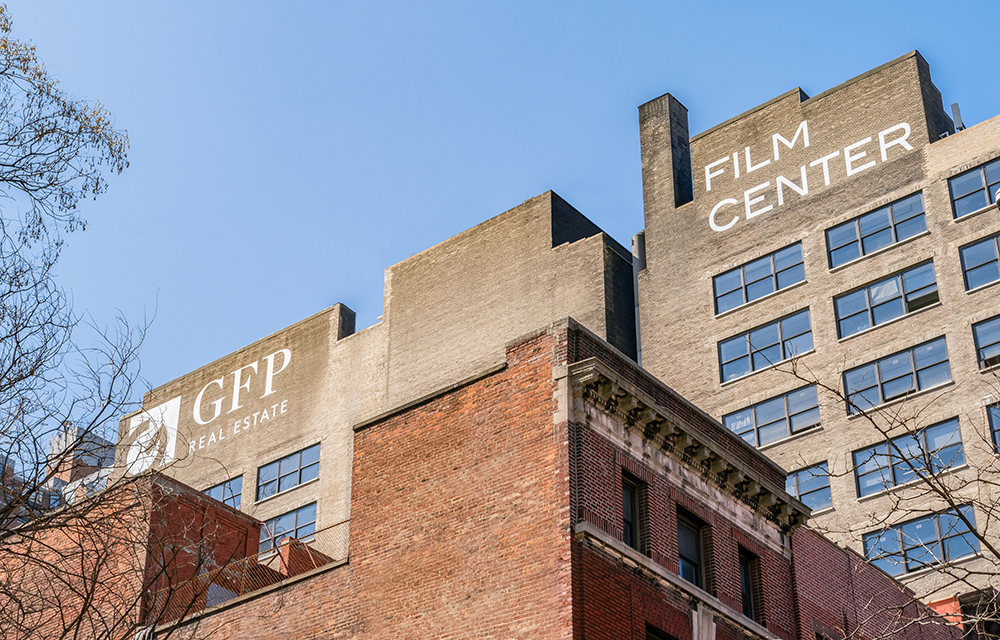
GFP Real Estate signs 11,078 s/f of leasing activity at 630 Ninth Ave.
Manhattan, NY GFP Real Estate closed three office leasing transactions totaling 11,078 s/f at 630 Ninth Ave. in Midtown, including a new lease with Irish Arts Center and extensions by existing



Quick Hits

Columns and Thought Leadership

New York’s streets are full again, and the retail numbers prove it - by Noam Aziz
Walk down any New York block this year and you can feel it. The sidewalks are crowded, the storefronts are lit, and the energy that defines this city is back at full volume.

Hunt commercial real estate question and answer: Fortune 500 wisdom - by David Hunt
Yes, there are lessons to be learned from the largest companies in America when comes to managing your real estate. But the decision to buy or lease real estate may not be one of

Positive forecast for New York’s pro-housing push? - by Philip Butler
New York’s housing crisis remains a hot button topic despite growing consensus that varied and affordable housing is desperately needed statewide. Governor Hochul has recently introduced several initiatives to overcome N.Y.’s anti-housing

A guide to finding the right NYC property management company - by Sanjay Gandhi
Being a small to midsize landlord in NYC is an increasingly demanding endeavor. From navigating complex regulations, increased compliance demands to dealing with tenant issues and remediating violations. It is wise to enlist the assistance of a partner, a professional
.gif)
September Promotion
