



News:
Brokerage
Posted: June 21, 2016
Rezoning East New York and the impact on affordable housing development - by Osei Rubie
 Osei Rubie, National Standard Abstract
As founder and president of National Standard Abstract, a full-service title insurance firm, I’ve built a business and an expansive network centered on vast expertise in commercial, affordable, supportive, and market-rate housing. We have closed $142 million in real estate transactions- primarily commercial and affordable-in the first year of operation. We continue to expand our business with $384 million in the pipeline for 2016. An area of the city that presents tremendous opportunity for growth is East New York.
On April 20th, the New York City Council approved a rezoning plan for Brooklyn’s East New York neighborhood. The plan addresses land use spanning 190 blocks of East New York, Cypress Hills and Ocean Hill, which is the first and largest of 15 areas to be rezoned under mayor de Blasio’s affordable housing plan. This rezoning includes several measures intended to support new housing construction while preserving housing at levels affordable to existing residents. The plan has been controversial and ultimately a modified version was approved by the city council. At issue for some was the potential displacement of current tenants when rezoned land is developed. The plan will expedite 1,300 new units of affordable housing, an increase from the original goal of 1,200 units. Also modified were industrial zoning heights for the area. Some measures of the plan centered on preservation: $267 million in capital improvements for a new school, a community center, a child care center, as well as upgrades to parks and dangerous intersections. Additionally, funds will be made available for loans and grants to repair existing one and two family homes. One of the most impactful pieces of the plan is Mandatory Inclusionary Housing (MIH), under which developers seeking city subsidies will be required to set up to 30% of units aside for families earning less than the area median income.
The rezoning will have direct implications for developers, and particular sectors stand to benefit. In faith based development, the new ordinances will allow some developers to participate more independently in the development of the area than had been previously feasible. Brisa Builders is a family owned development, construction management, and general contracting firm that regularly partners with religious organizations on development projects. It’s pipeline includes TLK Manor Partnership with Evangelical Disciples of Christ, Ebenezer Plaza in partnership with Church of God of East Flatbush, and Atlantic East Apartments (Harry T. Nance Apartments) in partnership with True Holy Church. Ericka Keller, chairperson of Brisa Builders, sees new opportunity for religious organizations that will less frequently need a private variance and ULURP approvals from the city to build. In some cases, land owned by churches that was previously not feasible to develop, yet subject to real estate tax if not used for religious purposes, would now be feasible for development under the new ordinances - particularly for populations identified in the Mandatory Inclusionary Housing.
Keller said, “It was difficult to develop land that previously had zoning restrictions. As a result of the tax burden, in many cases the churches were at risk of losing the properties to tax lien sales and other actions. With the new ordinance, this creates opportunities to explore development thus mitigating this threat.” Such organizations may also benefit from the ability to take on projects more autonomously.
Northeast Brooklyn Housing Development Corp. is a community based nonprofit housing developer that has preserved and developed 3,215 units of housing with $324 million in debt financing, raised $217 million in tax credit equity and $7.3 million in housing subsidies. Jeffrey Dunston, CEO of NEBHDC, assessed the role that MIH and specifically housing subsidies will play. “In the case of privately owned land, the Mandatory Inclusionary Housing kicks in to ensure an allocation of affordable housing units that will be negotiable with the private land owner. More important, housing subsidies will be essential to achieving and maintaining affordability under regulatory agreements with the City of New York,” he said.
Affordability features prominently in the plans for both the existing housing stock and new development. Jessica Loeser, special counsel at the firm Goldstein Hall said, “It is our strong hope that the stakeholders that came together to shape the rezoning will continue to have a voice moving forward.”
As the rezoning plan is implemented, we will gain more insight into its benefits for development and expand the discussion and analysis.
Osei Rubie is the founder & president of National Standard Abstract LLC, Floral Park, N.Y.
Tags:
Brokerage
MORE FROM Brokerage
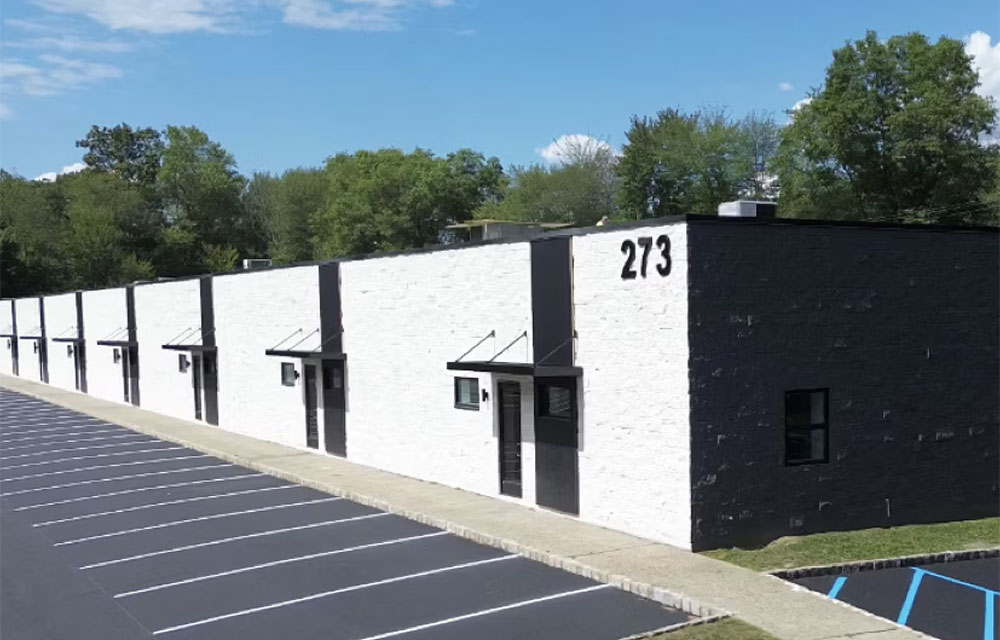
Resource Realty of Northern NJ delivers complete lease-up of 235 Franklin Rd. for Commerce Park Investors
Randolph, NJ Resource Realty of Northern New Jersey (RRNNJ) has completed the lease-up of a 10-unit small-bay industrial property at 273 Franklin Rd., marking the culmination of an investment strategy that began



Quick Hits
 (2).gif)

Columns and Thought Leadership

New York’s streets are full again, and the retail numbers prove it - by Noam Aziz
Walk down any New York block this year and you can feel it. The sidewalks are crowded, the storefronts are lit, and the energy that defines this city is back at full volume.

Hunt commercial real estate question and answer: Fortune 500 wisdom - by David Hunt
Yes, there are lessons to be learned from the largest companies in America when comes to managing your real estate. But the decision to buy or lease real estate may not be one of

Positive forecast for New York’s pro-housing push? - by Philip Butler
New York’s housing crisis remains a hot button topic despite growing consensus that varied and affordable housing is desperately needed statewide. Governor Hochul has recently introduced several initiatives to overcome N.Y.’s anti-housing

A guide to finding the right NYC property management company - by Sanjay Gandhi
Being a small to midsize landlord in NYC is an increasingly demanding endeavor. From navigating complex regulations, increased compliance demands to dealing with tenant issues and remediating violations. It is wise to enlist the assistance of a partner, a professional
.gif)