



News:
Brokerage
Posted: November 21, 2008
Revitalizing downtown Rochester: Now has more than $778 million in projects in the pipeline
Growth in Rochester's downtown has been outpacing its region and now has more than $778 million of real estate projects in the pipeline.
That's not bad for a community that over the past 20 years has lost some 45,000 jobs. The real story is in the gut rehab of Rochester's economic landscape which has been propelling it from a manufacturing-based economy (Kodak, Xerox, Bausch & Lomb) to one defined by the technology, alternative energy, and health sectors.
With a stable regional population of 1.1 million, pop culture has been driving a wide range of age and higher income groups to a new, very urban lifestyle in the center core. Walkability, nightlife, cool urban spaces, and great neighborhoods all define the new frontier for housing development. Downtown residential projects absorb rapidly, and products like lofts and urban condos have gained significant traction.
A large-scale project currently moving forward here illustrates just how real all of this is.
In 2004, plans for a $500 million casino project that would have transformed the center of the city collapsed. The abrupt removal of that massive, multi-block redevelopment proposal undermined the belief that the two greyfields sites involved - a former department store and the dying Midtown Plaza mall - could ever be redeveloped.
The business community responded by initiating a public-private effort to aggressively jumpstart redevelopment of the nearly two million s/f of space on these sites. The Urban Land Institute (ULI) was engaged, and its outcomes moved the community from a reactive to a proactive mode.
Captured by the vision of its young employees living and working in a vibrant downtown, the CEO of PAETEC Communications, the Rochester-based telecomm giant, approached the mayor with plans to consolidate and relocate their operations and 1,200 suburban employees to a new world headquarters building on part the Midtown Plaza site.
One small glitch - the asbestos abatement and demolition required to create developable sites on that block were estimated at more than $50 million. Another glitch - the property, which contains six office buildings and the retail mall, was not locally owned. The mayor convinced the governor that if the state leveled the playing field, the city and PAETEC would do the rest.
In October of 2007, the governor appeared in Rochester to announce the commitment of $55 million in state funds to move the project forward.
The city, state and private sector formed a significant partnership, and these have been the chief reason why the pace on this project has been astounding. Within 13 months, the city gained control of the property, relocated most of the remaining tenants, closed the underground parking garage, and set in motion contracts for the remediation and demolition work. Strategic public-private groups were formed to evaluate output from consultants on: (1) the larger site layout; (2) market demand for commercial and residential development; (3) SHPO issues; and, (4) potential development pro formas.
A request for proposals is due for release on November 24th for redevelopment of Midtown Tower, likely the only original building to remain. The potential to activate a residential conversion is already attracting the interest of developers. The state remains committed to their part of the project and is an active partner in all of the redevelopment activity.
Given the recent upheaval in the credit and investment markets, why are we still seeing forward momentum here?
There are several very clear answers. The tight public-private partnership between the city and real estate developers has sped up and simplified the development process. More intelligent master planning is protecting private investment. The city listens and responds to private market input, recognizing that "if the dogs won't eat the dog food," any government investment is wasted.
Perhaps most importantly, Rochester has had a history of stability in its real estate market. Its development players have avoided creating the kind of overhang in the commercial and housing markets that has diminished property values in many communities across the country.
A unified vision for downtown is evolving. This effectively guides the injection of public resources and incentives, infrastructure investments, and private development projects. The end game is to create an environment that people want to be in - that remains true to the hot urban lifestyle that attracts so many converts here and nationwide.
Heidi Zimmer-Meyer is the president, Rochester Downtown Development Corporation and executive director of Downtown Special Services, Inc., Rochester, N.Y.
Tags:
Brokerage
MORE FROM Brokerage
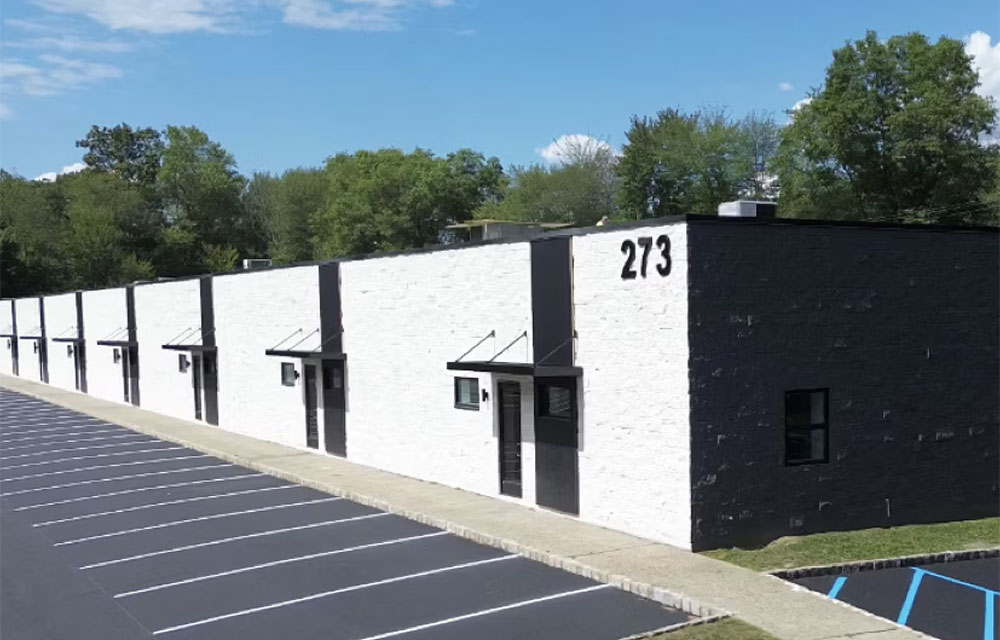
Resource Realty of Northern NJ delivers complete lease-up of 235 Franklin Rd. for Commerce Park Investors
Randolph, NJ Resource Realty of Northern New Jersey (RRNNJ) has completed the lease-up of a 10-unit small-bay industrial property at 273 Franklin Rd., marking the culmination of an investment strategy that began



Quick Hits

Columns and Thought Leadership

Hunt commercial real estate question and answer: Fortune 500 wisdom - by David Hunt
Yes, there are lessons to be learned from the largest companies in America when comes to managing your real estate. But the decision to buy or lease real estate may not be one of

Positive forecast for New York’s pro-housing push? - by Philip Butler
New York’s housing crisis remains a hot button topic despite growing consensus that varied and affordable housing is desperately needed statewide. Governor Hochul has recently introduced several initiatives to overcome N.Y.’s anti-housing

New York’s streets are full again, and the retail numbers prove it - by Noam Aziz
Walk down any New York block this year and you can feel it. The sidewalks are crowded, the storefronts are lit, and the energy that defines this city is back at full volume.

A guide to finding the right NYC property management company - by Sanjay Gandhi
Being a small to midsize landlord in NYC is an increasingly demanding endeavor. From navigating complex regulations, increased compliance demands to dealing with tenant issues and remediating violations. It is wise to enlist the assistance of a partner, a professional
.gif)