



News:
Brokerage
Posted: August 12, 2026
BKM Capital Partners releases Q2 2026 Light Industrial Market update; small-bay industrial gains ground as leasing rebounds and supply tighten

Newport Beach, CA Industrial leasing momentum accelerated in the second quarter, with new activity reaching 175 million s/f, 49% higher than a year earlier and ahead of each of the prior three years. But while the broader recovery signals renewed confidence across the sector, BKM Capital Partners’ (BKM) latest research finds that the rebound remains uneven, with multi-tenant light industrial continuing to distinguish itself from larger-format properties.
The newly released Q2 2026 Light Industrial Market Update examines how shifting occupier priorities, limited development and an aging inventory base are creating a more nuanced opportunity set. Tenants are increasingly focused on flexible, well-located facilities that support operational resilience and supply-chain efficiency, reinforcing demand for smaller industrial spaces near population centers.
Vacancy among buildings below 50,000 s/f remains 4%, compared with 7.5% for larger properties. That performance reflects a structural imbalance between the amount of space tenants require and the limited volume of comparable product being added to the market.
“The return of leasing activity is an important signal, but the recovery is not lifting every segment equally,” said Brian Malliet, BKM’s founder, CEO and chief investment officer. “Capital is becoming more selective and increasingly focused on durable occupancy, in-place cash flow and assets that are difficult to replicate. Small-bay industrial brings those qualities together, particularly in infill markets where demand is deep and meaningful new supply is increasingly difficult to create.”
Among the themes examined in BKM’s Q2 2026 Light Industrial Market Update:
• Leasing Decisions are Moving Forward: After an extended period of uncertainty, occupiers are reengaging with the market as delayed space decisions become increasingly difficult to postpone.
• The Small-Bay Supply Gap is Widening: Small-bay properties represent approximately 31% of existing industrial inventory but only 7% of the current construction pipeline, reinforcing the segment’s long-term scarcity.
• Asset Quality is Becoming a Greater Differentiator: As existing industrial inventory ages, tenants are placing greater value on power capacity, efficient loading, modern finishes and flexible unit configurations.
• Capital Markets are Rewarding Resilience: Improving transaction activity and disciplined pricing are directing investor attention toward assets supported by strong fundamentals and reliable cash flow.
• Operational Expertise is Separating Performance: Local market knowledge, strategic capital investment and hands-on asset management are becoming increasingly important as investors seek to unlock value within an operationally intensive segment.
The report also explores how advances in technology are changing tenant space requirements, why aging small-bay inventory presents a significant repositioning opportunity and how supply-chain strategies are influencing long-term real estate decisions.
“Small-bay industrial is not a commodity asset class,” said Mason Waite, senior managing director of asset and portfolio management at BKM. “Performance depends on understanding what tenants need at the building and submarket level, then making the right investments to deliver it. In a market where new supply is constrained, the ability to modernize existing properties and operate them effectively is becoming an increasingly meaningful competitive advantage.”
Looking ahead, BKM expects industrial demand to be shaped by a combination of economic resilience, technology adoption and a growing emphasis on supply-chain control. These forces are likely to favor flexible industrial space in established infill locations while increasing the strategic importance of assets that would be difficult or prohibitively expensive to recreate.
The Q2 2026 Light Industrial Market Update is part of BKM Intel, the firm’s ongoing research series and thought leadership platform examining the forces shaping industrial real estate across the U.S.
MORE FROM Brokerage
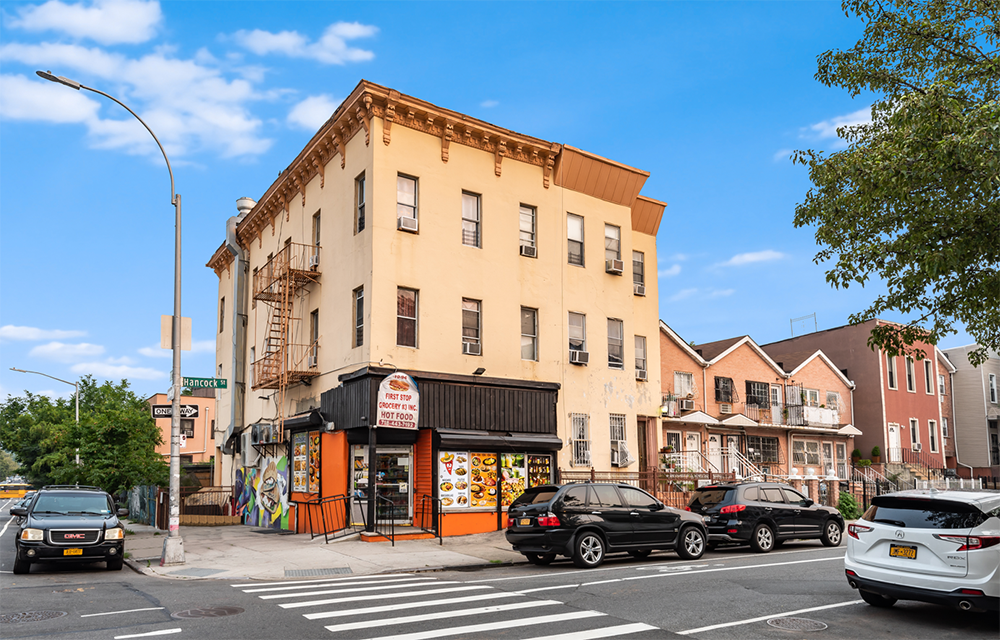
Investment Property Realty Group closes $1.75 million sale of 1094 Hancock Street in Brooklyn
Brooklyn, NY Investment Property Realty Group (IPRG), a New York-based commercial investment firm, has closed the sale of 1094 Hancock St., a mixed-use building in the Bushwick section, for $1.75 million.





Quick Hits

Columns and Thought Leadership

A guide to finding the right NYC property management company - by Sanjay Gandhi
Being a small to midsize landlord in NYC is an increasingly demanding endeavor. From navigating complex regulations, increased compliance demands to dealing with tenant issues and remediating violations. It is wise to enlist the assistance of a partner, a professional

Hunt CRE question and answer: Choosing a real estate agent - by David Hunt
First, we will only work with one agent exclusively. The primary reason is that we want that agent to legally represent our client’s interests. In New York State, a real estate agent has a fiduciary

Hunt commercial real estate question and answer: Fortune 500 wisdom - by David Hunt
Yes, there are lessons to be learned from the largest companies in America when comes to managing your real estate. But the decision to buy or lease real estate may not be one of

New York’s streets are full again, and the retail numbers prove it - by Noam Aziz
Walk down any New York block this year and you can feel it. The sidewalks are crowded, the storefronts are lit, and the energy that defines this city is back at full volume.
.gif)