


News:
Owners Developers & Managers
Posted: November 1, 2016
Renewed focus on architecture/infrastructure - by Carol Loewenson
By Carol Loewenson, FAIA, LEED AP
New York City is at an impasse. Too much of the city’s essential transportation infrastructure remains stuck in the 20th century—a problem for a city positioning itself to compete with other global city metropolises today. The bridges, tunnels, roadways, sidewalks, and transit systems that have served New York for centuries are reaching the end of their functional lifetime and threaten the current quality of life residents and commuters depend on.
New York City’s growing population, projected to almost one million additional residents by 2030, continues to test the outer most limits of our systems’ capacity. In addition to our growing population, New York continues to see new patterns of where people choose to live and how they move about the city. Climate change and rising sea levels will continue to present new and escalating stresses on our systems, seen no more dramatically than in Superstorm Sandy and its reverberating impacts to this day.
To remain a prosperous and vibrant city, our elected leaders need to make investing in our aging roads, bridges, tunnels, and other critical infrastructure a top priority. Investing in our transportation network today and equipping it to meet the needs of the 21st century, will cement New York’s position as a national leader in infrastructure and keep pace with cities across the globe.
In confronting these ever-present challenges, the New York chapter of the American Institute of Architects (AIA) affirms the crucial role architecture and design have in modernizing our infrastructure. Architects are uniquely qualified and positioned to work with a range of stakeholders, including community members, government agencies, and builders – providing an essential bridge between communities and the built environment.
At every opportunity since the end of the last century, AIANY has been strongly supportive of efforts to improve the region’s infrastructure. With more than 5,300 registered architects and associated design professionals, the AIANY will continue to champion innovative ideas that move our transportation systems into the 21st century.
Over the coming months, we’ll be directly engaging in the public dialogue through a series of events and initiatives examining our city’s infrastructure needs and opportunities. We’re eager about working with our members, peer organizations, and the city at large to provide a renewed focus on the architecture and design of our infrastructure projects and invite you all to join.
Carol Loewenson, FAIA, LEED AP is the 2016 president of AIA New York and is a partner at Mitchell | Giurgola, New York, N.Y.
MORE FROM Owners Developers & Managers
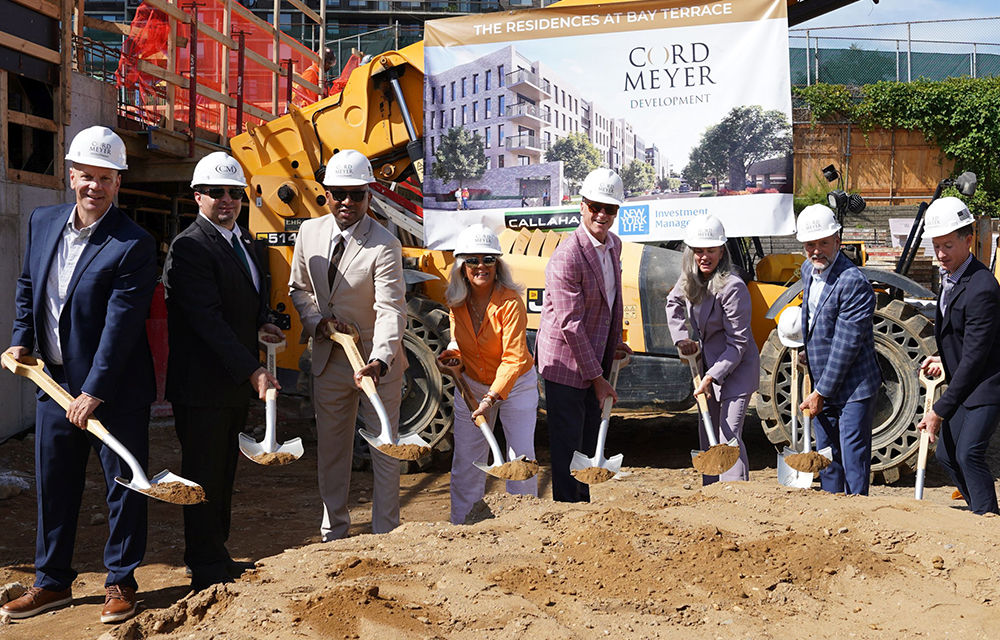
Cord Meyer Development breaks ground on new residential community at the Bay Terrace Shopping Center
Queens, NY On September 10, Cord Meyer Development celebrated the groundbreaking of its new residential community at the Bay Terrace Shopping Center, marking a major investment in new housing and the continued evolution of one of






Columns and Thought Leadership

Don’t leave severance damages behind - by Sebastian Jablonski
When the government takes a portion of a landowner’s property, most assume just compensation stops at the value of the land taken. However, in partial takings, that is only half of the equation.

Hunt Commercial Real Estate Q&A: Location, location, location? - by David Hunt
In working with our clients, we break down our search objectives into two categories. The first category involves the specific needs of your business such as warehouse height, amount of office space and number of loading

NYC's Community Opportunity to Purchase Act is back - and multifamily owners should pay attention - by Ron Cohen
New York City’s Community Opportunity to Purchase Act (COPA) is back, and this latest version could have a much better chance of becoming law. The proposal would give qualified nonprofit organizations

IREON Insights: Research and development tax credit: Very important deadline for amendments is July 6 - by Richard Levychin
If you are a company that either claimed or qualify for the research and development tax credit you need to be aware of the following update resulting from the One Big Beautiful Bill Act (OBBBA).
September Promotion
