



News:
Brokerage
Posted: December 17, 2019
Related Cos., Cushman & Wakefield bring Facebook to Hudson Yards: 1.522 million s/f
Manhattan, NY Hudson Yards completed a lease with Facebook for 1.522 million s/f of office space across 30 floors and three buildings.
The lease deal includes:
- 1.2 million s/f at 50 Hudson Yards;
- 265,000 s/f at 30 Hudson Yards; and
- 57,000 s/f at 55 Hudson Yards.
30 Hudson Yards was developed by Related Cos. and Oxford Properties Group. 50 and 55 Hudson Yards were developed by Related Cos., Mitsui Fudosan America and Oxford Properties Group. Cushman & Wakefield represented Facebook in the transaction while Related handled the negotiations in-house.
Jeff Blau, CEO of Related Cos. said, “This is an extraordinary commitment to New York City and Hudson Yards. Hudson Yards continues to be a magnet for talent, attracting the greatest companies across every sector of the economy. We are thrilled to welcome Facebook and its employees to their new park-front offices where they will enjoy the convenience of a truly dynamic live-work-play environment.”
John Tenanes, VP of global facilities and real estate for Facebook said, “New York’s vibrant communities, strong business economy and diverse talent base first attracted us to the city in 2007. When considering the next phase of our growth in the city, it was important that our newest office space was situated in the heart of a vibrant community that offered access to arts, culture, media and commerce. Hudson Yards offered this and more, and we’re excited to expand our offices there starting in 2020.”
Dean Shapiro, head of U.S. development for Oxford Properties Group said, “Hudson Yards continues to cement its reputation as a destination of choice for employers looking to gain an edge in the war for talent. The array of world-class companies that have been attracted to the project will ensure we are building a vibrant new employment hub for New York. We are proud to be partnering with Facebook to create the workplace of the future for its employees; a place that provides world-class amenities across food, entertainment, retail, arts and culture right on its doorstep.”
30 Hudson Yards is fully committed, 55 Hudson Yards is 99% committed and 50 Hudson Yards, anchored by BlackRock, is now 75% leased two and half years prior to occupancy. Over eight million s/f have been leased or sold at Hudson Yards bringing the overall leasing commitments to 91% of the development.
Tags:
Brokerage
MORE FROM Brokerage
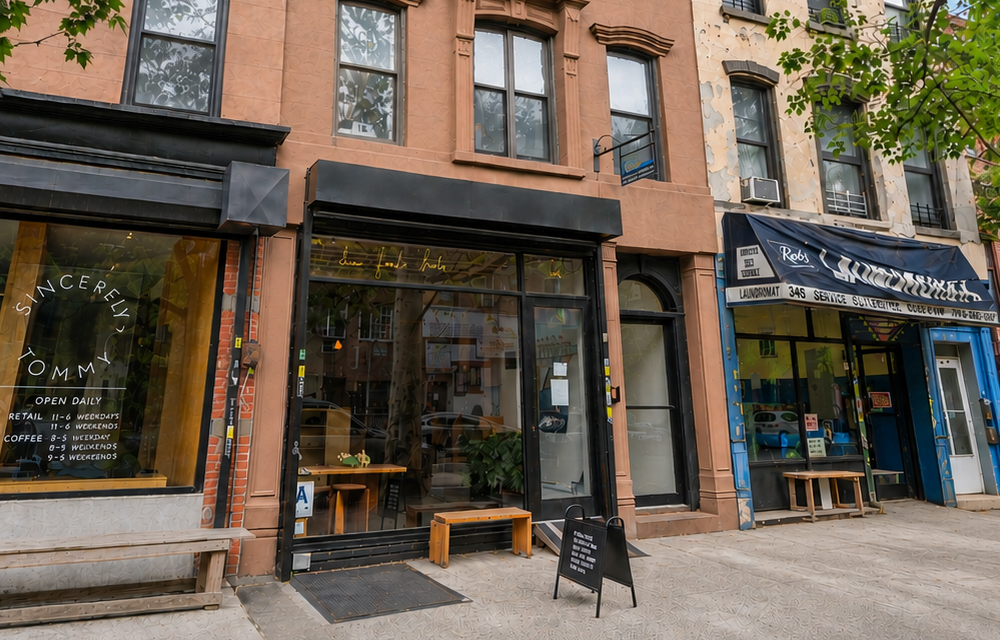
Bestreich, Reynolds, Davila, and Flaherty of Investment Property Realty Group close $1.97 million sale of 343A Tompkins Ave. in Bed-Stuy
Brooklyn, NY Investment Property Realty Group (IPRG) closed the sale of 343A Tompkins Ave., a mixed-use building located in the Bed-Stuy section of the borough, for $1.97 million.


Quick Hits

Columns and Thought Leadership

Hunt CRE question and answer: Choosing a real estate agent - by David Hunt
First, we will only work with one agent exclusively. The primary reason is that we want that agent to legally represent our client’s interests. In New York State, a real estate agent has a fiduciary

New York’s streets are full again, and the retail numbers prove it - by Noam Aziz
Walk down any New York block this year and you can feel it. The sidewalks are crowded, the storefronts are lit, and the energy that defines this city is back at full volume.

Hunt commercial real estate question and answer: Fortune 500 wisdom - by David Hunt
Yes, there are lessons to be learned from the largest companies in America when comes to managing your real estate. But the decision to buy or lease real estate may not be one of

A guide to finding the right NYC property management company - by Sanjay Gandhi
Being a small to midsize landlord in NYC is an increasingly demanding endeavor. From navigating complex regulations, increased compliance demands to dealing with tenant issues and remediating violations. It is wise to enlist the assistance of a partner, a professional
.gif)