



News:
Brokerage
Posted: May 11, 2016
REBNY releases First Quarter 2016 Residential Sales Report
New York, NY Residential homes sales activity in both the Bronx and Staten Island surged 35 percent in the first quarter of 2016, while overall New York City sales activity and prices posted small, but healthy gains year-over-year, according to the Real Estate Board of New York’s (REBNY) First Quarter 2016 Residential Sales Report.
A total of 11,827 New York City homes (cooperatives, condominiums, and one-to-three family dwellings) were sold in the first quarter of 2016, which was a five percent increase from the first quarter of 2015. The rise in Bronx and Staten Island home sales volume was driven by the sale of one-to-three family dwellings, which year-over-year increased 24 percent to 699 sales, out of 989 total home sales, in the Bronx and 31 percent to 1,021 sales, out of 1,195 total home sales, in Staten Island. The sale of one-to-three family dwellings in both boroughs has been on a relative upward trajectory over the last five years since the start of 2011.
The average sales price of a home in New York City increased one percent to $911,000 from $898,000 in the first quarter of 2015, despite the average home sale price increase of five percent to $1.865 million in Manhattan and eight percent to $809,000 in Brooklyn.
While Manhattan and Brooklyn maintain the highest average home sale prices in the city, both boroughs saw a slight year-over-year dip in sales volume by two percent and four percent respectively. This activity was counteracted by increasing sales in the Bronx, Staten Island and Queens, whose average home sale prices were considerably lower at $378,000, $441,000 and $504,000 respectively, which moderated citywide average home sale price growth in the first quarter of 2016.
“With growing interest and activity, particularly in the Bronx and Staten Island, home buyers are finding and being attracted to more options at various price levels throughout all five boroughs,” said John Banks, III, REBNY President. “The demand for housing continues to resonate throughout New York City and the strong residential sales activity throughout the city is driving healthy overall price increases.”
Additionally, the middle segment of the market continued to see average sales price increases despite weak national economic data. The middle 50 percent of the market registered an average sales price of $584,281, which was 4.5 percent greater than the first quarter of 2015. Meanwhile, the top 10 percent of the market had an average sales price of $3.76 million, which was eight percent lower than the first quarter of last year.
The average sales price of a New York City condominium unit increased one percent to $1.639 million, while that of a one-to-three family dwelling increased two percent to $711,000 year-over-year. In contrast, the average sales price of a New York City cooperative unit was $727,000, down three percent from last year’s first quarter average.
The total consideration (monetary value for completed transactions) for all residential sales in New York City during the first quarter of 2016 rose seven percent to $10.8 billion from the first quarter of 2015.
Total consideration increased year-over-year by: 2.8 percent to $5.69 billion in Manhattan; 3.8 percent to $2.27 billion in Brooklyn; 13.2 percent to $1.9 billion in Queens; 41 percent to $527 million in Staten Island; and 34 percent to $374 million in the Bronx.
Tags:
Brokerage
MORE FROM Brokerage
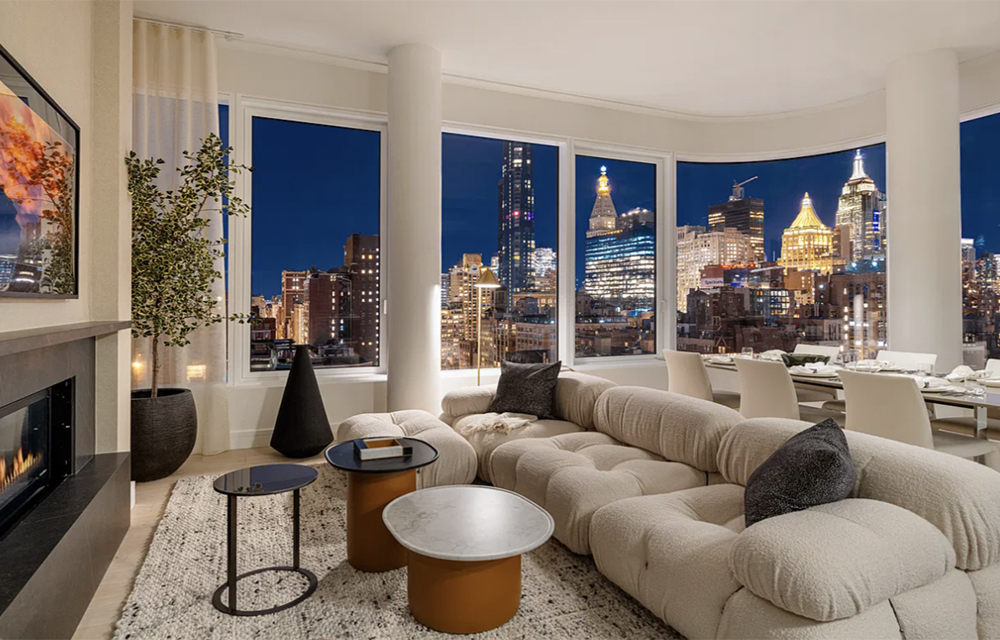
200E20TH sells out in Gramercy, penthouse A closes out sales at the CetraRuddy-designed condominium residences
Manhattan, NY 200E20TH, the CetraRuddy-designed architectural masterwork that brought a curved, contemporary sensibility to Gramercy’s Beaux-Arts streetscape, has




Quick Hits

Columns and Thought Leadership

Hunt commercial real estate question and answer: Fortune 500 wisdom - by David Hunt
Yes, there are lessons to be learned from the largest companies in America when comes to managing your real estate. But the decision to buy or lease real estate may not be one of

New York’s streets are full again, and the retail numbers prove it - by Noam Aziz
Walk down any New York block this year and you can feel it. The sidewalks are crowded, the storefronts are lit, and the energy that defines this city is back at full volume.

The art of investing in real estate - by Thomas Donovan
Real estate investing is as much an art as it is a skill. No one can time the market, or the factors that drive it, perfectly. Location, zoning, size, transportation, and neighborhood density give you a baseline for

Hunt CRE question and answer: Choosing a real estate agent - by David Hunt
First, we will only work with one agent exclusively. The primary reason is that we want that agent to legally represent our client’s interests. In New York State, a real estate agent has a fiduciary
.gif)