



News:
Brokerage
Posted: July 16, 2024
Realtors rally against NYC council bill to halt broker fees on rentals
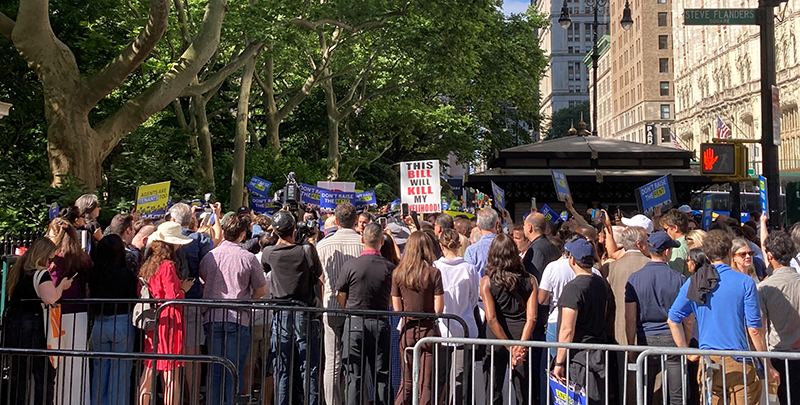
Manhattan, NY Members of the Hudson Gateway Association of Realtors, (HGAR) and the New York State Association of Realtors (NYSAR) addressed the New York City Council, in opposition to City Council Bill Int. 360, which would prohibit real estate brokers and agents of a landlord from collecting a broker’s fee from a renter. The meeting followed a rally by over a thousand Realtors and members of the public outside of City Council Chambers.
Currently, the brokers’ fees are paid by either the renter or the landlord, or a combination of both, based on a negotiated amount for each. This bill would drastically change the rental market by eliminating the ability to negotiate who pays a commission and would result in higher rents for tenants. Prohibiting this common practice of collecting a broker fee will reduce the use of real estate professionals in rentals, harming both Realtors and tenants.
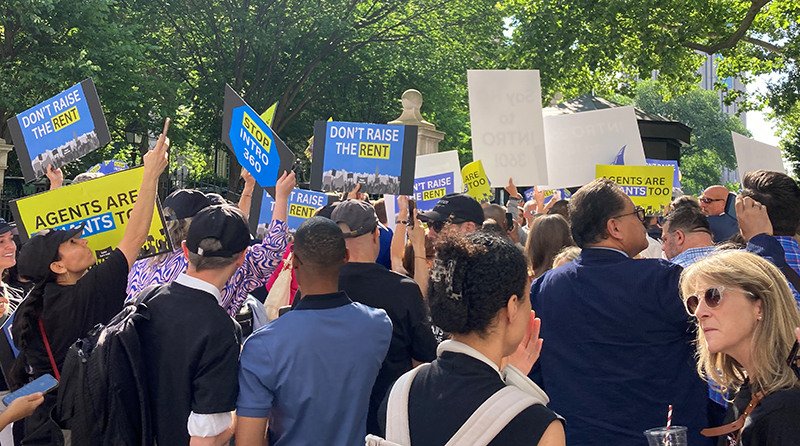
Agents’ compensation model could be altered or eliminated under this legislation and rents could increase as landlords try to recoup the cost of compensating real estate brokers. Realtors contend this bill fails to protect the hardworking professionals and the consumers they serve.
Former HGAR president Anthony Domathoti was among the speakers calling for an end to Bill Int. 360. “When I first moved to this bustling city for my career, I was overwhelmed by the sheer complexity of finding an affordable apartment. The maze of listings, the uncertainty of landlords, and the ever-looming threat of being taken advantage of were daunting,” he said. “A licensed Realtor stepped in, offering not just a service, but a lifeline. His fee, which some might see as a burden, was a small price to pay for the security, peace of mind, and invaluable guidance they provided.”
Domathoti believes the bill threatens to dismantle a crucial support system for renters and cripple the livelihood of real estate agents. “Consider the real-life implications: middle-income workers who depend on these fees to sustain their livelihoods will be pushed to the brink,” he added. “These are people with families, and the same financial pressures that we all face. Removing their primary source of income not only jeopardizes their financial stability, but also threatens to erode the quality-of-service renters rely on.”
The Bill has not yet passed, but Domathoti reported given the majority support, it may pass. The bill was spearheaded by NYC councilmember Chi Ossé (D-Brooklyn) and has garnered a majority of 33 in the 51-member Council. “While the bill aims to reduce financial burdens on tenants, it could disrupt the market, making it harder for landlords to fill vacancies and for tenants to find housing quickly,” said Domathoti. “Additionally, landlords might raise rental prices to cover the costs of broker fees.”
Tags:
Brokerage
MORE FROM Brokerage

Residential real estate consultancy and brokerage firm Nancy Packes, Inc. rebrands as NPI
Manhattan, NY The NYC-based premier residential real estate consultancy and brokerage firm, Nancy Packes Inc., has rebranded as NPI. Helmed by Seth Rosner, most recently the firm’s managing partner and now president, the company has been intricately involved in hundreds of Tri-State new developments and conversions, spearheading the full project life cycle, from assessment/pre-dev.






Quick Hits

Columns and Thought Leadership

A guide to finding the right NYC property management company - by Sanjay Gandhi
Being a small to midsize landlord in NYC is an increasingly demanding endeavor. From navigating complex regulations, increased compliance demands to dealing with tenant issues and remediating violations. It is wise to enlist the assistance of a partner, a professional

New York’s streets are full again, and the retail numbers prove it - by Noam Aziz
Walk down any New York block this year and you can feel it. The sidewalks are crowded, the storefronts are lit, and the energy that defines this city is back at full volume.

Hunt CRE question and answer: Choosing a real estate agent - by David Hunt
First, we will only work with one agent exclusively. The primary reason is that we want that agent to legally represent our client’s interests. In New York State, a real estate agent has a fiduciary

Hunt commercial real estate question and answer: Fortune 500 wisdom - by David Hunt
Yes, there are lessons to be learned from the largest companies in America when comes to managing your real estate. But the decision to buy or lease real estate may not be one of
.gif)