



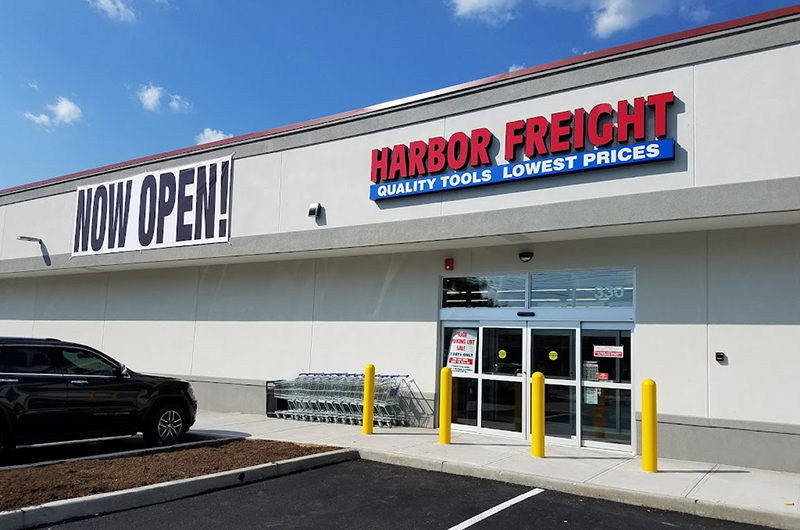
White Plains, NY Robert Ranieri, senior vice president/managing director of Northmarq’s Westchester, NY debt/equity team, finalized the refinance of four retail properties for a combined $12.845 million. Each transaction was structured with a seven-year term on a 30-year amortization schedule. Northmarq secured the permanent-fixed rate loans for the borrower through PCSB bank. Totaling 66,691 s/f, the retail properties are located at 316-330, 350-360, 388 and 410-420 Tarrytown Rd. (Rte. 119). Northmarq provided the original construction financing for the 316-330 Tarrytown Rd. property, which became home to Harbor Freight Tools’ first store in Westchester County. Harbor Freight is the sole tenant in the 15,000 s/f space.
Major tenants at the other properties include The Men’s Warehouse, New Balance, Sherwin Williams, Cycle Gear, Mattress Firm, AutoZone, and Gothic Cabinet Craft.
“This long-term client was interested in refinancing his fully occupied retail portfolio in an excellent location in White Plains. During a very volatile period, the lender, PCSB Bank, offered a rate lock option that allowed the loans to close once the existing loan prepayment penalty decreased” said Ranieri.
Ranieri also arranged for a $2 million debt deal in order to refinance the client’s two owner-
occupied properties. The two industrial properties are located at 11-03/07 43rd Rd. and 43-22 12th St. in Long Island City, with a combined 12,050 s/f of rentable space. Northmarq secured the permanent-fixed rate loans for the client through a local lender.
“Many lenders had interest in financing the deals due to the low LTV and product type, and the client chose a very competitive deal that offered a fixed interest rate, no prepayment penalty and no bank fees,” said Ranieri.
The 11-03/07 43rd Rd. property was constructed circa 1930 and features 4,900 s/f of rentable space with 300 s/f of office space. The 43-22 12th St. property, also constructed circa 1930, features a total of 7,150 s/f of rentable space for single tenant use including 1,350 s/f of office space. Both properties feature 12-ft. tall ceiling heights along with drive-in loading doors.


 (2).gif)





.gif)