



News:
Brokerage
Posted: July 27, 2015
Question of the Month: What is the effect of bankruptcy code on commercial leases when a tenant files for bankruptcy? (Part 1)
In Ancient Rome, the Law of the Twelve Tables provided a debtor with thirty days to pay the debts. After that the creditors could fasten the debtor in stocks or fetters, with not less than fifteen pounds of weight, and then, three market days later (even then there was a break for weekends), divide the debtor's body amongst them, but "if they cut more or less than each one's share it shall be no crime."
While the current United States Bankruptcy Code (the "Code") affords landlords less divertissement than the ancient Twelve Tables, it does afford landlords substantial protections upon a commercial tenant filing for bankruptcy. A commercial tenant can file a petition under code chapter 7, which is for asset liquidation (in which the debtor's assets become property of the bankruptcy estate and are administered by a court-appointed chapter 7 trustee), or code chapter 11 (in which the debtor intends to reorganize and continue its business operations once there has been some restructuring of its current financial obligations, and is termed a debtor-in-possession). The court may appoint a chapter 11 trustee to administer the estate, but does so only in extraordinary circumstances.
Whichever the chapter filing, the debtor-in-possession or the chapter 7 trustee must pay use and occupancy charges (generally at the lease's rent amount) and comply with most other lease obligations for the continued use and occupancy of the subject premises, and must determine, within the code's time limits, whether to cure all defaults and remain in possession of the premises under the terms and conditions of the controlling lease, that is, whether to "assume" the lease, or to "reject" the lease and cease operations in the premises.
The debtor may assume or reject any lease that is unexpired and has not been terminated for some other reason, such as the issuance of a state court warrant of eviction. A tenant's bankruptcy filing will not terminate an unexpired lease, even where the lease expressly provides for the automatic termination of the tenancy upon insolvency or bankruptcy.
The debtor's right to assume or reject an unexpired lease is discretionary. The landlord cannot compel assumption. The court will, however, decide whether to approve any lease assumption based on a review of the totality of the circumstances, including the financial stability of the reorganized debtor.
Generally, the debtor must decide whether to assume the lease within 120 days of the bankruptcy filing, which the court can extend for another 90 days if the debtor is meeting its current lease obligations. Any further extension can only be with the landlord's written consent.
To assume the lease, the debtor must cure all material defaults, including the payment of past due rent and additional rent, and must provide "adequate assurance of future performance" under the lease, that is whether there is a likelihood, not a certainty, that the rent and other lease-related obligations will be met.
The code permits the assignment of a lease, notwithstanding a lease provision that prohibits, restricts or conditions the assignment of the lease, provided that the lease is assumed in accordance with the code and adequate assurance of future performance by the assignee is provided. At least in the case of the assignment of non-shopping center leases, adequate assurance of future performance by an assignee does not require literal compliance with the lease's use clause. Since a chapter 11 trustee is liquidating the estate and clearly not going to operate the debtor's business, the assumption of the lease would normally be in conjunction with a sale of the business and an assignment of the lease.
In the event of an assignment, the landlord may require a security deposit that is substantially the same as would have been required by the landlord upon the initial leasing to a similar tenant.
The tenant's rejection of the lease constitutes a statutory breach, but does not repudiate or terminate the tenancy. Thus, the parties must resort to state law to determine their rights arising from the breach. However, and in any event, once a debtor rejects a commercial lease, the premises must be immediately surrendered to the landlord.
Part 2 of this article will discuss additional code provisions relating to a commercial tenant's bankruptcy filing.
Jeffrey Chancas is a partner at Borah, Goldstein, Altschuler, Nahins & Goidel, P.C., New York, N.Y.
Tags:
Brokerage
MORE FROM Brokerage
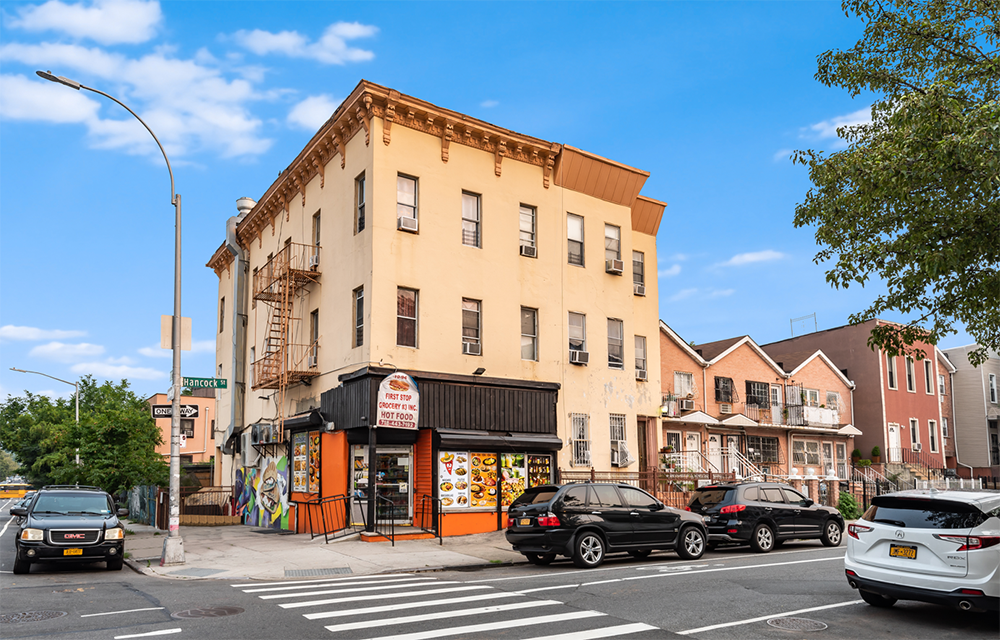
Investment Property Realty Group closes $1.75 million sale of 1094 Hancock Street in Brooklyn
Brooklyn, NY Investment Property Realty Group (IPRG), a New York-based commercial investment firm, has closed the sale of 1094 Hancock St., a mixed-use building in the Bushwick section, for $1.75 million.




Quick Hits

Columns and Thought Leadership

A guide to finding the right NYC property management company - by Sanjay Gandhi
Being a small to midsize landlord in NYC is an increasingly demanding endeavor. From navigating complex regulations, increased compliance demands to dealing with tenant issues and remediating violations. It is wise to enlist the assistance of a partner, a professional

Hunt CRE question and answer: Choosing a real estate agent - by David Hunt
First, we will only work with one agent exclusively. The primary reason is that we want that agent to legally represent our client’s interests. In New York State, a real estate agent has a fiduciary

New York’s streets are full again, and the retail numbers prove it - by Noam Aziz
Walk down any New York block this year and you can feel it. The sidewalks are crowded, the storefronts are lit, and the energy that defines this city is back at full volume.

Hunt commercial real estate question and answer: Fortune 500 wisdom - by David Hunt
Yes, there are lessons to be learned from the largest companies in America when comes to managing your real estate. But the decision to buy or lease real estate may not be one of
.gif)