



News:
Brokerage
Posted: October 27, 2014
Question of the Month: What are the 7 agencies (aside from DOB) that are affecting your approvals?
Construction in New York City is on the rise both literally and figuratively. Applications and permit submissions are at levels not seen in years and for the first time in decades, there are 10 to 12 active sites building towers that will reach 70-90 stories each.
New York City is unlike any other place in the world and development here is no exception. Regardless of development goals- a new building, interior renovation, enlargement of an existing structure or pure site work- there are many agencies involved in the approval process in addition to the Department of Buildings. The following are several important factors associated with these agencies that can impact development schedules by weeks, months or even years;
1. Don't underestimate the value of thorough due diligence. Do your research and determine if there's an existing board of standards and appeals decision associated with your site. If there is, it can put everything else on hold.
2. The mayor's Office of Environmental Remediation continues to identify properties throughout the city as having potential concerns related to hazardous materials contamination, window/wall noise attenuation and air quality. Depending on your site's classification, coordination with OER may be required.
3. Is your site in close proximity to a subway station, tunnel, elevated track or other transit-managed interest? If so, schedule a preliminary discussion with the Transit Authority up front.
4. The New York City Landmarks Preservation Commission flags buildings, as well as specific areas of buildings, requiring approval prior to the Department of Buildings. Properties identified as "calendared" deserve attention, too. Although not officially a landmark, these properties still require LPC approval.
5. If your project involves street or sidewalk work along with associated permits such as lanes closures, consider the Construction Embargoes set forth by the New York City Department of Transportation. During such embargoes, existing permits are suspended and new permits won't be issued unless DOT grants a waiver.
6. The Department of Parks and Recreation limits the planting season to three months during the Fall and three months during the Spring. Missing the short planting season can impact other signoffs and ultimately, your Certificate of Occupancy.
7. The Department of Environmental Protection oversees work related to asbestos, city water and sewer and air monitoring. Lead times for these approvals should be considered.
The key to a successful project is knowing the development obstacles to look out for and understanding their potential impact. Having the right team in place can make all the difference.
Bohler Engineering has provided permit expediting and consulting services in New York City for over 30 years. From our newest office location in Midtown Manhattan, we routinely coordinate with the agencies above and can guide you through the approval process, ensuring your project stays on track. Unlike other permitting firms, we are supported by a team of professional engineers with technical expertise in zoning and site design.
Have questions about the entitlement process? Please contact me at 646-661-4200 or ttabone@Bohlereng.com to see how our team can help.
Tom Tabone is the director of permitting for Bohler Engineering, New York, N.Y.
Tags:
Brokerage
MORE FROM Brokerage
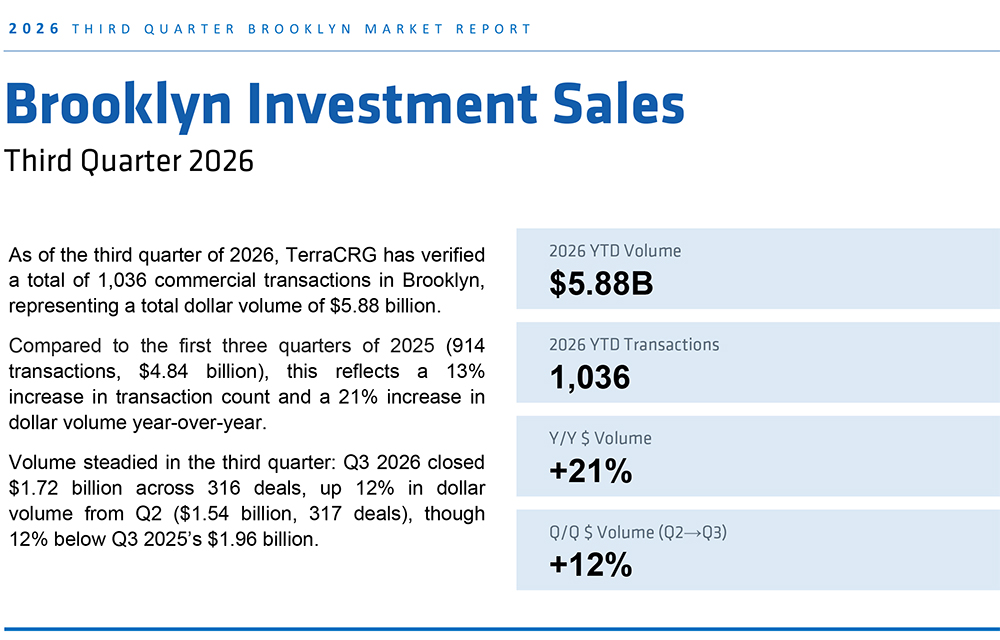
TerraCRG releases 3Q 2026 Brooklyn Market Report: Investment sales reach $5.88 billion tear-to-date, up 21%
Brooklyn, NY TerraCRG released its 3Q 2026 Brooklyn Market Report. Through the first three quarters of 2026, TerraCRG verified 1,036 commercial investment sales in Brooklyn



Quick Hits
 (2).gif)

Columns and Thought Leadership

The art of investing in real estate - by Thomas Donovan
Real estate investing is as much an art as it is a skill. No one can time the market, or the factors that drive it, perfectly. Location, zoning, size, transportation, and neighborhood density give you a baseline for

New York’s streets are full again, and the retail numbers prove it - by Noam Aziz
Walk down any New York block this year and you can feel it. The sidewalks are crowded, the storefronts are lit, and the energy that defines this city is back at full volume.

Hunt commercial real estate question and answer: Fortune 500 wisdom - by David Hunt
Yes, there are lessons to be learned from the largest companies in America when comes to managing your real estate. But the decision to buy or lease real estate may not be one of

Hunt CRE question and answer: Choosing a real estate agent - by David Hunt
First, we will only work with one agent exclusively. The primary reason is that we want that agent to legally represent our client’s interests. In New York State, a real estate agent has a fiduciary
.gif)