



News:
Brokerage
Posted: June 5, 2018
Public Relations: Online or in print, press clips are assets - by Harry Zlokower
Has the ubiquitous press clip, which once provided a prestigious showcase for New York real estate firms, become an endangered species? Hardly, but its evolution from a uniquely paper hosted narrative to an online post, a couple of clicks away, should be of interest to real estate public relations planners.
Typical real estate stories–whether in the trade or business media–often appear now initially online and that means they may be on a publication’s website, e-mail blast, and search engine all at the same time, before possibly getting tweeted and re-tweeted and before ever hitting the newsstands or airwaves.
What this signifies to brokers, developers, owners, lenders, and other real estate professionals is that it has become harder to know who and how many influencers and prospects are actually seeing your deals, commentary and profiles, not to mention when and where.
While some publications require applying for an advertising rate card, answers to your readership questions can often be found by contacting the publisher or advertising department. Most PR firms subscribe to media software and services which also have the answers.
In fact, a strong argument can be made that today’s press clip–digital and paper–is much more powerful and influential than ever in its ability to reach and influence real estate audiences. While in the past we relied on audited print, viewer and listener figures, today it is possible to attain more comprehensive metrics on who actually is seeing, reading and hearing our stories.
To capitalize, real estate companies should:
1) Seek opportunities to hyperlink their website URLs in publications that write positive stories;
2) Create a news page on their website for posting positive articles including news outlet mastheads; and
3) Blast, tweet, and post on social media as soon as they achieve good coverage.
Harry Zlokower is president of Zlokower Co., a real estate public relations firm, and past president of the New York Chapter of the Public Relations Society of America, New York, N.Y.
Tags:
Brokerage
MORE FROM Brokerage
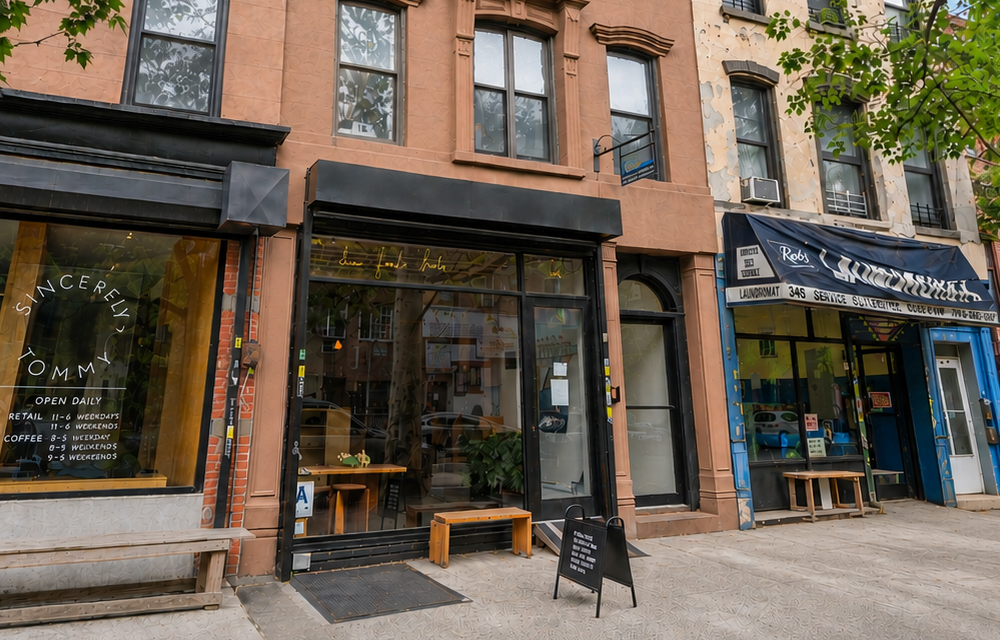
Bestreich, Reynolds, Davila, and Flaherty of Investment Property Realty Group close $1.97 million sale of 343A Tompkins Ave. in Bed-Stuy
Brooklyn, NY Investment Property Realty Group (IPRG) closed the sale of 343A Tompkins Ave., a mixed-use building located in the Bed-Stuy section of the borough, for $1.97 million.




Columns and Thought Leadership

Hunt CRE question and answer: Choosing a real estate agent - by David Hunt
First, we will only work with one agent exclusively. The primary reason is that we want that agent to legally represent our client’s interests. In New York State, a real estate agent has a fiduciary

A guide to finding the right NYC property management company - by Sanjay Gandhi
Being a small to midsize landlord in NYC is an increasingly demanding endeavor. From navigating complex regulations, increased compliance demands to dealing with tenant issues and remediating violations. It is wise to enlist the assistance of a partner, a professional

New York’s streets are full again, and the retail numbers prove it - by Noam Aziz
Walk down any New York block this year and you can feel it. The sidewalks are crowded, the storefronts are lit, and the energy that defines this city is back at full volume.

Hunt commercial real estate question and answer: Fortune 500 wisdom - by David Hunt
Yes, there are lessons to be learned from the largest companies in America when comes to managing your real estate. But the decision to buy or lease real estate may not be one of
.gif)