



News:
Brokerage
Posted: August 15, 2023
Prusik Group, BRP Companies, L+M Development Partners, Goldman Sachs Urban Investment Group, and Taconic Partners signs leases with Sephora and Pandora in mixed-use development on 125th St
Manhattan, NY A joint venture of The Prusik Group, BRP Companies, L+M Development Partners, Goldman Sachs Urban Investment Group, and Taconic Partners, announced the newest tenants of 121 W 125th St. – beauty and make-up retailer Sephora and luxury jewelry retailer Pandora. Sephora signed a lease for its new location on the ground floor, expected to open in winter of 2023. Pandora signed a 2,000 s/f lease, also on the ground floor, which will feature a jewelry showroom and is expected to open in winter of 2023.
“We are thrilled to continue to add exciting new tenants to 121 W 125th,” said S. Andrew Katz, co-founder and principal of The Prusik Group. “Sephora and Pandora will offer high end retail shopping experiences for the surrounding bustling community, further cementing the building and neighborhood as a retail destination.”
Sephora is a beauty retailer with 15 stores in New York City. This new space will be their first location in Upper Manhattan. Pandora is a global jewelry retailer with two stores in New York City. This new space marks their first location in Upper Manhattan. Ginny Pittarelli and Christine Jorge of Crown Retail Services brokered the deal for Sephora, while Bob Gibson and Davie Berke of JLL brokered the deal for Pandora.
Sephora and Pandora will join Trader Joe’s and Target as anchor tenants in the building, adding significant retail activity to the 125th St. commercial corridor. In August, Target will move into their 44,000 s/f space, while Trader Joe’s will move in in August and occupy 28,000 s/f.
A mixed-use development, 121 W 125th St. was constructed by Taconic Partners and its development partners, L+M Development Partners, Goldman Sachs Urban Investment Group, BRP Companies, and the Prusik Group and designed by Beyer Blinder Belle. Slated to be complete in summer of 2023, 121 W 125th St. transformed a block-through site in Harlem’s buzzing commercial corridor, into a mixed-use complex featuring office, retail, residential and cultural spaces. The building includes 85,000 s/f of class-A office space, with floor-to-ceiling windows and a 7,500 s/f private terrace, 90,000 s/f of space, an 11-story residential tower with 170 apartments.
Tags:
Brokerage
MORE FROM Brokerage
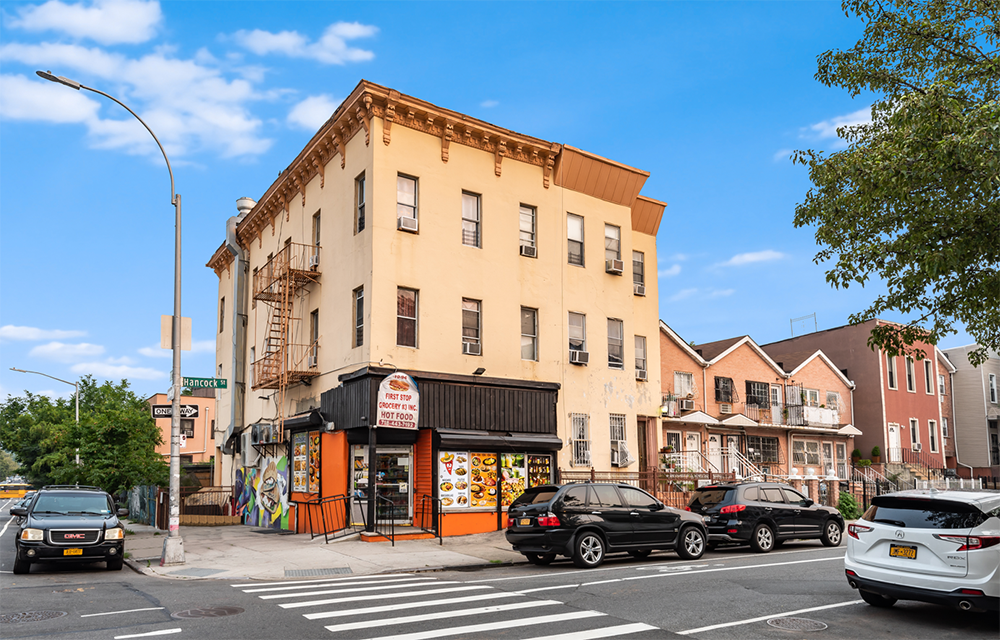
Investment Property Realty Group closes $1.75 million sale of 1094 Hancock Street in Brooklyn
Brooklyn, NY Investment Property Realty Group (IPRG), a New York-based commercial investment firm, has closed the sale of 1094 Hancock St., a mixed-use building in the Bushwick section, for $1.75 million.


 (2).gif)

Columns and Thought Leadership

A guide to finding the right NYC property management company - by Sanjay Gandhi
Being a small to midsize landlord in NYC is an increasingly demanding endeavor. From navigating complex regulations, increased compliance demands to dealing with tenant issues and remediating violations. It is wise to enlist the assistance of a partner, a professional

Hunt commercial real estate question and answer: Fortune 500 wisdom - by David Hunt
Yes, there are lessons to be learned from the largest companies in America when comes to managing your real estate. But the decision to buy or lease real estate may not be one of

Hunt CRE question and answer: Choosing a real estate agent - by David Hunt
First, we will only work with one agent exclusively. The primary reason is that we want that agent to legally represent our client’s interests. In New York State, a real estate agent has a fiduciary

New York’s streets are full again, and the retail numbers prove it - by Noam Aziz
Walk down any New York block this year and you can feel it. The sidewalks are crowded, the storefronts are lit, and the energy that defines this city is back at full volume.
.gif)