


 (2).gif)
News:
Spotlight Content
Posted: May 22, 2009
President's message: The power of diversity
This year, San Francisco's breathtaking landscape and culturally diverse neighborhoods served as a fitting backdrop to the American Institute of Architects' annual convention. Held at the Moscone Convention Center during the week of April 27, the event was energizing, inspiring and most appreciated during these uncertain times. The theme was "The Power of Diversity: Practice in a Complex World." Sessions and tours took advantage of the city's compelling examples of architecture and public works to remind all of us that the practice of Architecture comes with tremendous responsibility - not only in setting an agenda for the buildings and parks to come, but also in responding to our many clients: public, regulatory and development communities, to name a few.
The subject of diversity took on several connotations throughout the week. First, participants looked to the immediate surroundings. The new Bay Bridge, the affordable housing south of Market Street, the redevelopment of the Presidio (former home of the U.S. Army) and of course, the peripheral wine country, were all highlighted and represented a cross-section of the various project types that create the urban world. The variety of neighborhood issues and building programs, not to mention the structural challenges of building over the bay, were an exciting encyclopedia for all of the architects in attendance. But the real challenge confronting today's architects is that of expanding the membership of our profession beyond the familiar faces we are also used to. The inclusion of members of all communities in the thinking that goes into planning, designing and building our world environments will be a critical component in the success of future projects.
Special sessions highlighted the diversity of architectural practice going on today. Four of the younger practitioners, Amale Andraos of Work AC in New York, Minsuk Cho of Mass Studies in Seoul, Craig Dykers of Snohetta in Oslo and New York, and Julien De Smedt of Copehagen participated in a conversation with WNYC's John Hockenberry. The range of project types - housing, museums, streetscape and even infrastructure - was both optimistic and appealing. But most impressive was the geographical diversity represented by these emerging architects. Their practices span the globe and their projects are even more widespread. These younger architects are bringing their own community-organizing experiences to the practice of architecture. This, paired with their sensitivity to local conditions, makes them ideal designers for our global environments.
Diversity in building materials and construction options was a major focus throughout the week. As sustainable design is now a given condition for all projects, we must be able to offer options that are responsible and environmentally conscious. No longer is greening considered a luxury - it is a necessary aspect of every project. An inspiring number of products were revealed at this year's Expo. Patricia Sapinsley, the AIA New York Chapter's Committee on the Environment Co-chair was spotted viewing new offerings that will dramatically increase the options we have to offer our clients. Architects now have access to a wide range of green building products, from windows and wall systems to fixtures and furniture that will be more appealing to owners as they look to invest wisely when the economy begins to turn around.
Lastly, the need to provide as many routes into the profession was explored in AIA business sessions. Allowing for greater participation by our youngest members, coupled with opportunities for international architects to participate in a dialogue will enhance professional discourse as we grapple with today's global working world. We are taking this opportunity to introduce you to our newest members here in New York.
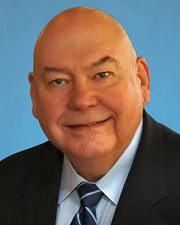
Sherida Paulsen, FAIA is the 2009 president of the New York Chapter of the American Institute of Architects, New York, N.Y.
Tags:
Spotlight Content
MORE FROM Spotlight Content
The commercial classroom: Capital gains taxes - by Edward Smith
Generally, when you sell the home you live in and any commercial property you own, it may be subject to capital gains taxes. Always, before you take a listing, advise your client to speak to their accountant about



.png)

Quick Hits


Columns and Thought Leadership

From vacancy to vitality: How adaptive reuse is reshaping Long Island’s CRE landscape - by Andrea Tsoukalas Curto
Adaptive reuse has become one of the most important conversations in commercial real estate today. Long Island has a large inventory of aging retail, office and industrial

2026 Developing Queens: Long Island Board of Realtors advances commercial growth and advocacy in Queens
The Long Island Board of Realtors (LIBOR) Commercial Network continues to play a key role in advancing opportunities and strengthening the commercial real estate landscape across Queens. Through targeted programming and global outreach

2026 Developing Long Island: ERG Commercial Real Estate launches its new Retail Leasing division
North Hempstead, NY ERG Retail Leasing is the dedicated leasing division of ERG Commercial Real Estate, an established full-service commercial real estate brokerage for over 35 years.

CRE Guide Featured Company: Merritt Environmental Consulting Corp.
Merritt Environmental Consulting Corp. (MECC) was established in June of 2009 after being part of a larger engineering firm for almost 20 years. The focus of the company is to assist lending institutions, attorneys, real estate investors, and property owners with environmental concerns. Today, MECC has offices in New York, Florida, and Vermont and has grown into a regional consulting firm serving clients along the East Coast.