



News:
Brokerage
Posted: December 17, 2007
Preserving affordable housing: New challenges for old cities
Boston mayor Thomas Menino was the keynote speaker at a panel presentation, last month at The Harvard Club in N.Y.C., on new challenges for creating affordable housing, returning abandoned buildings and vacant apartment units to the marketplace, and dealing with less-sexy infrastructure issues, such as sewers, when gleaming new high-rises commanding breath-stopping views and price tags want to move into the neighborhood. The event was sponsored by the Drum Major Institute of Public Policy, a non-partisan, non-profit think tank whose areas of interest include issues impacting "the increasingly fragile middle class."
Menino's opening remarks were peppered with some unflattering opinions about what he perceives as the lack of a national policy for building new affordable housing. He also did not miss the opportunity to poke some gentle fun at his N.Y. audience, claiming to have the Boston Red Sox' 2007 World Series Championship trophy in his car and offering a closer look at it to anyone interested. That prompted one member of the audience to pipe up that word had just been received the mayor's car had been towed!
As mayor of one of the top 25 largest cities in the country and perhaps the most historic one, Menino said he has to juggle several considerations when a new development is proposed. "I'm a preservationist at heart but if a historic building has to be taken in the process of redevelopment, I have to weigh all of the issues," the mayor told his audience of mostly affordable housing advocates. The challenge of allowing developers to maximize the return on their investment has to be weighed against more global issues impacting entire neighborhoods, such as unwelcome gentrification.
One strategy that Boston has used effectively to reduce the city's inventory of abandoned buildings has been its…um, "popular" "House of Shame" television commercial series broadcast on Boston stations. The series' format: Feature side-by-side photos of the luxury, often suburban residences of Boston landlords alongside their investment properties in Boston proper that they have failed to properly maintain. "It's embarrassing but an excellent motivator" to return the properties to market. Since the series began in 1997, Menino said Boston's inventory of abandoned residential and mixed-use buildings has dropped a combined average of 66%.
A few developers in the audience righteously expressed their opinion that they are entitled to get the greatest return on their investment as possible. No argument there. But at what price and to whom, asked Carlton Collier, a panelist.
"Condos are being built at W. 145th St. and Eighth Ave. Studios are going for 'as low as' $300,000 and they call this affordable," said Collier, executive director of the Parodneck Foundation for Self-Help Housing and Community Development. The not-for-profit organization provides financial, technical and organizing assistance to N.Y.C.'s self-help housing and community development efforts.
Fellow panelist and Manhattan borough president Scott Stringer said, "The feeling of community leaders is that all this luxury housing is happening and (they're) not a part of it. We have to beef up grassroots understanding of this new paradigm" which changes historic zoning codes to allow for a different use redevelopment.In Yonkers, new luxury housing construction has to include 20% of affordable housing, according to Chuck Lesnick, Yonkers city council president and co-chair of the council's real estate committee. Speaking from the floor during the "Q&A" session, Lesnick added that "From a green perspective, it's good to recycle these buildings. However, historic preservationists and housing advocates are often at loggerheads."
Brad Lander, director of the Pratt Center for Community Development, a not-for-profit that works for "a more just, equitable and sustainable city" said, "The system is broken for pro-active planning. It needs to be reformed to put communities in front…N.Y.C. needs to add to its menu of affordable housing programs in a way to return to the housing market vacant units." Borough president Stinger concurred noting that while N.Y.C.'s community board structure has been in place since the 1950s, "It is broken. We haven't been able to give it power." He was optimistic about at least one notable step towards the road to repair. In Manhattan, 125-155th Sts. have been designated as a Community Special District, giving long-term residents there stronger muscles, more bass to their voices and, perhaps, more than just a cameo appearance as the gentrification process of neighborhoods in N.Y. continues to get played out.
Rob Seitz is a commercial real estate agent at Goldschmidt & Associates, Scarsdale, N.Y.
Tags:
Brokerage
MORE FROM Brokerage
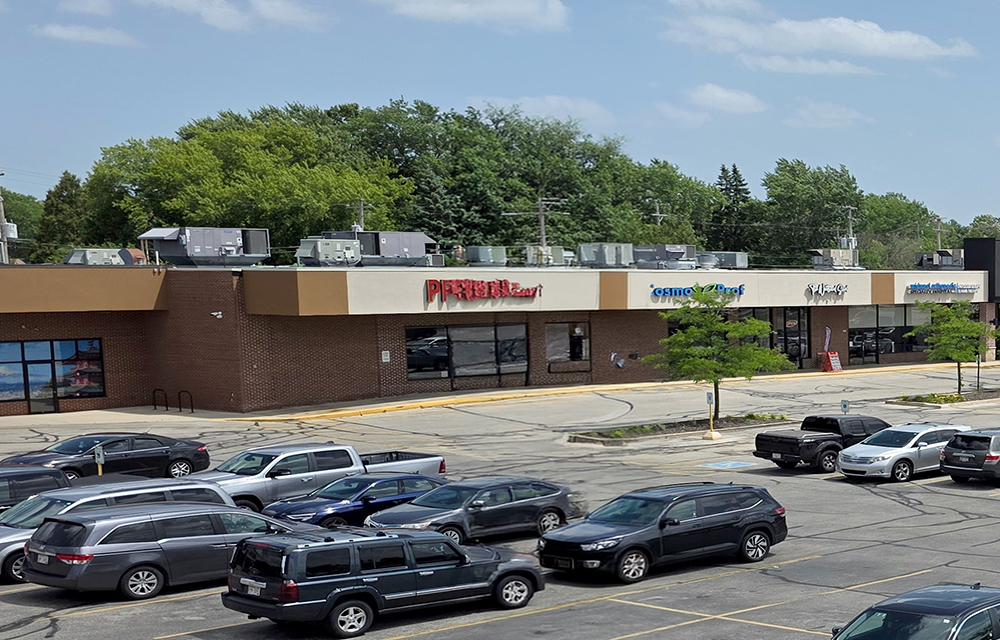
United Properties Corp. expands Wisconsin and Illinois retail presence adding 200,000 s/f
West Allis, WI United Properties Corp. completed two retail acquisitions totaling $27.4 million across Illinois and Wisconsin, adding 205,000 s/f of shopping center space to its portfolio




Columns and Thought Leadership

New York’s streets are full again, and the retail numbers prove it - by Noam Aziz
Walk down any New York block this year and you can feel it. The sidewalks are crowded, the storefronts are lit, and the energy that defines this city is back at full volume.

A guide to finding the right NYC property management company - by Sanjay Gandhi
Being a small to midsize landlord in NYC is an increasingly demanding endeavor. From navigating complex regulations, increased compliance demands to dealing with tenant issues and remediating violations. It is wise to enlist the assistance of a partner, a professional

Positive forecast for New York’s pro-housing push? - by Philip Butler
New York’s housing crisis remains a hot button topic despite growing consensus that varied and affordable housing is desperately needed statewide. Governor Hochul has recently introduced several initiatives to overcome N.Y.’s anti-housing

Hunt commercial real estate question and answer: Fortune 500 wisdom - by David Hunt
Yes, there are lessons to be learned from the largest companies in America when comes to managing your real estate. But the decision to buy or lease real estate may not be one of
.gif)