



News:
Brokerage
Posted: November 26, 2012
Prepare yourself and your property for the next building emergency
In the wake of super storm Hurricane Sandy many NYC residents are still struggling to get their properties up and running. The storm shut off the lights and flooded basements that were equipped with generators designed to offer redundancy to light the property's hallways and common areas.
Owners are now tasked with re-examining their buildings' safety systems. Everyone should be thinking not only about backup power and emergency lighting, but also the idea of what system redundancies and other methods might be used to improve safety.
While costly generators are being installed, even small investments can make a major improvement. Building owners are well advised to look into photoluminescent egress guidance systems to help improve safety for building occupants.
When there is an emergency such as smoke or power outage, people evacuating can become confused, disoriented and sometimes panic. In emergency situations the first response is to quickly move people from danger to safety quickly.
Using photoluminescent "glow-in-the-dark" emergency exit signs and emergency pathway marking systems and low-level photoluminescent exit signs will reduce confusion and panic. Photoluminescent safety signs help to save lives by clearly illuminating the path to exits and safety.
Understanding
Photoluminescence
The photoluminescent glow-in-the-dark phenomenon comes from rare earth mineral crystals found in nature that have the unique capacity to absorb and store energy from ambient light. When the lights dim or go out, the absorbed light energy is released, and the crystals emit a luminous glow. The glow commences automatically without any human, mechanical or electrical intervention. It is precisely this automatic activation that renders photoluminescent products useful during an emergency.
A typical photoluminescent system calls for a combination of signs, strips and directional symbols strategically placed where building occupants and visitors can easily see them. Photoluminescent pathway markings define all evacuation routes and provide visual guidance for safe, rapid, orderly egress. The glowing directional signs and symbols evoke comfort and alleviate confusion and panic in fire, smoke and blackout conditions.
Unfortunately inequality is the status quo. Not all high-rise buildings are created equal-commercial office towers have far more safety requirements than residential towers; and with condo high-rises all around the city, that lack of emergency preparedness could be costly, even deadly.
Building safety code requirement differences were partially addressed with the adoption of Local Law 26, which revised the buildings codes for high-rise office properties in 2004; but these safety laws don't address all the challenges that residents could face in a high-rise residential building.
Local Law 26 of 2004 made a significant improvement to the safety of commercial high-rise office buildings 75 ft. and higher. But other people living in N.Y.C. residential high-rises do not have this same safety benefit.
It should now be obvious that blackouts and fires are non-discriminatory events. Shouldn't all people in N.Y.C. have the same safety benefit in any/all high-rise structures? If a person must evacuate a building it should not be just the high-rise office workers that can get out safely. It is also important to point out that the majority of fire tragedies that kill people often occur in the most economically challenged neighborhoods of the city.
Its time for all building owners and property managers must reexamine their buildings safety measures. The relatively low cost to install non-electric photoluminescent low-location pathway markings is proven method to help control the response to a blackout, fire or smoke emergency and prevent the situation from disintegrating into disorder and chaos.
It is important for building owners to understand and recognize that the essence of the concept of liability is the negligent failure to plan for accidents that could have been avoided. At this time of cleaning up and reevaluating property owners and managers must review their buildings safety measures and emergency response plans, along with evacuation plans for their buildings.
Evan Lipstein is the president and owner of Hyline Safety Co., Manhattan, N.Y.
Tags:
Brokerage
MORE FROM Brokerage
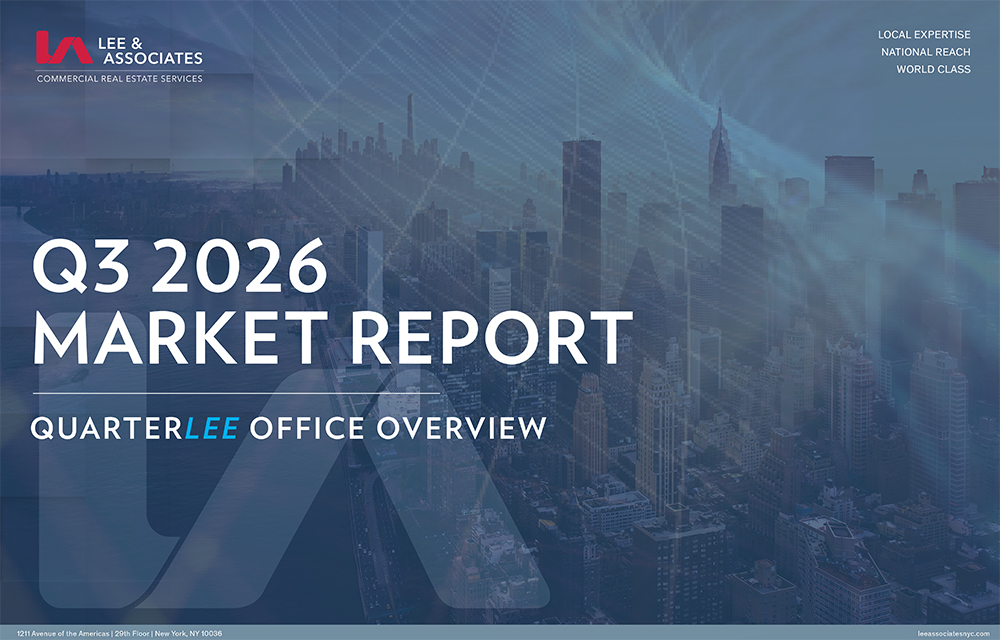
Manhattan office leasing tops 10 million s/f for ninth consecutive quarter, Lee & Associates NYC reports
Manhattan, NY Manhattan’s office market continued its recovery in the third quarter of 2026, recording more than 10 million s/f of leasing activity for the ninth




Quick Hits

Columns and Thought Leadership

New York’s streets are full again, and the retail numbers prove it - by Noam Aziz
Walk down any New York block this year and you can feel it. The sidewalks are crowded, the storefronts are lit, and the energy that defines this city is back at full volume.

Hunt commercial real estate question and answer: Fortune 500 wisdom - by David Hunt
Yes, there are lessons to be learned from the largest companies in America when comes to managing your real estate. But the decision to buy or lease real estate may not be one of

Hunt CRE question and answer: Choosing a real estate agent - by David Hunt
First, we will only work with one agent exclusively. The primary reason is that we want that agent to legally represent our client’s interests. In New York State, a real estate agent has a fiduciary

A guide to finding the right NYC property management company - by Sanjay Gandhi
Being a small to midsize landlord in NYC is an increasingly demanding endeavor. From navigating complex regulations, increased compliance demands to dealing with tenant issues and remediating violations. It is wise to enlist the assistance of a partner, a professional
.gif)