



News:
Brokerage
Posted: November 3, 2020
Polsinelli of Compass sells Manhattan property for $7.5 million

New York, NY Adelaide Polsinelli, vice chair of Compass has sold 207 East 32nd St., the beaux-arts headquarters of celebrated graphic artist, Milton Glaser.
The property is located between 2nd and 3rd Aves. It is a 9,000 s/f boutique office building, which was the clubhouse for Tammany Hall Central Association in 1920, and later became the home of New York Magazine.
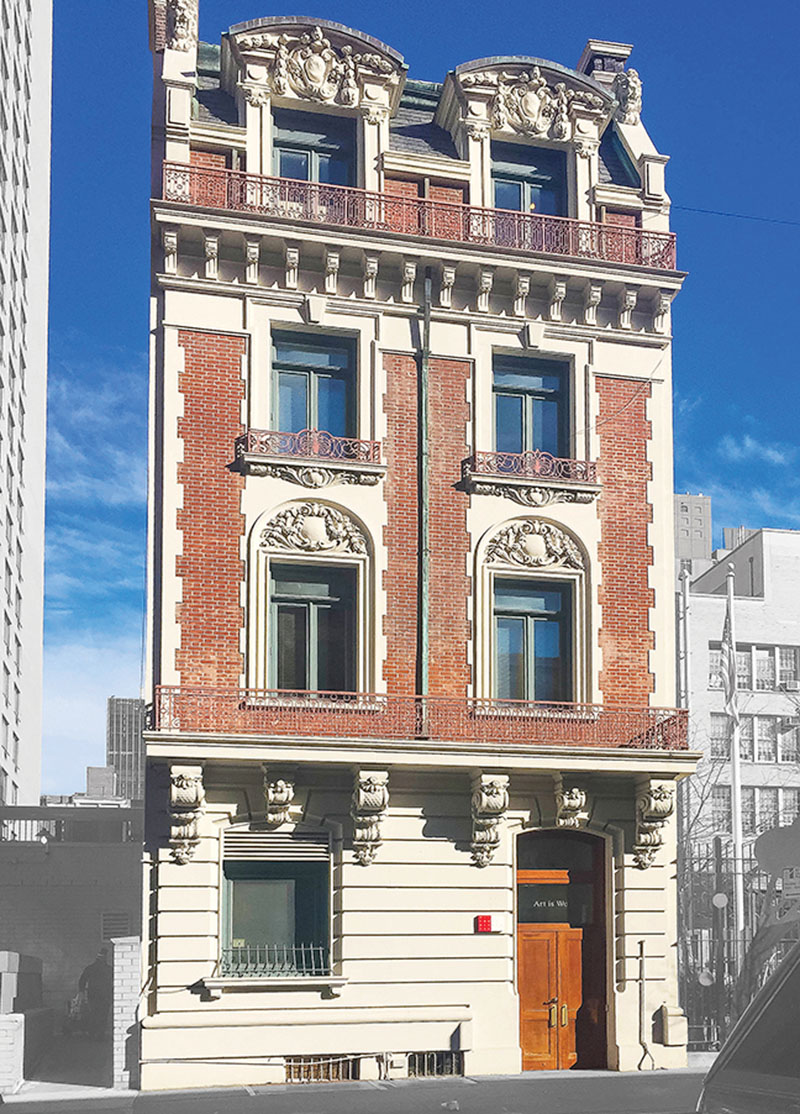
The Tammany Central Association made every effort to impress in 1920 to build this Beaux-Arts building, which was originally built for use as a magistrates’ court, by architect, Robert Lyons. Around a quarter century later, New York Magazine was co-founded by Milton Glaser and 207 East 32nd St. became its headquarters. It began as a supplement to The New York Herald Tribune in 1963. Through its narrow door went writers like Jimmy Breslin, Tom Wolfe and Gloria Steinem. Soon after, the building became the headquarters to graphic artist, Milton Glaser. It is here that many of his iconic works were created. He designed the world renowned, “I♠NY” logo, among many other significant works.
When asked about the challenges to sell this property during a pandemic, Polsinelli said, “I began the marketing process in 2019 and was able to identify purchasers who could feel the “magic” in this iconic building. By introducing nontraditional bidders to the sales process, I successfully found two who simply had to have the building. After a competitive bidding process, Milton chose the buyer who would continue the legacy of greatness that has always filled the space.”
“The pandemic caused a reset in values. Having nimble and creative attorneys on both sides, made all the difference in facing the hurdles while crafting solutions to get the deal closed,” said Polsinelli.
The eventual sale price was $7.5 million, equating to $833 per s/f. The purchaser is the NY Review of Books.
“207 East 32nd St. is an iconic building whose walls were filled with history and beauty,” said Polsinelli. “This was a rare opportunity to continue the legacy of exceptional ownership of this iconic trophy.”
Best known for his timeless “I♠NY,” logo, Glaser created many works of art that have framed our culture and captured significant moments in time. He passed away on his birthday, June 26th, 2020, in the midst of the pandemic. His attorney was represented by Charles Rich, of
Rottenberg Lipman Rich, P.C.
Tags:
Brokerage
MORE FROM Brokerage

Adirondack Capital Partners arranges $45 million sale of West Chelsea development site to Toll Brothers
Manhattan, NY Adirondack Capital Partners (ACP) closed the $45 million sale of 126/128 Tenth Ave. and 456 W. 18th St. to Toll Brothers City Living. The acquisition forms part of a broader






Quick Hits
 (2).gif)

Columns and Thought Leadership

Positive forecast for New York’s pro-housing push? - by Philip Butler
New York’s housing crisis remains a hot button topic despite growing consensus that varied and affordable housing is desperately needed statewide. Governor Hochul has recently introduced several initiatives to overcome N.Y.’s anti-housing

Hunt commercial real estate question and answer: Fortune 500 wisdom - by David Hunt
Yes, there are lessons to be learned from the largest companies in America when comes to managing your real estate. But the decision to buy or lease real estate may not be one of

New York’s streets are full again, and the retail numbers prove it - by Noam Aziz
Walk down any New York block this year and you can feel it. The sidewalks are crowded, the storefronts are lit, and the energy that defines this city is back at full volume.

A guide to finding the right NYC property management company - by Sanjay Gandhi
Being a small to midsize landlord in NYC is an increasingly demanding endeavor. From navigating complex regulations, increased compliance demands to dealing with tenant issues and remediating violations. It is wise to enlist the assistance of a partner, a professional
.gif)