



News:
Brokerage
Posted: March 10, 2014
Phillips Edison-ARC Shopping Center REIT Inc. enters into an unsecured revolving credit facility for up to $600 million of availability; market leading terms and structure
Phillips Edison-ARC Shopping Center REIT Inc., through Phillips Edison-ARC Shopping Center Operating Partnership, L.P. entered into an unsecured credit facility that provides aggregate revolving loan borrowings of up to $350 million, initially priced at 130 basis points over LIBOR based on the company's current leverage ratio. Through an accordion feature and subject to certain conditions, the Company may increase availability under the Credit Facility to up to $600 million. At closing, the Credit Facility had no outstanding balance.
The Credit Facility has a four year term, maturing in December 2017 with two 6-month extension options at the Company's option, which if exercised by the Company, would extend the maturity date to December 2018. The Credit Facility also has a pricing conversion feature, making pricing even more attractive should the Company become investment grade. The Credit Facility replaces the Company's previous $265 million secured credit facility.
"We view this as a major milestone for the Company, allowing us to convert to an unsecured structure while significantly reducing our overall cost of capital, enhancing our liquidity, and strengthening our balance sheet," said Jeff Edison, chairman and CEO. "We appreciate the continued partnership with, and commitment from, our banking relationships as we continue to perform and execute on our strategy."
Devin Murphy, CFO, said "We believe that this execution is indicative of the deep relationships that the Company has built within the capital markets community, evidenced by the broad base of capital commitments to this facility; we very much value that level of support and partnership."
Bank of America, N.A. is the administrative agent under the Credit Facility, while KeyBank National Association (KeyBank) and Citibank, N.A. both serve as co-syndication agents. Merrill Lynch, Pierce Fenner & Smith Incorporated, KeyBank and CitiGroup Global Markets Inc. acted as joint lead arrangers for the Credit Facility. The lending syndicate also includes UnionBank, N.A.; JP Morgan Chase Bank, N.A.; Wells Fargo Bank, National Association; PNC Bank, National Association; and Deutsche Bank AG, New York Branch.
In addition to general corporate purposes, the Company intends to use proceeds from the Credit Facility to finance the acquisition of well-occupied grocery-anchored neighborhood shopping centers having a mix of national, credit worthy retailers selling necessity-based goods and services in strong markets throughout the United States.
Tags:
Brokerage
MORE FROM Brokerage

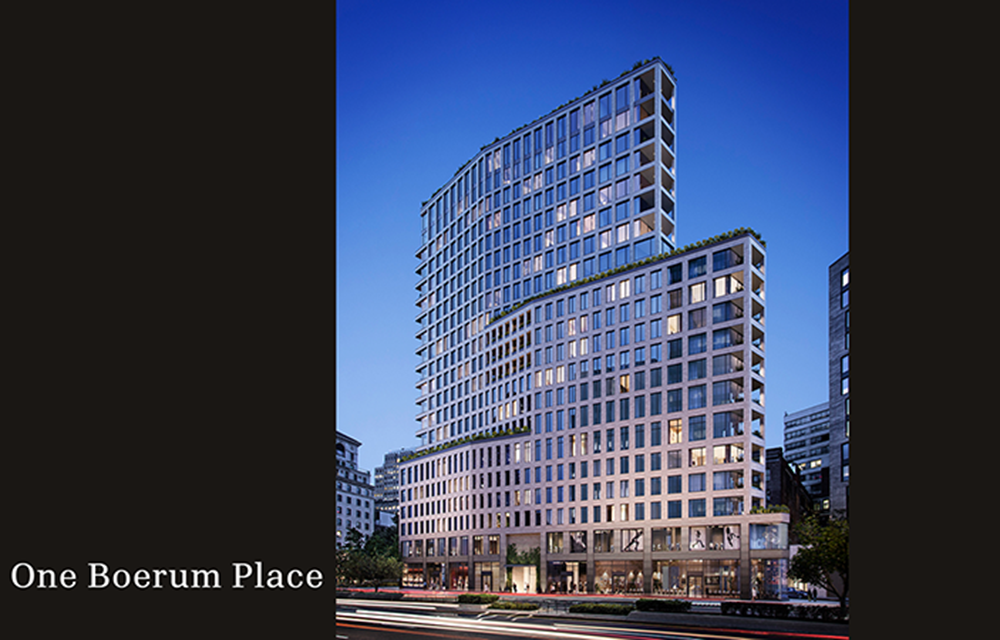
200E20TH sells out in Gramercy, penthouse A closes out sales at the CetraRuddy-designed condominium residences
Manhattan, NY 200E20TH, the CetraRuddy-designed architectural masterwork that brought a curved, contemporary sensibility to Gramercy’s Beaux-Arts streetscape, has



 (2).gif)

Columns and Thought Leadership

Hunt CRE question and answer: Choosing a real estate agent - by David Hunt
First, we will only work with one agent exclusively. The primary reason is that we want that agent to legally represent our client’s interests. In New York State, a real estate agent has a fiduciary

New York’s streets are full again, and the retail numbers prove it - by Noam Aziz
Walk down any New York block this year and you can feel it. The sidewalks are crowded, the storefronts are lit, and the energy that defines this city is back at full volume.

Hunt commercial real estate question and answer: Fortune 500 wisdom - by David Hunt
Yes, there are lessons to be learned from the largest companies in America when comes to managing your real estate. But the decision to buy or lease real estate may not be one of

The art of investing in real estate - by Thomas Donovan
Real estate investing is as much an art as it is a skill. No one can time the market, or the factors that drive it, perfectly. Location, zoning, size, transportation, and neighborhood density give you a baseline for
.gif)