



News:
Brokerage
Posted: March 10, 2014
03-26-2014 - MBANY hosts luncheon at Cornell Club; "CMBS Five Years After the Disaster"
Mortgage Bankers Association of New York (MBANY) will host its annual spring luncheon panel on Wednesday, March 26th, Noon to 2 p.m., at the Cornell Club, 6 East 44th St. Moderating the panel, "Same As It Ever Was? - CMBS Five Years After the Disaster," will be commercial real estate finance attorney Joseph Philip Forte of DLA Piper. Mr. Forte is a long-time leader in the CMBS business and served as general counsel for MBANY for more than ten years.
"After a near-death experience in the Financial Crisis of half a decade ago, commercial mortgage-backed securitization once again seems to be alive and well in 2014, reflecting similar enthusiasm in wide swathes of the larger commercial real estate finance market," said Joshua Stein, chair of MBANY's education committee and coordinator of the event. "At the luncheon, our panel will discuss the CMBS industry and how it still labors under regulatory uncertainty caused by legislative responses to the last crash."
The panel will feature several leaders in the CMBS market, including Sally Gordon of BlackRock; Christopher LaBianca of UBS; Doug Mazer of Wells Fargo; Daniel Rubock of Moody's Investors Service; and Ryan Severino, a real estate economist with REIS. The program is part of the MBANY educational luncheon series, arranged by Mr. Stein, sole principal of Joshua Stein PLLC and a prominent commercial real estate lawyer.
The CMBS panel will take a look back at how the Financial Crisis decimated the securitization business, what caused that implosion, the gradual return of market confidence, and today's era of extensive new legislation and regulatory requirements. Panelists will discuss whether risk retention is the right or wrong cure for existing problems and where CMBS stands today.
"At one point in the market meltdown, no one knew how to price deals or lend on commercial real estate," adds Stein. "Similar to 2007, today's market is seeing weaker loan underwriting, greater complexity, less transparency, possible mispricing, and pressure on the rating agencies. We still ask the question, 'Where will that take us?'"
Doors will open at 11:45 a.m. Lunch will be served at noon, followed by the program at 12:45 p.m. and questions and answers.
Tags:
Brokerage
MORE FROM Brokerage
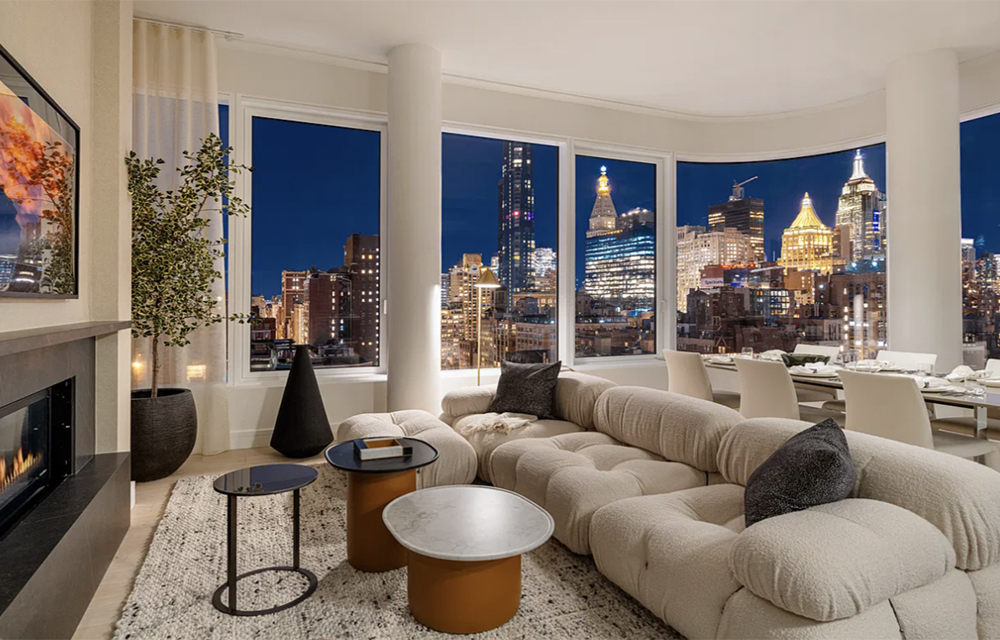
200E20TH sells out in Gramercy, penthouse A closes out sales at the CetraRuddy-designed condominium residences
Manhattan, NY 200E20TH, the CetraRuddy-designed architectural masterwork that brought a curved, contemporary sensibility to Gramercy’s Beaux-Arts streetscape, has





Quick Hits
 (2).gif)

Columns and Thought Leadership

New York’s streets are full again, and the retail numbers prove it - by Noam Aziz
Walk down any New York block this year and you can feel it. The sidewalks are crowded, the storefronts are lit, and the energy that defines this city is back at full volume.

The art of investing in real estate - by Thomas Donovan
Real estate investing is as much an art as it is a skill. No one can time the market, or the factors that drive it, perfectly. Location, zoning, size, transportation, and neighborhood density give you a baseline for

Hunt commercial real estate question and answer: Fortune 500 wisdom - by David Hunt
Yes, there are lessons to be learned from the largest companies in America when comes to managing your real estate. But the decision to buy or lease real estate may not be one of

Hunt CRE question and answer: Choosing a real estate agent - by David Hunt
First, we will only work with one agent exclusively. The primary reason is that we want that agent to legally represent our client’s interests. In New York State, a real estate agent has a fiduciary
.gif)