



News:
Brokerage
Posted: October 11, 2022
Penn Station, transit oriented development and the looming threat of eminent domain, part 2 - by Jennifer Polovetsky

Part one of this series appeared in the September 27th edition of the New York Real Estate Journal.
This article series explains the eminent domain process, which will very likely be used as part of the impending Penn Station expansion project in New York City. This second article will delve into the typical procedures around compensation for property owners and tenants.
How do property owners and tenants get paid? Do they compete against one another for the payment?
Owners and business tenants are entitled to separate condemnation awards (see Rose v. State, 24 N.Y.2d 80 (1969)). Property owners are entitled to an award for the value of their real estate based upon a highest and best use analysis, while business tenants are entitled to a separate award for their compensable trade fixtures, based upon a reproduction cost less depreciation valuation. Trade fixtures are usually machines, equipment, and/or tools that your business regularly uses in its trade, without limitation. Trade fixtures can also include certain improvements that a business owner has made to the leased premises, subject to the terms of the lease agreement.
What if the property owner or business tenant doesn’t like the compensation being offered to them by the government or its developer?
Although New York’s eminent domain laws require the condemning authority to appraise your property and offer to purchase it from you before the taking, you have the right to refuse such an offer if you believe it is too low. It is not wrong to contest or object to an initial compensation offer – you are simply exercising your statutory and Fifth Amendment rights. In such an event, the condemning authority will proceed with the seizure of your property by eminent domain, and it is obligated to make you an offer of “just compensation.” within a reasonable time after you have been forcibly stripped of your ownership rights. Oftentimes, property owners and business tenants believe that these initial post-taking offers are unfavorable. In that case, property owners and business tenants are entitled to file claims for additional compensation, in either the New York State Supreme Courts, or the New York State Court of Claims.
The main objective for condemnees is to never leave your rights on the table. I have practiced eminent domain law for 22 years, first for the government and then in the private sector. Unfortunately, I have seen too many people lose enormous amounts of money, as well as their legal rights, because they either waited too long to act or didn’t have experienced counsel. If I could give one piece of advice to potential condemnees, it would be to speak to an experienced eminent domain lawyer early on. Eminent domain is a complicated process, and the laws were enacted to make the condemnee whole financially. New York’s eminent domain laws, however, put the burden on the property owners and business tenants to fight for their financial and legal rights. Being made whole is never automatic – it is always something that condemnees and their counsel must fight for.
Jennifer Polovetsky is the co-chair of the eminent domain practice at Herrick, Feinstein LLP, New York, N.Y.
Tags:
Brokerage
MORE FROM Brokerage
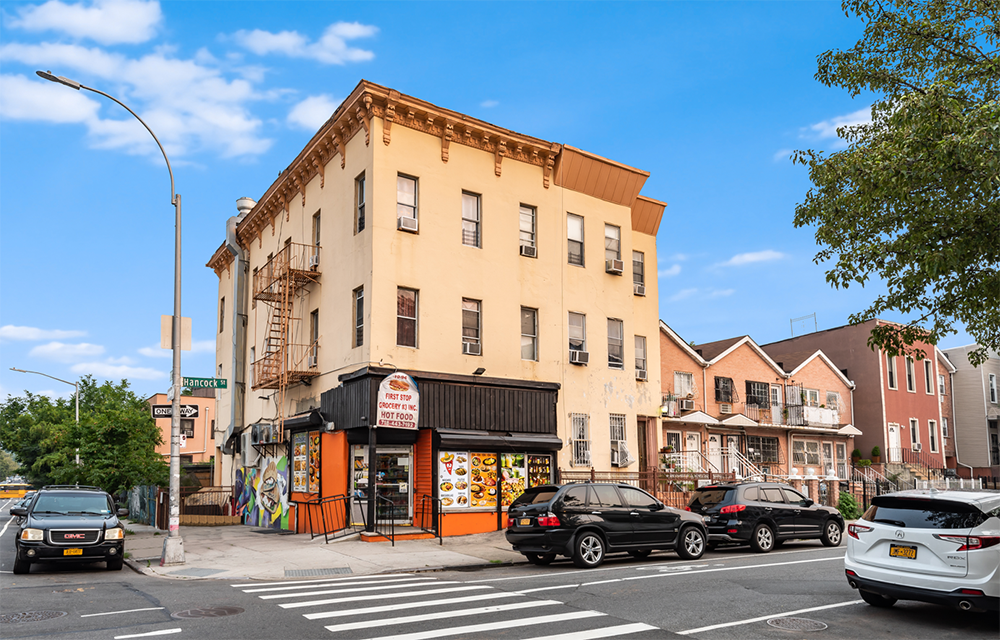
Investment Property Realty Group closes $1.75 million sale of 1094 Hancock Street in Brooklyn
Brooklyn, NY Investment Property Realty Group (IPRG), a New York-based commercial investment firm, has closed the sale of 1094 Hancock St., a mixed-use building in the Bushwick section, for $1.75 million.




Columns and Thought Leadership

Hunt CRE question and answer: Choosing a real estate agent - by David Hunt
First, we will only work with one agent exclusively. The primary reason is that we want that agent to legally represent our client’s interests. In New York State, a real estate agent has a fiduciary

Hunt commercial real estate question and answer: Fortune 500 wisdom - by David Hunt
Yes, there are lessons to be learned from the largest companies in America when comes to managing your real estate. But the decision to buy or lease real estate may not be one of

New York’s streets are full again, and the retail numbers prove it - by Noam Aziz
Walk down any New York block this year and you can feel it. The sidewalks are crowded, the storefronts are lit, and the energy that defines this city is back at full volume.

A guide to finding the right NYC property management company - by Sanjay Gandhi
Being a small to midsize landlord in NYC is an increasingly demanding endeavor. From navigating complex regulations, increased compliance demands to dealing with tenant issues and remediating violations. It is wise to enlist the assistance of a partner, a professional
.gif)