



News:
Brokerage
Posted: September 17, 2019
Outside the Region: Tax Advantage Group closes $8.5 million sale of Faith Family Medical
Nashville, TN Tax Advantage Group LLC (TAG), a consulting firm specializing in New Markets Tax Credit (NMTC) financing, closed its third NMTC transaction in a Federal Promise Zone with the funding of Faith Family Medical Center (FFMC).
There are 22 Federal Promise Zones, which are defined by The US Department of Housing and Urban Development as high poverty communities where the federal government partners with local leaders to increase economic activity, improve educational opportunities, leverage private investment, reduce violent crime, enhance public health and address other priorities identified by the community.
FFMC, is a non-profit medical center providing health, wellness and medical services to the working uninsured and other underserved people in Middle Tennessee. They are currently operating out of an aging, undersized facility located in a community with 46.2% poverty. With the help of Reinvestment Fund and SunTrust Community Capital, they were able to leverage a successful capital campaign through a NMTC financing structure to finance a new medical center, doubling their capacity, in the Nashville Federal Promise Zone.
“When we began our capital campaign to build a larger facility, we planned to build a 10,000 square foot one story building on our current property. When we heard about the NMTC program, we began to dream about the possibility of building something even bigger,” said Laura Hobson, FFMC’s president and CEO. “Through Tax Advantage Group’s leadership in walking us through the NMTC journey, we are now able to build a two story 17,000 s/f building that will allow us to grow and widen our reach even more. The expansion of our services would not be possible without the NMTC program, and that program would have been unattainable if it weren’t for Tax Advantage Group’s diligent work and guidance throughout the process.”
Aimed at stimulating investment and economic growth in low-income communities (LICs), TAG’s current portfolio consists of investments in areas with poverty rates as high as 66.6%, median family income as low as 14.24%, and unemployment rates as high as 31.2%. TAG NMTC Program senior manager Pete Byford, said, “We could not have delivered these financially sound, impactful projects without our investors, our amazing borrowers, and our community partners.”
Tags:
Brokerage
MORE FROM Brokerage

Bestreich, Reynolds, Davila, and Flaherty of Investment Property Realty Group close $1.97 million sale of 343A Tompkins Ave. in Bed-Stuy
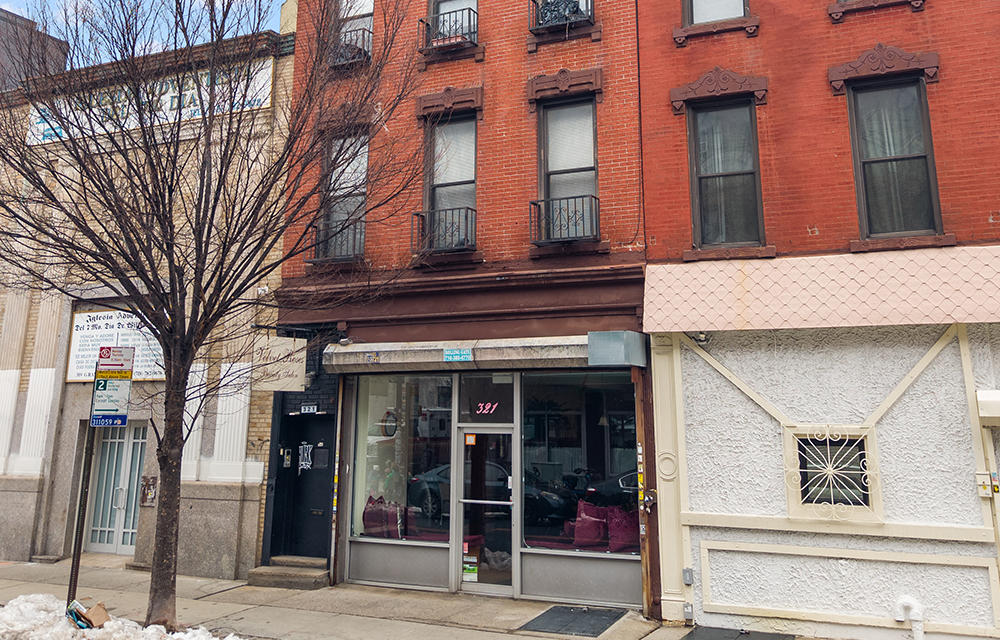
Brooklyn, NY Investment Property Realty Group (IPRG) closed the sale of 343A Tompkins Ave., a mixed-use building located in the Bed-Stuy section of the borough, for $1.97 million.



Quick Hits

Columns and Thought Leadership

Hunt CRE question and answer: Choosing a real estate agent - by David Hunt
First, we will only work with one agent exclusively. The primary reason is that we want that agent to legally represent our client’s interests. In New York State, a real estate agent has a fiduciary

New York’s streets are full again, and the retail numbers prove it - by Noam Aziz
Walk down any New York block this year and you can feel it. The sidewalks are crowded, the storefronts are lit, and the energy that defines this city is back at full volume.

Hunt commercial real estate question and answer: Fortune 500 wisdom - by David Hunt
Yes, there are lessons to be learned from the largest companies in America when comes to managing your real estate. But the decision to buy or lease real estate may not be one of

A guide to finding the right NYC property management company - by Sanjay Gandhi
Being a small to midsize landlord in NYC is an increasingly demanding endeavor. From navigating complex regulations, increased compliance demands to dealing with tenant issues and remediating violations. It is wise to enlist the assistance of a partner, a professional
.gif)