



News:
Brokerage
Posted: July 12, 2022
Opportunity for commercial real estate is in the eye of the beholder - by Mark Fogel

Viewing the complex commercial real estate industry through an asset management lens may be the key to surviving – and thriving – in 2022’s tumultuous economic landscape.
At press time, the Fed was raising rates to help stave off a four-decade-high of inflation. Reports abound of declining U.S. retail sales due to rising gasoline prices and interest rates, displaying additional evidence that the economy is losing momentum.
The focus has been on the evident challenges facing the commercial real estate industry—and with good reason. However, while the challenges are evident, a more productive discussion should be centered on the implementation of solutions and uncovering the opportunities that lie beneath the surface.
Many asset classes within the commercial real estate industry have struggled as of late due to myriad post-pandemic repercussions such as supply constraints and labor shortages. This caused many lenders to hold a myopic focus on the bread-and-butter multifamily and industrial asset classes, while shying away from retail, hospitality, and office.
When commercial real estate lenders crowd into the same space, the window of opportunity closes. That’s why we don’t eliminate an entire asset class from consideration. We take a wider—and deeper—look at the components of the package as a whole. These include strong sponsorship, a supportable and comprehensive business plan, and an ability to execute on that plan.
Where The Opportunities Are
Almost a year ago to the day, I wrote a blog post advising sponsors that one of the strongest opportunities in commercial real estate is in retail, despite the fact that many traditional retail properties suffered for years due to the rapid growth of e-commerce.
Since that time, it seems that some investors have gotten the memo, especially with well-situated, well-anchored retail locations. Even if not well-anchored, prime retail locations can do well with a different tenant mix. Those in less-optimal locations can thrive by redeveloping those properties into experiential assets.
The tipping point depends upon the strength and vision of the sponsor.
What constitutes a strong sponsor?
Developers who are local to their markets and understand the needs of their communities typically have a greater ability to execute on business plans given their familiarity with city officials, contractors, and other development partners. Combined with the right capital, cost structure, and plan, this usually leads to a successful outcome. But even as the sponsors are now coming around to that point of view, therein lies the next challenge: Securing debt.
Many lenders are still hesitant to lend on retail assets, still relying on the tried-and-true, but crowded, multifamily and industrial asset classes.
We don’t see it that way. We are intrigued by the opportunities presented by out-of-favor properties.
Opportunity is in the Eye of the Beholder
The original use of many properties across this country may have been rendered obsolete, yet several of them—especially older malls and hotels—are situated at prominent “main and main” locales in their respective markets. The old real estate adage of location, location, location rings true in these cases, despite what their original intended use may have been.
We love to work with borrowers who can see the possibilities in properties like these. Combined with the right capital, cost structure and plan, this usually leads to a successful outcome. We have both high standards and high tolerance for complex deals—which is exactly what this current environment provides.
Viewing the complex commercial real estate industry through an asset management lens is the key to surviving—and thriving —in 2022’s tumultuous economic landscape.
Mark Fogel is the CEO and president of ACRES Capital, Uniondale, N.Y.
Tags:
Brokerage
MORE FROM Brokerage
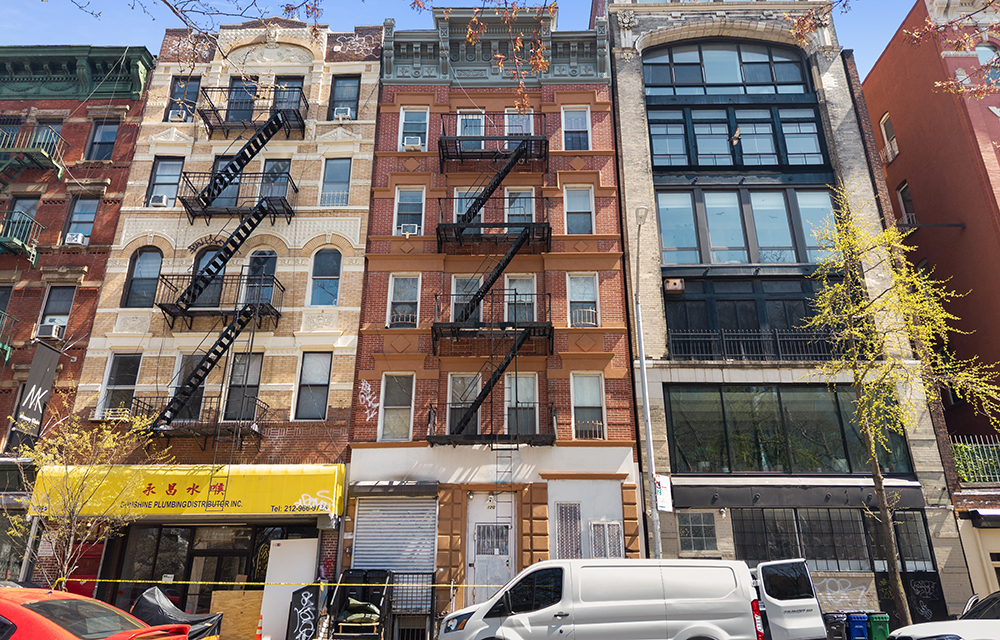
Investment Property Realty Group sells 120 Forsyth St. for $1.35 million
Manhattan, NY Investment Property Realty Group (IPRG) closed the sale of 120 Forsyth St., a mixed-use building located in the Lower East Side section of the city, for $1.35 million.




Columns and Thought Leadership

Hunt commercial real estate question and answer: Fortune 500 wisdom - by David Hunt
Yes, there are lessons to be learned from the largest companies in America when comes to managing your real estate. But the decision to buy or lease real estate may not be one of

A guide to finding the right NYC property management company - by Sanjay Gandhi
Being a small to midsize landlord in NYC is an increasingly demanding endeavor. From navigating complex regulations, increased compliance demands to dealing with tenant issues and remediating violations. It is wise to enlist the assistance of a partner, a professional

New York’s streets are full again, and the retail numbers prove it - by Noam Aziz
Walk down any New York block this year and you can feel it. The sidewalks are crowded, the storefronts are lit, and the energy that defines this city is back at full volume.

Positive forecast for New York’s pro-housing push? - by Philip Butler
New York’s housing crisis remains a hot button topic despite growing consensus that varied and affordable housing is desperately needed statewide. Governor Hochul has recently introduced several initiatives to overcome N.Y.’s anti-housing
.gif)