Romer Debbas LLP




From all different angles, real estate can look different for everyone involved. Buyers see the tangible, brokers focus on facilitating the transaction to the satisfaction of the buyers and sellers, and the attorneys cross the proverbial t’s and dot the i’s to ensure that all interests are protected.
There is not a lot of renegotiation. By and large, sellers are getting their price and there is movement at all price points. On the new development side, concessions are being offered, and buyers who signed contracts pre-pandemic are moving ahead with closings. We are both seeing properties at the $3 million and under mark moving quite quickly, as expected for that price. However, the higher end of the market – specifically $7 million and up – is garnering attention and gaining momentum, furthering proving confidence in the city and reinforcing the enduring value of real estate.
Buyers proceeding with urgency. As pent-up demand and excess inventory collided, “Let’s get this apartment into contract, I don’t want to lose it!” was the overarching sentiment of January and February, two of the busiest months in recent market history.
On the state level, there is a fear the looming pied-a-terre tax. All eyes are on the proposed pied-a-terre tax, which if passed, is poised to have a negative impact on the sale of larger units. On the national level, there is a sense of positivity with the new administration; however, in New York we are seeing a contrasting sentiment. Although a lot of optimism in the residential market currently, the new development market is still struggling to find its footing. 50% of the new units that came on the market since 2018 have remained unsold, and this tax will only make it harder to sell those units. An additional tax will only stand to hurt the still-recovering New York City real estate market.
New York City always recovers. Similar to how the whole real estate industry works together, so does New York City. Launching just a few years ago, New York Real Estate Center has awarded over 10,000 certificates to participants just during the pandemic. This further proves that the mentality within the real estate market in New York has remained optimistic, with people looking to the future.
With client service and professionalism informing all interactions, the pros also discussed the importance of agent education and the launch of New York Real Estate Center. Although the plans for NYRE Center pre-dated the pandemic, the March 2020 availability of an online platform proved to be incredibly timely. NYRE Center provided a forum for agents to remain connected and engaged while satisfying continuing education requirements.
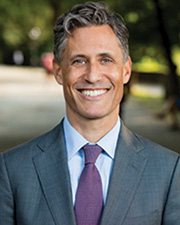
Michael Romer is managing partner of Romer Debbas LLP and principal of New York Real Estate Center. Scott Harris is a licensed associate real estate broker at Brown Harris Stevens. Harris hosted Romer on Talking New York to discuss the New York real estate market, and contributed to this article.


 (2).gif)





.gif)