



News:
Brokerage
Posted: July 30, 2024
NYC housing market: Renters are opting to renew leases - by Sam Eshaghoff

Gone are the days when every lease expiration prompted a hunt for a better apartment or a better deal. In a notable shift in the New York City housing market, more and more renters are opting to renew their leases. Here’s how high rents change the traditional dynamics, and keep renters in their existing apartments:
It has become costlier than ever to move. When renters move from one apartment to the next, it’s not a free and painless transition: broker fees and moving costs are formidable. Since rents are as high as ever, so are broker fees, which are calculated based off the rent amounts. It’s not uncommon for broker fees on a rental apartment to exceed $10,000 in today’s market. Moving costs are also cumbersome; aside from hiring a moving company, renters often have to take a day off work to supervise the move. Altogether, these moving costs are significant barriers, so avoiding them is an economical win for renters. Tenants have become wise to this dynamic, and they are increasingly requesting lease terms of two or more years. “Historically 50-60% of leases run for more than a year” says Dan Mordekai, senior agent at active rental brokerage REAL New York. “That number is more like eighty five percent now.”
Landlords also would prefer their tenants to stay. Leases signed in the past two years have locked tenants into top-of-the-market rents, and if a tenant is in good standing, a landlord has no reason to let that tenant go. With memories of vacancies during the pandemic still fresh, many building owners are offering modest rent increases — or none at all — on renewals. As a matter of fact, the landlord has some leverage in the renewal transaction today, knowing that tenants want to avoid moving costs and will likely agree to a small increase as the lesser evil. This dynamic is leading to many tenants begrudgingly but decisively agreeing to paying slightly-above-market rent to stay in their current apartment.
Good cause eviction reinforces stickiness. With the recent pass of the Good Cause Eviction Law, landlords effectively must offer tenants renewals, provided the renewal rent is within the rate of inflation. De jure, this keeps some tenants in their apartments who would otherwise have not been offered a renewal. More importantly, since landlords are now at risk of being “stuck” offering renewals to potentially problematic future tenants, landlords are even likelier to induce good tenants to stay.
Fewer children; less reason to move. Another confounding factor is a lower-than-ever birth rate. Household growth and upsizing has been a normal part of historical apartment turnover, but with fewer households needing to upsize, fewer people have reason to leave their apartment in search of more space.
The second order outcome: there is a shortage of apartments for rent. If more people are staying in their apartments, there is less “churn”, and there are fewer apartments available for new renters in the market. Naturally, fewer available apartments means that prices for available apartments goes up. High rents got us here in the first place, and now the market is in a positive feedback loop, with moving costs rising further, and even fewer tenants moving in the future.
What was once a tumultuous market of renters moving every year-or-two seems to actually be transforming into a market where people stay in their homes, good tenants are rewarded, and there is some semblance of stability.
Sam Eshaghoff is the managing principal of West Egg Development, Great Neck, NY.
Tags:
Brokerage
MORE FROM Brokerage
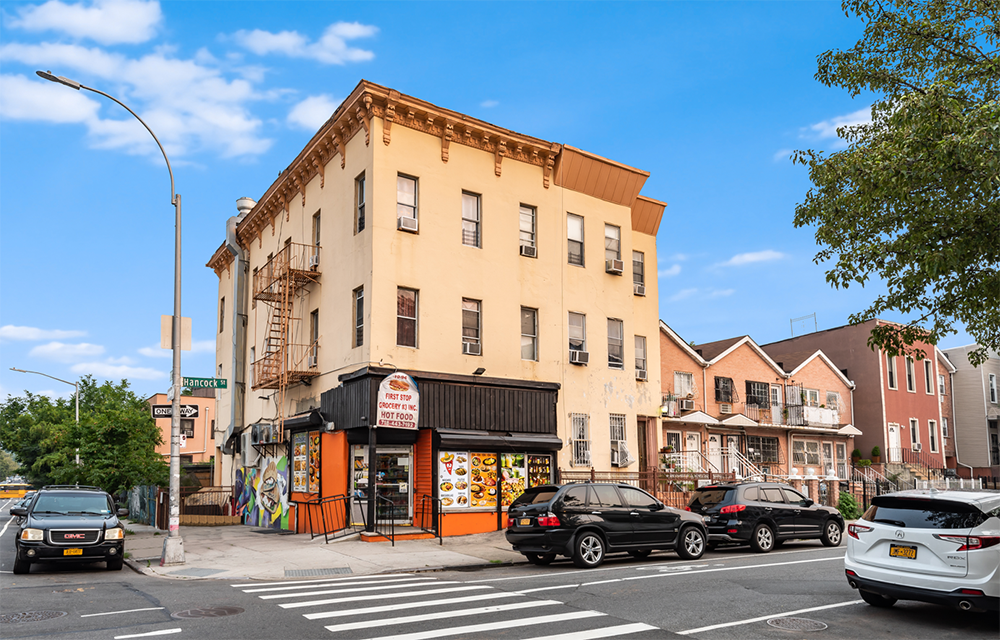
Investment Property Realty Group closes $1.75 million sale of 1094 Hancock Street in Brooklyn
Brooklyn, NY Investment Property Realty Group (IPRG), a New York-based commercial investment firm, has closed the sale of 1094 Hancock St., a mixed-use building in the Bushwick section, for $1.75 million.



Quick Hits
 (2).gif)

Columns and Thought Leadership

Hunt CRE question and answer: Choosing a real estate agent - by David Hunt
First, we will only work with one agent exclusively. The primary reason is that we want that agent to legally represent our client’s interests. In New York State, a real estate agent has a fiduciary

A guide to finding the right NYC property management company - by Sanjay Gandhi
Being a small to midsize landlord in NYC is an increasingly demanding endeavor. From navigating complex regulations, increased compliance demands to dealing with tenant issues and remediating violations. It is wise to enlist the assistance of a partner, a professional

Hunt commercial real estate question and answer: Fortune 500 wisdom - by David Hunt
Yes, there are lessons to be learned from the largest companies in America when comes to managing your real estate. But the decision to buy or lease real estate may not be one of

New York’s streets are full again, and the retail numbers prove it - by Noam Aziz
Walk down any New York block this year and you can feel it. The sidewalks are crowded, the storefronts are lit, and the energy that defines this city is back at full volume.
.gif)