



News:
Brokerage
Posted: January 16, 2024
New York State sales tax considerations for the commercial real estate industry - by Sapna Pillai
Commercial property owners should be aware of the rules and regulations governing the complex sales and use tax issues that affect the New York commercial real estate industry. These include the taxability of:
- certain services provided to tenants and related purchases,
- purchases by property owners for repairs and maintenance, and
- any leasehold improvements made to the building for or by the tenant.
Taxability of Certain Services Provided to Tenants and Related Purchases
For landlords who provide sub-metered electricity and other ancillary services to tenants, the purchases of such services from vendors are taxable.1 Specifically, regarding the purchase of electricity, the portion consumed by the landlord in the common areas is taxable and the landlord should pay sales tax to the vendor upon purchase.2
The landlord is responsible for collecting the sales tax on the portion sold to tenants (including all associated billing and administrative costs) and remitting it to the State.5 However, the landlord can take a credit or apply for a refund of the sales tax it paid to the utility company for the portion of the sub-metered electricity services to tenants.3
The sales of any ancillary services that are not incidental charges under the lease agreement are taxable if these services vary according to the amount of square footage leased to tenants.4
Taxability for Repair and Maintenance Services Provided to Real Property Owners
Maintenance, service, and repair activities that relate to keeping real property in a condition of efficiency or restoring it to such condition are considered taxable. However, renovations to an existing structure that result in a capital improvement are exempt from New York sales and use tax.5
A capital improvement is an alteration that adds value to real property, becomes part of real property and intended to be a permanent installation.6
Taxability Of Leasehold Improvements
Additions or modifications to real property for or by a lessee are presumed to be temporary in nature and do not qualify as capital improvements unless there is a demonstrated intention to make them permanent.7
New York City Commercial Rent Tax
Finally, an important consideration is the commercial rent tax imposed by New York City.
The commercial rent tax (CRT) imposed by New York City is at 6% of base rent. This tax is charged to tenants who a) occupy or use a property for commercial activity in Manhattan south of 96th St. and b) pay annualized gross rent of $250,000 or more.8
All taxpayers are granted a 35% base reduction which reduces the effective tax rate to 3.9%.9
In addition, a credit is allowed if the rent is between $250,000 and $300,000, and a small business credit further reduces the tax base on a sliding scale for qualifying tenants.10
In summary, commercial real estate owners and tenants need to be aware of the rules regarding New York State sales and use tax and the city’s CRT to properly comply with the applicable payment and reporting obligations.
Endnotes:
1 New York State Statute, “Imposition of Sales Tax, § 1105 (b)(1),” https://www.nysenate.gov/legislation/laws/TAX/1105.
2 Id.; State of New York Commissioner of Taxation and Finance, “Advisory Opinion, Petition No. S060321A” (March 19, 2007), https://www.tax.ny.gov/pdf/advisory_opinions/sales/a07_8s.pdf.
3 Id.
4 Id.
5 Legal Information Institute, N.Y. Comp. Codes & Regs. Tit. 20 § 527.7, “Maintaining, servicing or repairing real property,” https://www.law.cornell.edu/regulations/new-york/20-NYCRR-527.7.
6 Id.
7 New York State Department of Taxation and Finance, “Publication 862 Sales and Use Tax Classifications of Capital Improvements and Repairs to Real Property,” https://www.tax.ny.gov/pdf/publications/sales/pub862.pdf.
8 New York City Administrative Code, “Title 11 – Taxation and Finance, Ch. 7 – Commercial Rent or Occupancy Tax § 11-701,” https://nycadmincode.readthedocs.io/t11/c07/index.html.
9 Id.
10 https://www.nyc.gov/site/finance/business/business-commercial-rent-tax-crt.page#:~:text=Beginning%20June%201%2C%202018%2C%20taxpayers,from%20the%20Commercial%20Rent%20Tax.
Sapna Pillai is a director in the tax advisory group within the real estate solutions practice at FTI Consulting, Roseland, NJ
Tags:
Brokerage
MORE FROM Brokerage
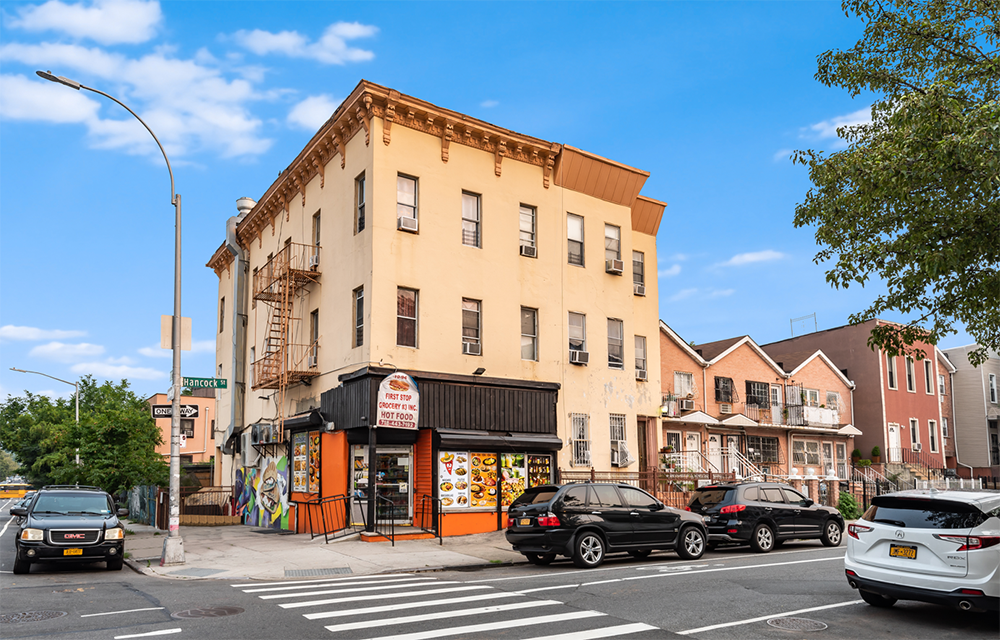
Investment Property Realty Group closes $1.75 million sale of 1094 Hancock Street in Brooklyn
Brooklyn, NY Investment Property Realty Group (IPRG), a New York-based commercial investment firm, has closed the sale of 1094 Hancock St., a mixed-use building in the Bushwick section, for $1.75 million.




Quick Hits
 (2).gif)

Columns and Thought Leadership

Hunt CRE question and answer: Choosing a real estate agent - by David Hunt
First, we will only work with one agent exclusively. The primary reason is that we want that agent to legally represent our client’s interests. In New York State, a real estate agent has a fiduciary

New York’s streets are full again, and the retail numbers prove it - by Noam Aziz
Walk down any New York block this year and you can feel it. The sidewalks are crowded, the storefronts are lit, and the energy that defines this city is back at full volume.

Hunt commercial real estate question and answer: Fortune 500 wisdom - by David Hunt
Yes, there are lessons to be learned from the largest companies in America when comes to managing your real estate. But the decision to buy or lease real estate may not be one of

A guide to finding the right NYC property management company - by Sanjay Gandhi
Being a small to midsize landlord in NYC is an increasingly demanding endeavor. From navigating complex regulations, increased compliance demands to dealing with tenant issues and remediating violations. It is wise to enlist the assistance of a partner, a professional
.gif)