



News:
Brokerage
Posted: January 23, 2018
New York City’s annual Notice of Property Value: Taxpayer aggravation and uncertainty linger - by Peter Blond

Brandt, Steinberg, Lewis & Blond LLP
President Trump arrived in January of 2017, but the January 2018 arrival of his Federal tax plan could pop his own New York real estate bubble. Whether you seemingly benefit from the plan or not, data suggests it’s a financial negative for New York. While the marketplace hasn’t had meaningful time to react, new real estate tax assessments have already been formulated. Ironically, I think real estate taxes will increase as opposed to the perception these new rules will make New York “tighten the belt.” Any drop to sales tax or local income tax collections must be accounted for on the real estate tax side of the ledger.
In New York City, assessments should arrive like tardy lumps of coal on January 16th with your annual Notice of Property Value. The notices are normally mailed by the NYC Department of Finance in mid to late January and are simultaneously available on their website. The release of the new assessments opens the 2018/19 real estate tax protest filing period, which closes – for NYC properties – on March 1st, 2018. These new assessments will impact NYC tax bills starting July 1st, 2018.
While I have written many times as to the overall value of an annual protest, it is indispensable when markets are poised to pivot downward. If you believe in the cyclical nature of markets, a downturn is statistically long overdue. If you understand how assessors assess, you realize NYC assessors are currently using 2016 performance to value all properties for taxes that run through June of 2019!
The annual Notice of Property Value (NOPV) ordinarily includes details as to your property’s inventory (e.g., s/f, age and number of stories). Just as important, it discloses the city’s estimate of your income and expenses utilized in valuing the property. To enhance transparency, the NOPV generally itemizes the financial factors considered including gross income, expenses, net operating income (NOI), base cap rate and overall cap rate.
Nonetheless, taxpayer aggravation and uncertainty linger because the income and expense approach to value is frequently more art than science. By law, and in practice, assessors use your property’s cash flow as well as comparable properties to arrive at an anticipated revenue stream. In other words, NYC isn’t constrained to assessing and taxing what you in fact collect from tenants. This counterintuitive inequity renews each January to mystify diligent taxpayers who review their annual notices. Many taxpayers imagine the figures should match their RPIE, or tax return, which were filed as legally required.
Magnifying NYC’s vague and unjust system are the blunders, by the city, which are habitually made as to a property’s size or use. Timely review of your annual notices is critical, because not identifying problems before March 1st means no assessment protest. Many property owners initially recognize the adverse change when the tax bill due July 1st is received in June. Other taxpayers detect the increase when escrow statements arrive with irreversible news, as the opportunity to challenge the assessment has expired.
Similarly, blindly accepting the NOPV as accurate can prove to be an error. Even if your actual collections and expenses match the NOPV exactly, it is still feasible that you are over-assessed. As an example, NYC occasionally considers collections as triple net, even though no tenant is liable for 100% of the real estate taxes. Erroneous triple net treatment by the NYC DOF commonly leads to an over-assessment. A more relevant example, in light of the economic environment, is a property that was operating well but perhaps lost a major tenant subsequent to filing the RPIE. In that example, disputing the assessment and clearly demonstrating a distressed situation - despite recent performance - can bolster the case for a reduction.
Clients and other property owners have recently advised me that “the assessor realizes what’s happening and will probably reduce assessments.” In my twenty years of challenging assessments I have never seen any local assessor proactively reduce valuations overall, let alone for things that might happen.
Prime example, in January of 2009, NYC released an overall assessment roll which increased in value year-over-year despite the entire world being in financial freefall for months. Combine that historical approach with a macro financial situation more akin to calendar 2006 and you have an assessor’s office with little reason to proactively reduce assessments for 2018 even though the storm watches, if not warnings, have universally begun.
As always, I urge you to review all of your annual notices on-line (nycprop.nyc.gov) for inconsistencies, instead of hoping to receive a timely hardcopy from the city. Many facets of tax certiorari can be counterintuitive, so it’s usually best to seek the advice of a licensed professional to determine whether a protest is prudent even with the aforementioned macro conditions in mind.
Peter Blond, Esq. is a partner at Brandt, Steinberg, Lewis & Blond LLP and the chair of the NYC Bar committee on condemnation & tax certiorari, New York, N.Y.
Tags:
Brokerage
MORE FROM Brokerage
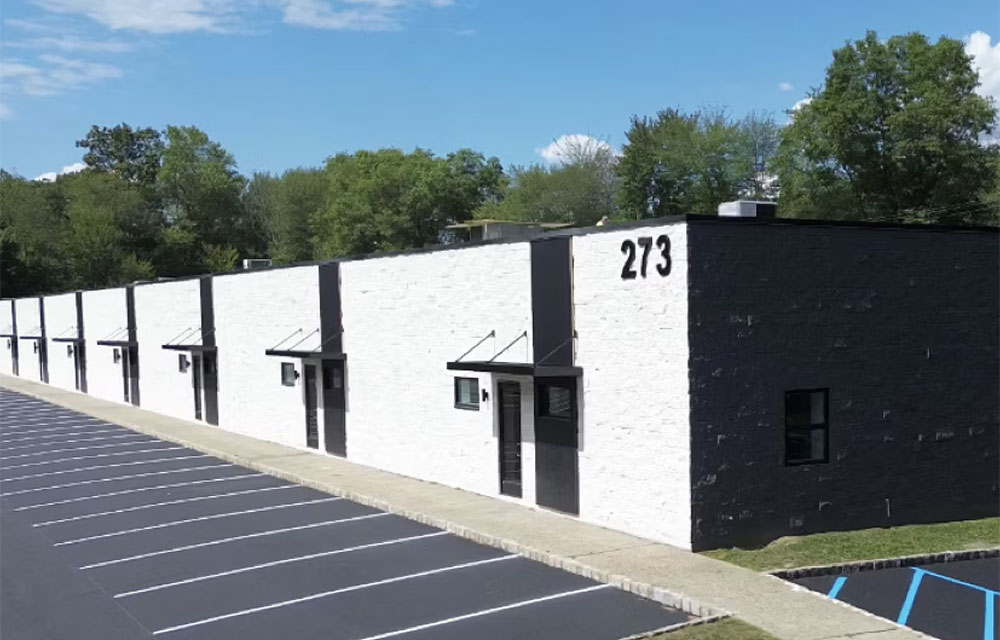
Resource Realty of Northern NJ delivers complete lease-up of 235 Franklin Rd. for Commerce Park Investors
Randolph, NJ Resource Realty of Northern New Jersey (RRNNJ) has completed the lease-up of a 10-unit small-bay industrial property at 273 Franklin Rd., marking the culmination of an investment strategy that began




 (2).gif)

Columns and Thought Leadership

A guide to finding the right NYC property management company - by Sanjay Gandhi
Being a small to midsize landlord in NYC is an increasingly demanding endeavor. From navigating complex regulations, increased compliance demands to dealing with tenant issues and remediating violations. It is wise to enlist the assistance of a partner, a professional

New York’s streets are full again, and the retail numbers prove it - by Noam Aziz
Walk down any New York block this year and you can feel it. The sidewalks are crowded, the storefronts are lit, and the energy that defines this city is back at full volume.

Hunt commercial real estate question and answer: Fortune 500 wisdom - by David Hunt
Yes, there are lessons to be learned from the largest companies in America when comes to managing your real estate. But the decision to buy or lease real estate may not be one of

Positive forecast for New York’s pro-housing push? - by Philip Butler
New York’s housing crisis remains a hot button topic despite growing consensus that varied and affordable housing is desperately needed statewide. Governor Hochul has recently introduced several initiatives to overcome N.Y.’s anti-housing
.gif)