



News:
Brokerage
Posted: May 17, 2016
Navigating the choppy waters of partnership technical termination - by Sandy Klein
Shanholt.jpg"> Shanholt-240x300.jpg" alt="Sandy Klein, Shanholt Glassman Klein Kramer & Co." width="240" height="300" /> Sandy Klein, Shanholt Glassman Klein Kramer & Co.
Shanholt-240x300.jpg" alt="Sandy Klein, Shanholt Glassman Klein Kramer & Co." width="240" height="300" /> Sandy Klein, Shanholt Glassman Klein Kramer & Co.Internal Revenue Code Section 708(b)(1)(B) popularly known as technical termination of a partnership is distinguished from actual termination or end of the partnership (§708(b)(1)(A)). Thus, for federal income tax purposes, a partnership may technically terminate even though it actually continues to exist. This concise article aims to bring to the fore issues relating to the technical termination of a partnership and how to avoid them.
Definitional Elements of Technical Termination
A technical termination occurs if within a 12-month period there is a sale or exchange of 50% or more of the total interest in a partnership capital and profits. Let us parse this edict for greater clarity. First, take the 12-month period: This could be a 12-month period straddling two calendar years. Second, sale or exchange does not include the following: A transfer by gift, bequest, or inheritance; conversions of one kind of partnership interest to another; a partial or complete liquidation of a partnership interest; or, a sale or exchange of the same interest multiple times within a 12-month period. Third, it must be the sale of at least 50% of both capital interest and profits interest. Although they often go together, it is not unusual to find partnership agreements where percentage of capital interest differs from profits interest for the same partner.
Example – Gerry and Jon are members in GEJO LLC, a residential real estate rental activity with capital interest of 75/25 and profits interest of 25/75 respectively. On September 15th, 2015, Gerry with the consent of Jon sold 25% his interest to Barry; and, on March 15th, 2016, Jon with the consent of Gerry and Barry sold all his interest to Alan. Jon’s sale to Alan on March 15th, 2016, did not trigger a technical termination even though there was an 81.25% [(25 x.25) + 75)] sale of total profits interest. Capital interest sold was only 43.75% [(75 x.25) + 25)].
Effects of Technical Termination
In a technical termination, the old partnership terminates and a new partnership begins. The old partnership is deemed to contribute all its assets and liabilities to the new partnership. Also, Old P is deemed to distribute the interests in New P to the purchasing partners and any remaining partners in proportion to their respective interests. Below are the salient ripple effects:
• No gain or loss on the contribution of assets and liabilities to the new partnership.
• Carrying over of basis, holding period and, if any, Section 754 election and Section 704(c) property.
• Selling partners recognizing capital gain or loss except to the extent of Section 751 property.
• Two income tax returns are required if the technical termination does not occur on the regular year-end date: Old partnership files a final short-year return by the 15th day of the third month following the close of the tax year.
• Old partnership adjustment of basis under existing or new Section 754 election.
• New partnership succeeding to the old partnership’s EIN but gets a fresh start – can adopt new accounting methods and make new elections including Section 754 election.
• Remaining basis of depreciable assets must be recovered over new depreciable life. Assume a commercial building depreciable over 39 years has 15 years remaining. A fresh start would mean significantly lower depreciation as the remaining basis will have to be depreciated over 39 years.
• The amortization of intangible assets including start-up and organizational expenditures gets carried over treatment.
• Collateral effect – sale or exchange of an upper-tier partnership could potentially trigger the termination of the lower-tier partnership.
• State non-conformity tax implications.
Steering Clear of Technical Termination
Inadvertent technical termination can create undesirable effects. The following are some preventative measures to take:
• Requiring consent of other partners if selling an interest in the partnership would precipitate a technical termination.
• Changing the timing of sale even if the timing is part of a plan.
• Varying the sale of the capital and profits interest where at least one stays below the 50% threshold.
• Redeeming a partner’s interest versus a sale of the partnership interest
• Prospectively engaging a tax practitioner with respect to changes in ownership.
Sandy Klein, CPA, is a partner at Shanholt Glassman Klein Kramer & Co., New York, N.Y.
Tags:
Brokerage
MORE FROM Brokerage
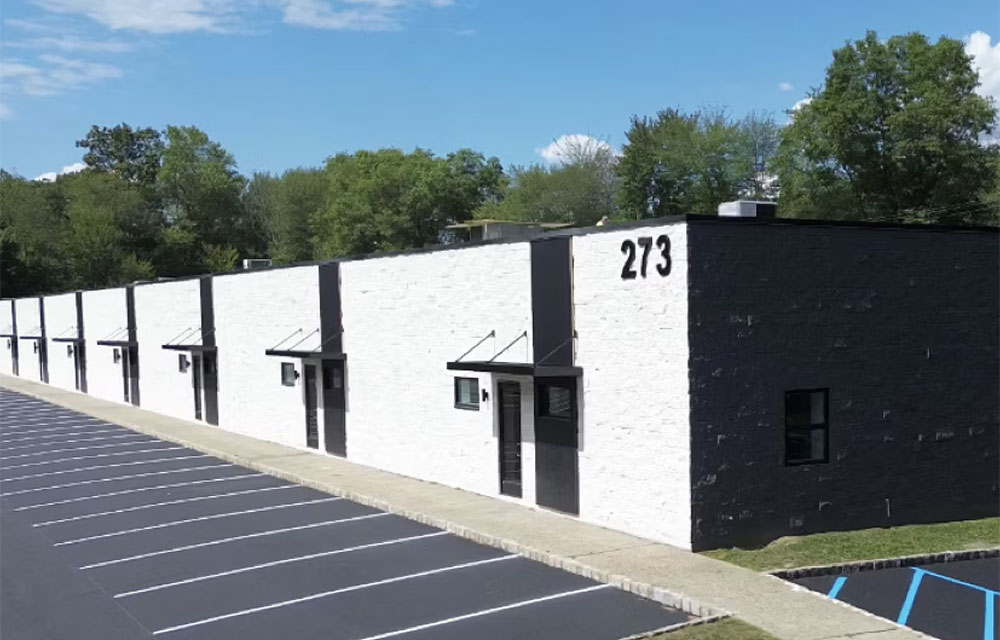
Resource Realty of Northern NJ delivers complete lease-up of 235 Franklin Rd. for Commerce Park Investors
Randolph, NJ Resource Realty of Northern New Jersey (RRNNJ) has completed the lease-up of a 10-unit small-bay industrial property at 273 Franklin Rd., marking the culmination of an investment strategy that began






Quick Hits
 (2).gif)

Columns and Thought Leadership

Hunt commercial real estate question and answer: Fortune 500 wisdom - by David Hunt
Yes, there are lessons to be learned from the largest companies in America when comes to managing your real estate. But the decision to buy or lease real estate may not be one of

A guide to finding the right NYC property management company - by Sanjay Gandhi
Being a small to midsize landlord in NYC is an increasingly demanding endeavor. From navigating complex regulations, increased compliance demands to dealing with tenant issues and remediating violations. It is wise to enlist the assistance of a partner, a professional

New York’s streets are full again, and the retail numbers prove it - by Noam Aziz
Walk down any New York block this year and you can feel it. The sidewalks are crowded, the storefronts are lit, and the energy that defines this city is back at full volume.

Positive forecast for New York’s pro-housing push? - by Philip Butler
New York’s housing crisis remains a hot button topic despite growing consensus that varied and affordable housing is desperately needed statewide. Governor Hochul has recently introduced several initiatives to overcome N.Y.’s anti-housing
.gif)