



News:
Brokerage
Posted: March 10, 2026
Nasco Stone and Tile secures lease at Koeppel Rosen’s 45 East 20th St.
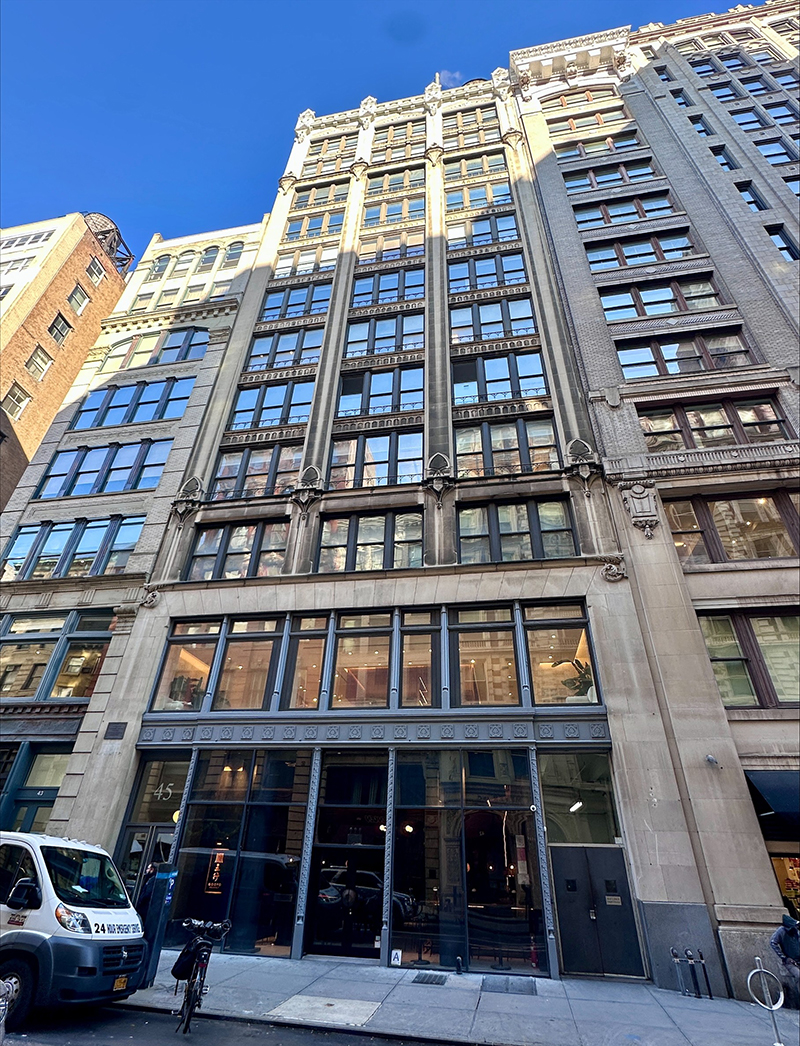 Manhattan, NY According to Koeppel Rosen LLC, leasing and management agent for the Rosen family portfolio, Nasco Stone and Tile has signed a 5,000 s/f lease at 45 East 20th St.
The space, occupying the entire fifth floor, will be used as an office and a showroom. The long-term lease agreement comprises 10 years and 6 months.
Ownership was represented in house by Max Koeppel in the transaction. The tenant was represented by Elliot Warren, Kaufman Leasing Company, LLC.
Nasco Stone and Tile is a specialized provider of premium stone, tile, and architectural surface materials serving designers, contractors, and commercial clients. Known for its selection of natural stone, porcelain, and custom finishes, the firm supports both residential and commercial projects.
“The transaction with Nasco Stone and Tile continues the recent leasing momentum we’ve enjoyed at 45 East 20th Street, and we welcome our new tenant to this well-located office property,” said Max Koeppel, firector of leasing, Koeppel Rosen LLC.
Constructed in 1911, 45 East 20th St. is a 12-story mid-rise office building in the Flatiron District. The office building offers 62,856 s/f and is located between Park Ave. and Bdwy., near Gramercy Park.
On-site amenities include street-level retail, 24/7 building access, and an attended lobby. The building is near several Gramercy Park District amenities, including additional restaurants and shops, and is close to numerous public transportation options. Other tenants include Verci, Inc., a co-working space and social club, Blue Matrix LLC, a global leader in capital markets content publishing technology, Kids in the Game LLC, a sports-based youth development organization, and Majesty’s Pleasure nail salon.
Tags:
Brokerage
New York City
MORE FROM Brokerage

Adirondack Capital Partners arranges $45 million sale of West Chelsea development site to Toll Brothers
Manhattan, NY Adirondack Capital Partners (ACP) closed the $45 million sale of 126/128 Tenth Ave. and 456 W. 18th St. to Toll Brothers City Living. The acquisition forms part of a broader





Quick Hits
 (2).gif)

Columns and Thought Leadership

New York’s streets are full again, and the retail numbers prove it - by Noam Aziz
Walk down any New York block this year and you can feel it. The sidewalks are crowded, the storefronts are lit, and the energy that defines this city is back at full volume.

A guide to finding the right NYC property management company - by Sanjay Gandhi
Being a small to midsize landlord in NYC is an increasingly demanding endeavor. From navigating complex regulations, increased compliance demands to dealing with tenant issues and remediating violations. It is wise to enlist the assistance of a partner, a professional

Hunt commercial real estate question and answer: Fortune 500 wisdom - by David Hunt
Yes, there are lessons to be learned from the largest companies in America when comes to managing your real estate. But the decision to buy or lease real estate may not be one of

Positive forecast for New York’s pro-housing push? - by Philip Butler
New York’s housing crisis remains a hot button topic despite growing consensus that varied and affordable housing is desperately needed statewide. Governor Hochul has recently introduced several initiatives to overcome N.Y.’s anti-housing
.gif)