



News:
Brokerage
Posted: June 19, 2009
NAIOP Upstate New York chapter visits State Capitol
Leaders from the NAIOP Upstate New York chapter visited the State Capitol in Albany on May 19, making this their third annual visit. Joining the Upstate New York chapter were leaders from the NAIOP New York City chapter, the downstate suburban New York chapter, and Unshackle Upstate, a bi-partisan coalition that represents over 45,000 companies in Upstate New York.
These New York leaders met with representatives in both the Assembly and the senate who represent our areas and discussed pending legislation that will affect developers in our region and our state.
During their visit to the State House, the NAIOP Upstate New York chapter members met with the following senators:
* Jim Alesi
* Mike Nozzolio
* Mike Ranzenhofer
* Joe Robach
* Bill Stachowski
* Antoine Thompson
* Dale Volker
The group also met with assembly members including:
* Jane Corwin
* Dennis Gabryszak
* Jim Hayes
* Brian Kolb
* Joe Morelle
* Crystal Peoples
* Robin Schimminger
The following legislation was discussed:
* Empire Zone Legislation: Of paramount of importance is the Empire Zone Budget bill, S5598. The unclear definition of shirtchangers and the look back to 1-1-08 are issues that would be potentially devastating to businesses that have made substantial investment based on program criteria established at the time of certification. To change the criteria during the benefit period is damaging to these businesses and sends the message New York is no longer interested in businesses locating to our state.
* Industrial Development Agency Reform Legislation: As devastating to business is S1241, the IDA bill. A prevailing wage component should in no way be associated with private projects receiving IDA incentives. Businesses receiving these benefits are required to prove they can and will locate outside the area if not for such assistance. To add 23+% in cost to these projects by requiring prevailing wage would undermine any benefit received, consequently doing away with the intent of the program. We need to stabilize, grow and bring businesses back to the state. This legislation achieves no benefit.
* Wetlands Legislation: In addition, the Wetland bill S5642 as it currently reads reduces state oversight from 12.5 acres down to one acre. We do not support increases in NYDEC jurisdiction of wetlands as found in the current legislation. A vague definition of wetland will lead to inconsistent results. NAIOP will support wetland legislation that creates criteria that is reproducible and scientifically defensible.
* SEQR Legislation: Continuing, the SEQR Legislation is categorically devastating to development with no need to prove harm by the complainant opening the flood gates causing developers to cease doing business in the state. This could occur for any project regardless of whether or not legitimate standing exists.
* Scaffold Law: Last, the Scaffold law is of great concern to our industry. This law has long outlived its intent. We need legislation that makes the worker responsible for their own negligence when the accident is the result of their own criminal, wrongful, or negligent behavior. Absolute liability, refusing the owner the right to defend themselves in court is unconstitutional. We support a healthy and safe environment for contractors and can provide necessary liability coverage without the burden of this mandate.
Most of the representatives we met with agreed with us that these issues were too far reaching and should be modified to encourage developers to invest and develop in NYS. There will be much debate on many of these issue, and the lawmakers we met with were very pleased we brought these concerns to their attention. The reception we received from all our legislators was very cordial, and we hope NAIOP's efforts will bring about some change this legislative session.
Thomas Thaney is the 2009 president of NAIOP Upstate New York, Pittsford, N.Y.
Tags:
Brokerage
MORE FROM Brokerage
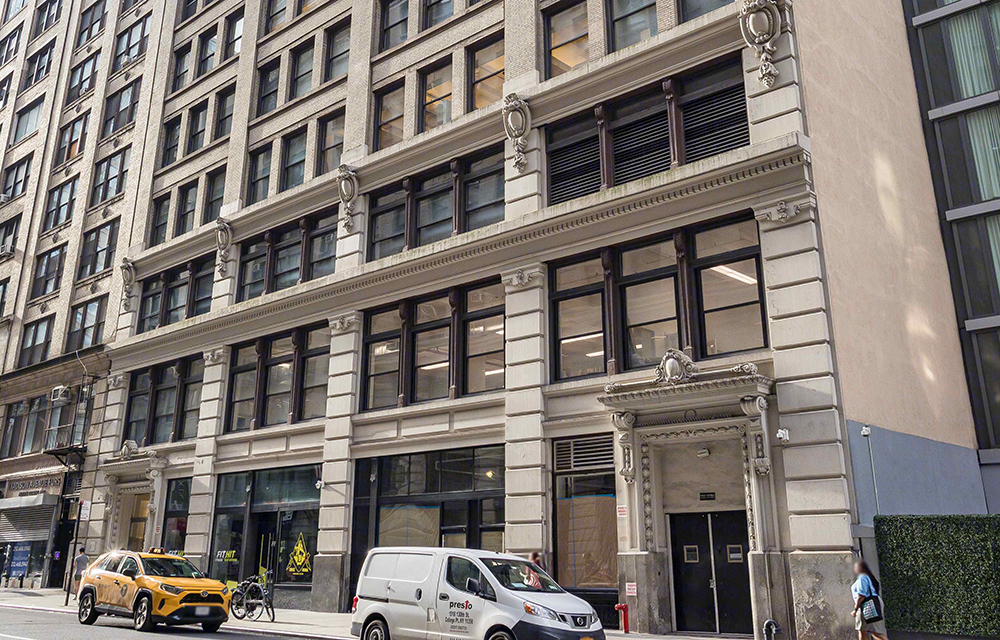
Koeppel Rosen inks 16-year 33,783 s/f lease for coworking firm Nomadworks at 122 West 27th St.
Manhattan, NY According to Koeppel Rosen LLC, leasing and management agent for the Rosen family portfolio, Nomadworks has signed a new 16-year, two-month lease totaling 33,783 s/f at 122 West




Quick Hits
 (2).gif)

Columns and Thought Leadership

New York’s streets are full again, and the retail numbers prove it - by Noam Aziz
Walk down any New York block this year and you can feel it. The sidewalks are crowded, the storefronts are lit, and the energy that defines this city is back at full volume.

The art of investing in real estate - by Thomas Donovan
Real estate investing is as much an art as it is a skill. No one can time the market, or the factors that drive it, perfectly. Location, zoning, size, transportation, and neighborhood density give you a baseline for

Hunt CRE question and answer: Choosing a real estate agent - by David Hunt
First, we will only work with one agent exclusively. The primary reason is that we want that agent to legally represent our client’s interests. In New York State, a real estate agent has a fiduciary

Hunt commercial real estate question and answer: Fortune 500 wisdom - by David Hunt
Yes, there are lessons to be learned from the largest companies in America when comes to managing your real estate. But the decision to buy or lease real estate may not be one of
.gif)