



News:
Brokerage
Posted: May 23, 2011
NAIOP forecast: Industrial space demand growing
The NAIOP Research Foundation released the Industrial Space Demand Forecast, the second forecast from a model that analyzes important economic factors and net absorption data to predict future demand for industrial real estate.
According to the data:
* The annualized rate of growth (1Q2011) is 1.1%. It is in line with previous forecasts, but slightly lower than the 1.26% annualized growth rate forecast last quarter.
* 1Q2011 growth fell in line with historical averages that range from growth of 1-2% per year. This finding is consistent with an economy marked by growth in output and improving labor markets.
* Prior to 3Q2010, the industry had been in "contraction mode" marked by seven consecutive quarters of negative demand for industrial space. In fact, in 4Q09 demand declined at an average annualized rate of 1.2%, which was well below the rate of decline in the prior quarters of 2009. The 1Q2011 results mark the third consecutive quarter of growth in demand.
* Underlying data from 2010 that impacted this quarter's forecast remains strong, but is trending down from the beginning of 2010 as exogenous shocks impacted the economy and real estate markets.
* Looking forward (see Table 2), virtually all demand drivers have trended up and have moved into the "hot" category. As such, while the next couple of quarters are likely to remain solid, strong growth should result towards the end of 2011 and into 2012.
* Therefore, demand for industrial space is projected to grow at an annualized rate of 1.5% in 2Q2011, which is in line with historical averages. Increased rates of growth will begin to occur towards the end of the year, barring exogenous shocks.
"The growth in demand returning to what can be called 'normal demand' is a very positive sign for the industrial real estate industry," said Thomas Bisacquino, NAIOP president and CEO. "It signifies a renewed confidence and increased activity in the industrial market, which is in response to job growth."
This is the second forecast for industrial space demand, part of ongoing data and analysis by Dr. Randy Anderson, University of Central Florida, and Dr. Hany Guirguis, Manhattan College. To read a research report regarding the methodology of the forecast and to download an accompanying graphic, visit www.naioprf.org.
Methodology for Industrial Space Demand Forecast Model
Drs. Anderson and Guirguis developed the forecasting model for the demand of industrial space at the national level. Utilizing variables that comprise the entire supply chain and lead the demand for space, the model is able to capture the majority of changes in demand.
While leading economic indicators have been able to forecast recessions and expansions, the indices used in this study are constructed to forecast industrial real estate demand expansions, peaks, declines and troughs. The Industrial Space Demand model was developed using the Kalman Filter approach, where the regression parameters are allowed to vary with time and thus are more appropriate for an unstable industrial real estate market.
This research initially examined nearly 40 real estate, economic and stock market variables that should theoretically be related to demand for industrial space. These variables included measures of employment, GDP, exports and imports, as well as air, rail and shipping data. Two variables, the Federal Reserve Board's Index of Manufacturing Output (IMO) and the PMI Index from the Institute for Supply Chain Management PMI (ISMPMI), capture the majority of the variation in demand and the entire supply chain.
The IMO is released monthly by the Federal Reserve Board of Governors. The index measures the quality of goods produced, excluding mining and utilities. The ISMPMI is constructed using a survey of purchasing managers' expectations. The Institute's monthly survey has five components: new orders, production, employment, deliveries and inventories. ISMPMI leads the IMO and is a leading indicator of production in the industrial sector, followed by the actual goods that are produced, which are portrayed and captured in the IMO data. The information leads firms in their decision making on how much industrial real estate they will demand.
Industrial Space Demand Forecast Data
Issued quarterly, the NAIOP Industrial Space Demand Forecast is based on Purchasing Manager Index (PMI) data provided by the Institute of Supply Management (ISM), Index of Manufacturing Output (IMO) data provided by the Federal Reserve, and net absorption data provided by CBRE Econometric Advisors.
To access the full report visit www.naioprf.org.
Tags:
Brokerage
MORE FROM Brokerage
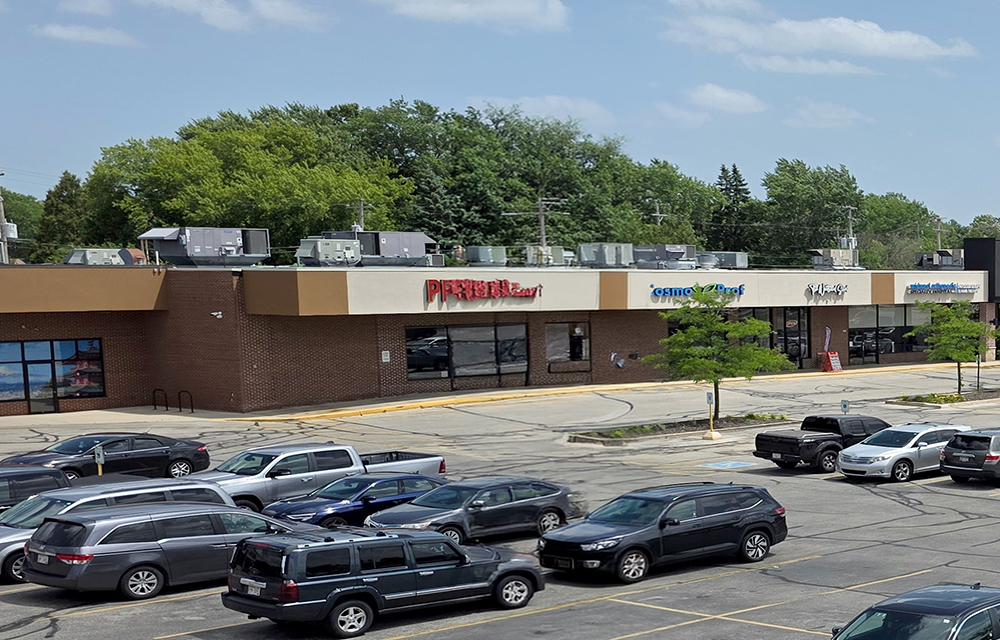
United Properties Corp. expands Wisconsin and Illinois retail presence adding 200,000 s/f
West Allis, WI United Properties Corp. completed two retail acquisitions totaling $27.4 million across Illinois and Wisconsin, adding 205,000 s/f of shopping center space to its portfolio






Quick Hits
 (2).gif)

Columns and Thought Leadership

New York’s streets are full again, and the retail numbers prove it - by Noam Aziz
Walk down any New York block this year and you can feel it. The sidewalks are crowded, the storefronts are lit, and the energy that defines this city is back at full volume.

Positive forecast for New York’s pro-housing push? - by Philip Butler
New York’s housing crisis remains a hot button topic despite growing consensus that varied and affordable housing is desperately needed statewide. Governor Hochul has recently introduced several initiatives to overcome N.Y.’s anti-housing

Hunt commercial real estate question and answer: Fortune 500 wisdom - by David Hunt
Yes, there are lessons to be learned from the largest companies in America when comes to managing your real estate. But the decision to buy or lease real estate may not be one of

A guide to finding the right NYC property management company - by Sanjay Gandhi
Being a small to midsize landlord in NYC is an increasingly demanding endeavor. From navigating complex regulations, increased compliance demands to dealing with tenant issues and remediating violations. It is wise to enlist the assistance of a partner, a professional
.gif)