



News:
Brokerage
Posted: March 7, 2016
NAI Global Market Outlook focuses on commercial real estate market
New York, NY Commercial real estate continues to be attractive to investors both in the U.S. and abroad, with the outlook in the U.S. stronger than the rest of the world, according to Tom Flexner, global head of real estate, institutional clients group, Citigroup and Dr. Peter Linneman, NAI Global chief economist. The two renowned real estate experts were featured on a panel discussion in New York City yesterday at the 2016 NAI Global Market Outlook. Over 700 individuals from NAI Global Member firms and their clients attended the event.
“One question on the mind of every commercial real estate investor is whether the market is peaking,” said Jay Olshonsky, FRICS, SIOR, president of NAI Global, who moderated the discussion. “The insights and perspectives shared by Mr. Flexner and Dr. Linneman will provide our NAI Global Members and their clients who attended yesterday’s Global Market Outlook with a better understanding of what is driving the market and where potential investment opportunities might be.”
Olshonsky noted that 2015 saw $1 trillion in worldwide commercial sales, which led to discussion of the market cycle and the key factors influencing it, including interest rates, oil prices, geopolitical uncertainty, currency stabilization and capital markets.
“We’re not at the top of the market cycle, and conditions are in place to see that level increase,” said Flexner. “Year over year, we’re seeing increased cross-border transactions, with a total of $90 billion of foreign investment in US commercial real estate. Virtually every sovereign wealth fund has increased its target real estate allocation over the past three years by material amounts.” Flexner noted that the commercial real estate market will benefit from investors fearful of more volatile assets.
Linneman was less bullish on the market in Europe and Asia, particularly China, citing instability of the Euro and lack of transparency in China. Investors need a deeply connected network and flexibility in order minimize risk, and the current risk-reward balance is not attractive to equity investors.
For the U.S., Linneman points to interest rates, oil prices and capital markets as the three factors that will have the most effect on commercial real estate. He believes that a rise in interest rates will stimulate the overall economy, with the housing market benefiting 6 – 10 months after a Fed Rate increase.
“If we were playing baseball, I’d say that right now with real estate fundamentals we are in the sixth inning of a really slow game,” said Linneman,
Tags:
Brokerage
MORE FROM Brokerage
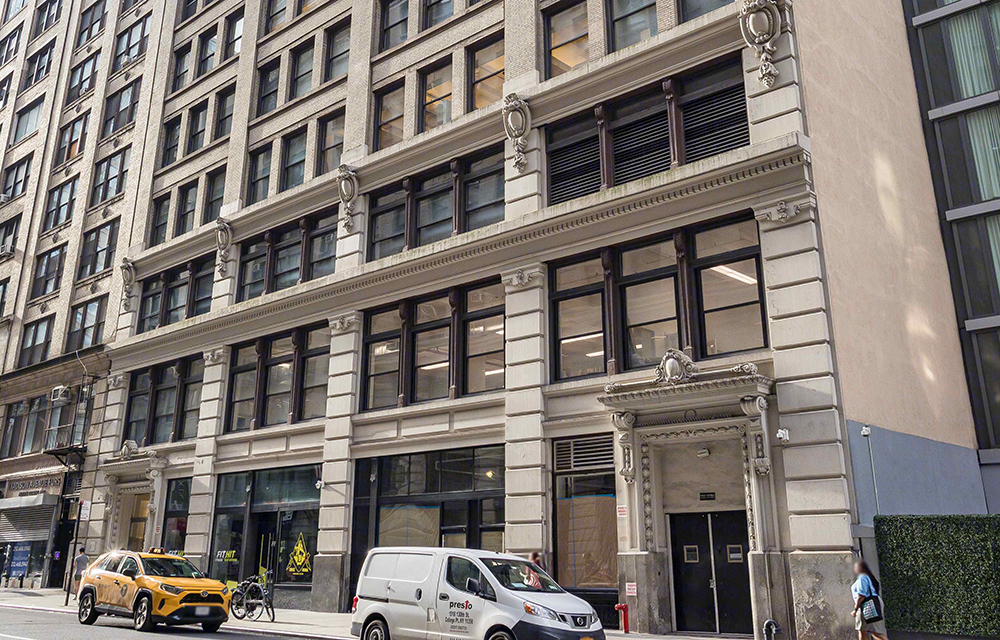
Koeppel Rosen inks 16-year 33,783 s/f lease for coworking firm Nomadworks at 122 West 27th St.
Manhattan, NY According to Koeppel Rosen LLC, leasing and management agent for the Rosen family portfolio, Nomadworks has signed a new 16-year, two-month lease totaling 33,783 s/f at 122 West




Quick Hits

Columns and Thought Leadership

Hunt CRE question and answer: Choosing a real estate agent - by David Hunt
First, we will only work with one agent exclusively. The primary reason is that we want that agent to legally represent our client’s interests. In New York State, a real estate agent has a fiduciary

New York’s streets are full again, and the retail numbers prove it - by Noam Aziz
Walk down any New York block this year and you can feel it. The sidewalks are crowded, the storefronts are lit, and the energy that defines this city is back at full volume.

The art of investing in real estate - by Thomas Donovan
Real estate investing is as much an art as it is a skill. No one can time the market, or the factors that drive it, perfectly. Location, zoning, size, transportation, and neighborhood density give you a baseline for

Hunt commercial real estate question and answer: Fortune 500 wisdom - by David Hunt
Yes, there are lessons to be learned from the largest companies in America when comes to managing your real estate. But the decision to buy or lease real estate may not be one of
.gif)