



News:
Brokerage
Posted: November 12, 2013
Montroy Andersen DeMarco assists NYC landlords with creative flood mitigation solutions following Hurricane Sandy
The New York City-based architectural firm of Montroy Andersen DeMarco (MADGI) is assisting New York City residential landlords and developers with creative natural disaster and flood mitigation design solutions. Hurricane Sandy, which caused extensive damage throughout the Northeast in October of 2012, has highlighted the need for natural disaster planning among condominium, rental, and cooperative residential property owners and managers.
"Our firm has been working with both existing properties and new developments that are still in the design or construction phases," said MADGI principal Richard DeMarco, AIA. "The solutions vary depending on the property type, design, and available architectural and engineering options dictated by the local zoning regulations. The common thread is the need to pro-actively address potential future natural disasters to protect the buildings and utilities. The upgrades additionally benefit the landlords by reducing the cost of insurance."
MADGI is currently working as the architect-of-record with the design architect Steven Harris Architects and developers Adam Gordon Holdings and Tavros Development on the luxury, 11-story 560 West 24th Street condominium project. The development team has recently started site work in Manhattan's trendy Highline/West Chelsea arts district.
The project was in the design phase when Sandy struck Manhattan, paralyzing entire neighborhoods with flooding and shutdown of utilities. The owners and architects of 560 West 24th St. immediately set out to revise the design to incorporate solutions that would protect the residents and the property from another similar disaster.
"The first goal was to prevent flooding of the property, whose foundations will extend 17 ft. down. The additional line of defense was protection of the utilities in case of water entering the building," said DeMarco.
To achieve the first goal, the architects extended the foundation walls nine feet above the ground level, above FEMA's newly-proposed 50-year flood mark. Resting on piles socketed into the bedrock, the concrete, sealed "bathtub" foundation has been designed to prevent any water penetration and is frequently used in sites with continuous underground water flows.
This type of foundation was already specified for the building due to the underground water present in this section of Manhattan. Following Sandy, however, MADGI extended it much higher than typically specified. The architects incorporated two large storefront windows and four door openings into the 50-foot-long street-facing front of the structure to accommodate the ground floor commercial tenant and building entrances. The other three sides of the building feature nine-foot-high solid concrete walls.
Preventing water from entering the property through the openings was the next step in the flood mitigation design process. After analyzing different options available on the market, MADGI selected the FastLogs flood containment systems developed by Wassaic, N.Y.-based Presray.
The FastLogs stackable flood barriers will protect both doors and windows. The system features stackable "logs," or six-inch-high aluminum sections, which during flood emergencies can be quickly inserted into preinstalled steel angles, called jamb brackets, on columns located on the sides of each door. Compression seals made of high-density, closed-cell neoprene sponge prevent leakage between logs, wall jambs, and a floor surface with steel embedments. When there is no danger of flooding, the logs can be stored away nearby. With the angles imbedded in the walls, the system has a minimal impact on the building's aesthetics.
To add another level of protection, MADGI custom designed a utility vault to be located in the building's cellar. The six-sided concrete vault, a secondary containment element, will feature two submarine bulkhead doors, large enough to meet the New York City Building Code's egress requirements. The vault will house the crucial electrical equipment. The vault will be connected to the building above through a concrete column with a raiser, which will contain electrical wires and a ventilation shaft for the vault. It will terminate above the FEMA flood level, sealing the electrical equipment in a watertight concrete structure.
The designers also added a third level of protection. If the first two barriers fail, or the city's power system goes off-line, the building will rely on its own power supply. It will include a 300Kv rooftop generator, powerful enough to sustain life-safety systems, hallway lights, and selected lights and electrical outlets in each residence.
Kunstadt Associates served as the mechanical, electrical, and plumbing (MEP) engineer and Robert Silman Associates was the structural engineer for the project.
Large, Luxury West Village Rental Property
In another example of emergency planning and flood mitigation, MADGI is assisting an owner of an existing large, luxury residential building in the West Village. The property, which houses over 100 units, was flooded in the aftermath of Sandy, lost all boilers, and sustained damage to its electrical system. The owner reached out to MADGI, which was already working on another project at the property.
The architects analyzed the possible design and engineering options as well as zoning regulations. The review has resulted in flood mitigation solutions that not only protected the building's infrastructure, but also allowed the landlord to transfer the Floor Area Ratio (FAR) credits, opening an opportunity to expand the size of the building. FAR, the ratio of total building floor area to the area of its zoning lot, is the principal bulk regulation controlling the size of buildings in New York City. The area utilized by mechanical equipment, electrical installations, and other utilities is not included in FAR calculations.
The MADGI team recommended relocating the boiler room and the electrical room from the cellar to two apartments located on the second floor, which typically generates lower rents. The loss of the rentable square footage included in FAR entitled the landlord to transfer residential space to another area of the building. Furthermore, while performing the review of the property, MADGI discovered additional unclaimed FAR credits. The combined credits allowed the landlord to add a penthouse level to existing top floor apartments and thus expand the property and eventually increase revenues once the expansion is completed.
MADGI recommended several other protective measures as well. These included an installation of a 300kV rooftop emergency generator. The building's owner is currently implementing MADGI-designed upgrades and revisions to the building.
62 Avenue B Luxury Rental Property
MADGI also assisted Magnum Realty, the owner of 62 Avenue B in New York City's East Village, with flood mitigation design services, while the building was undergoing a market repositioning and extensive upgrades. Magnum retained MADGI in the second half of 2012, while planning a purchase and redevelopment of an East Village nursing home into a luxury rental property. MADGI developed the initial space study and then a complete design for the repositioning of the six-story building before the transaction was completed in order to accelerate the permitting and construction process.
Sandy struck the East Village with significant impact, including flooding and a loss of power for nearly two weeks. Even though the building wasn't damaged, the owner decided to implement emergency planning features into the renovated structure. Construction proceeded last winter and was completed in July of 2013. In an unusual design and engineering step, MADGI moved the structure's boilers to the roof in order to protect the heating system from damage and the owner from costly repairs in case of flooding.
Tags:
Brokerage
MORE FROM Brokerage
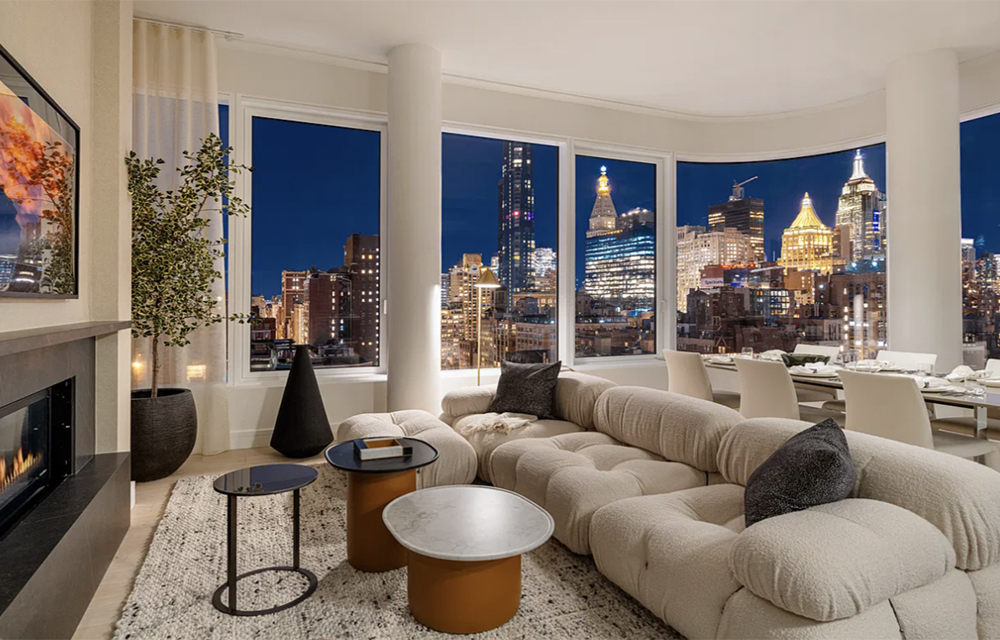
200E20TH sells out in Gramercy, penthouse A closes out sales at the CetraRuddy-designed condominium residences
Manhattan, NY 200E20TH, the CetraRuddy-designed architectural masterwork that brought a curved, contemporary sensibility to Gramercy’s Beaux-Arts streetscape, has



Quick Hits
 (2).gif)

Columns and Thought Leadership

New York’s streets are full again, and the retail numbers prove it - by Noam Aziz
Walk down any New York block this year and you can feel it. The sidewalks are crowded, the storefronts are lit, and the energy that defines this city is back at full volume.

Hunt CRE question and answer: Choosing a real estate agent - by David Hunt
First, we will only work with one agent exclusively. The primary reason is that we want that agent to legally represent our client’s interests. In New York State, a real estate agent has a fiduciary

The art of investing in real estate - by Thomas Donovan
Real estate investing is as much an art as it is a skill. No one can time the market, or the factors that drive it, perfectly. Location, zoning, size, transportation, and neighborhood density give you a baseline for

Hunt commercial real estate question and answer: Fortune 500 wisdom - by David Hunt
Yes, there are lessons to be learned from the largest companies in America when comes to managing your real estate. But the decision to buy or lease real estate may not be one of
.gif)