



News:
Brokerage
Posted: February 6, 2009
MKDA designs 6,000 s/f office suite for MVison at 41 Madison Ave.
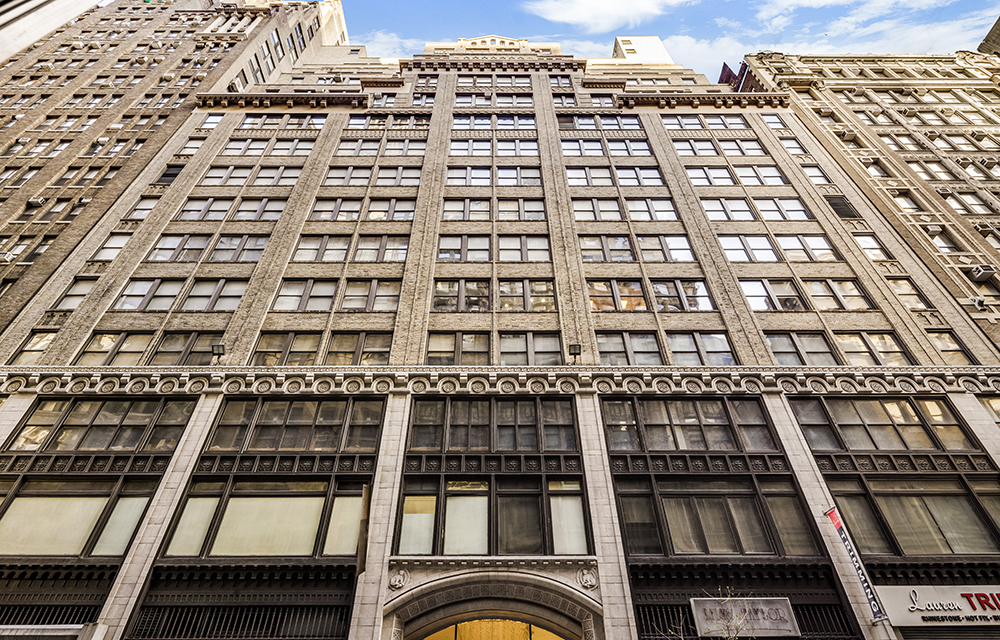
MKDA has designed the first permanent U.S. office suite for MVision Private Equity Advisers, a private equity firm headquartered in London. The company had signed a number of temporary office leases in the U.S. before signing its long-term lease for 6,000 s/f of office space on the 40th floor at 41 Madison Ave., the Emery Roth-designed New York Merchandise Mart building.
MKDA was tasked to design a space that would feature the art, object and memorabilia collection of MVison CEO Mounir Guen.
"This is a great location for the firm as it offers exclusive views of the iconic N.Y.C. skyline. We capitalized on this location by using glass throughout the space, allowing visitors to overlook the city's cultural landmarks—such as the gold dome atop the famed New York Life Building, which occasionally casts golden tones throughout the entire office suite," said MKDA president Michael Kleinberg.
Some of Guen's pieces are situated in the two conference rooms, which were designed with all-glass fronts so that visitors entering through the reception area would be able to view the art. In addition to favorable lighting techniques that highlight the artwork, blue-toned lighting that is the same color as the company logo is cast up walls and across ceilings, creating an interesting light feature. Contemporary pendant light fixtures hang in the center of the room.
"Lighting was critical throughout the space. These conference rooms, for example, were given flat lighting that illuminates the entire space along with specialty lighting that highlights the artwork. The pendant light fixtures at the center of the rooms serve as accent pieces that bring the focus back to the center of the space," said MKDA principal and project manager Stan Judovits.
In addition to the two conference rooms and a reception area that resembles an art gallery with grey stone flooring and decorative cove lighting, MKDA gave the sleek, sophisticated space sixteen Italian workstations made of wood and fabric panels and metal trim, two private offices, an executive washroom with a shower composed of ceramic tiles, and a pantry with a blue stone countertop custom-designed by MKDA using recyclable materials.
The walls are covered in a pale white that serves as a backdrop to the art, while monochromatic neutral carpeting is used throughout. MKDA added punches of color through the use of blue accent pieces and furniture, such as the undulating leather bench situated in the reception area.
Tags:
Brokerage
MORE FROM Brokerage

Marcus & Millichap releases fourth-quarter 2026 NYC industrial market report
Manhattan, NY Marcus & Millichap has published its fourth-quarter 2026 New York City Industrial Market Report. “New York City’s industrial market is showing a clear





Quick Hits
 (2).gif)

Columns and Thought Leadership

The art of investing in real estate - by Thomas Donovan
Real estate investing is as much an art as it is a skill. No one can time the market, or the factors that drive it, perfectly. Location, zoning, size, transportation, and neighborhood density give you a baseline for

Hunt CRE question and answer: Choosing a real estate agent - by David Hunt
First, we will only work with one agent exclusively. The primary reason is that we want that agent to legally represent our client’s interests. In New York State, a real estate agent has a fiduciary

New York’s streets are full again, and the retail numbers prove it - by Noam Aziz
Walk down any New York block this year and you can feel it. The sidewalks are crowded, the storefronts are lit, and the energy that defines this city is back at full volume.

Hunt commercial real estate question and answer: Fortune 500 wisdom - by David Hunt
Yes, there are lessons to be learned from the largest companies in America when comes to managing your real estate. But the decision to buy or lease real estate may not be one of
.gif)