



News:
Spotlight Content
Posted: December 22, 2020
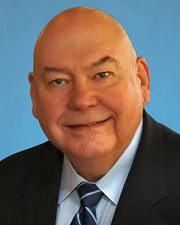
Michael Lefkowitz, Rosenberg & Estis, P.C.
 Name: Michael Lefkowitz
Title: Managing Member
Company Name: Rosenberg & Estis, P.C.
What was your greatest professional accomplishment in 2020?
On June 1st, I was named managing member of the firm. I’ve been at the firm for 31 years, and having earned the faith, trust and respect of my partners to be appointed managing member is not just my greatest professional accomplishment of 2020, but of my career. Taking on this leadership position during the pandemic has been both challenging and rewarding: Working with my partners on decisions and adjustments to our practice, which certainly are out of the ordinary, having to adopt a work from home policy and continue to operate and serve clients in an efficient manner. I can say through these challenging times that we have maintained our successful law firm.
What aspects of working from home did you enjoy most?
Not actually the working from home, but being home. We have grown children all in their mid-20s. Pre-pandemic lockdown, we all lived in New York City, but not together. When the lockdown was ordered, and businesses began to work from home, our children, for the better part of the lockdown, came home and worked from home. Never thought I would again spend so much time with my children under one roof, have dinner with them every night, engage in family discussions night-in and night-out. I enjoyed watching as they turned our living room, dining and kitchen into a WeWork space. The open concept work environment was conducive to the millennial work style. My wife and I retreated to our home offices on different floors and on different sides of the house.
What are your predictions for commercial real estate in 2021?
While I don’t possess a crystal ball, my predictions for real estate in 2021 are as follows:
- Continued and considerable dislocation, distress, troubled assets and workouts will be the order of the day.
- States will likely continue to issue moratoriums and/or other protections and relief against foreclosure and evictions.
- Sales activity of luxury condominiums, hotel, office and retail sectors will continue to be sluggish.
- A low interest rate environment will help alleviate some of the hardships created by the pandemic on many of the sectors of commercial real estate.
Tags:
Spotlight Content
MORE FROM Spotlight Content

Participate in Developing New York Featuring Westchester County - November 24, 2026
Choose how you’d like to participate in this edition of NYREJ’s Developing New York series featuring Westchester County.



.png)

 (2).gif)

Columns and Thought Leadership

2026 Developing Queens: Long Island Board of Realtors advances commercial growth and advocacy in Queens
The Long Island Board of Realtors (LIBOR) Commercial Network continues to play a key role in advancing opportunities and strengthening the commercial real estate landscape across Queens. Through targeted programming and global outreach

From vacancy to vitality: How adaptive reuse is reshaping Long Island’s CRE landscape - by Andrea Tsoukalas Curto
Adaptive reuse has become one of the most important conversations in commercial real estate today. Long Island has a large inventory of aging retail, office and industrial

2026 Developing Long Island: ERG Commercial Real Estate launches its new Retail Leasing division
North Hempstead, NY ERG Retail Leasing is the dedicated leasing division of ERG Commercial Real Estate, an established full-service commercial real estate brokerage for over 35 years.

CRE Guide Featured Company: Merritt Environmental Consulting Corp.
Merritt Environmental Consulting Corp. (MECC) was established in June of 2009 after being part of a larger engineering firm for almost 20 years. The focus of the company is to assist lending institutions, attorneys, real estate investors, and property owners with environmental concerns. Today, MECC has offices in New York, Florida, and Vermont and has grown into a regional consulting firm serving clients along the East Coast.