



News:
Brokerage
Posted: March 5, 2019
Message from the CEO of Bronx-Manhattan North Association of Realtors: Co-op transparency - by Eliezer Rodriguez
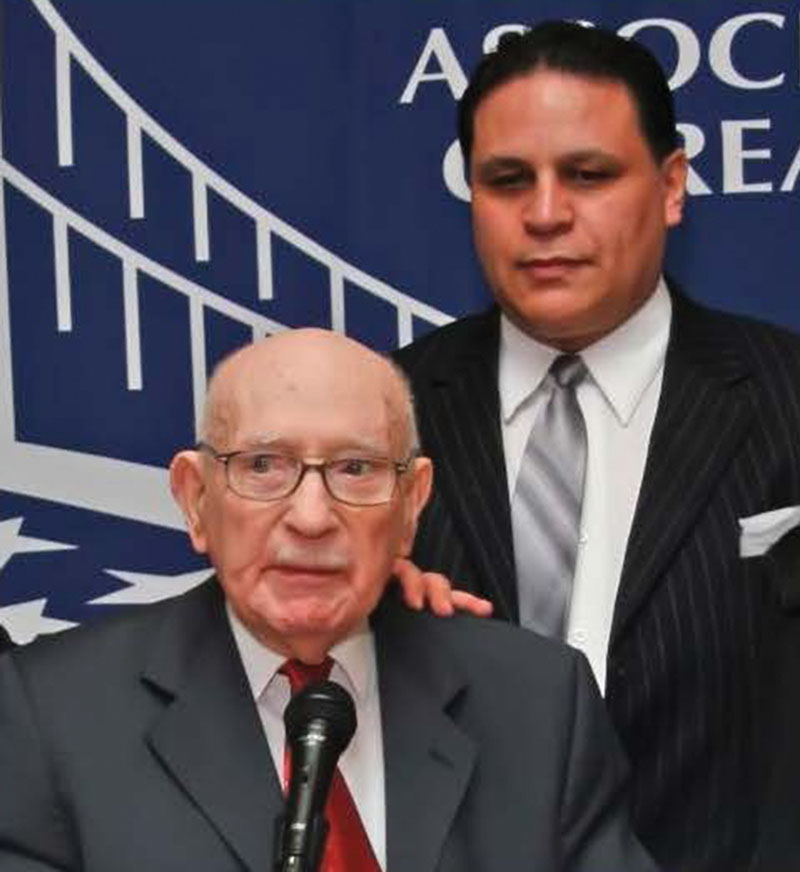
The New York State Association of Realtors (NYSAR) held its annual Mid-Winters Meetings at the Desmond Hotel in Albany from February 10th to the 14th. The five days of meetings, as usual, were extremely productive. After one of the sessions, I sat down with a well-respected Realtor and friend to discuss the need for co-op transparency.
NYSAR has long recognized that buyers and sellers of co-op units have significant concerns with the length of time it takes to have an application approved or disapproved. Hence the drafting of bill language to create a reasonable and standardized timeline for this process is warranted. Co-ops turn buyers down for many reasons, discrimination is likely the most frequent but difficult to prove. Unfortunately, since they do not have to give a reason, it is often hard to pursue. Many buyers get frustrated with the delay and simply move on. A law increasing transparency will help reduce discriminatory practices in the buying and selling of co-ops.
My Realtor friend is passionate about bringing fairness and justice, as am I, to the co-op application process. I shared my experience with her and she asked that I send her a synopsis. Instead, I have chosen to write this article to show another scenario how a co-op Board abused their power.
One of my mentors, and dear friend, Dr. Elias “Mr. Bronx” Karmon, wanted me to get into the real estate business, but there was a catch. Since his 75th birthday, and every five years thereafter, he would celebrate his birthday by hosting a birthday fundraiser. He would then donate all the raised funds to non-profits located in the Bronx. Mr. Bronx’s mind was sharp, but his 98-year-old body was failing him. For the last five years of his life, if Mr. Bronx was seen in public, it was because I took him there.
He called me in April of 2008 and said, “Eliezer, I want you to buy all of my co-ops in Thwaites Place.” He then gave me a list of non-profits that he wanted me to support once he was no longer able or alive. Mr. Bronx’ wish was for me to continue his birthday tradition. The sale was to be the vehicle for him to continue giving through me.
In June of 2008, with his permission, I brought in another mentor who owns a reputable management company and has the distinction of being the largest management company in the Bronx. We entered into a contract of sale for Mr. Bronx’s co-ops on Thwaites Place. Of course, the contract of sale was contingent on Board approval. The application was submitted to the Board for review in July of 2008. For the next two months, numerous calls were made to the Board’s president regarding the Board interview. The president of the co-op did not return our calls.
My dear friend, Dr. Elias “Mr. Bronx” Karmon, passed away on October 21, 2008, 113 days after we submitted our application to the Co-op Board for approval. I was by his side. 47 days after his passing, the Board finally got around to scheduling our interview. Our application was disapproved for no reason. The interview itself was a joke and no relevant questions were asked that would have justified the disapproval. However, I knew the truth. The Board was waiting for my friend to die.
Mr. Bronx’s son-in-law sat on the Board. He was against the sale and wanted to keep the apartments for himself. I suspect Mr. Bronx’ daughter and son-in-law were certain, and I believe with all of my heart, that if our application was disapproved while Mr. Bronx was alive, he would have taken other measure to ensure the end result was to his satisfaction. No one, absolutely, no one; under any circumstances should have to wait 160 days for a Board application to be disapproved.
I was not the CEO of The Bronx Manhattan North Association of Realtors when my friend passed away. Now that I am, I will partner with my Realtor friends to make the co-op application process more transparent and to fight for at least a 60 day period for the Co-op Board to render a decision on an application. If a decision is not rendered within the 60 days, the application ought to be rendered approved.
To this day, I live with regret that I could not carry on Mr. Bronx’ wish. I am reminded of that every time I drive by the intersection near where he lived. On July 13, 2014, that intersection was renamed “Elias Karmon Way.” Getting a co-op transparency law passed in New York City will go a long way to healing my experience and preventing others from getting caught up in the abuse of Co-op Board power. I will march forward for my friend, Mr. Bronx, who, coincidentally was born on March 4th.
Eliezer Rodriguez, Esq. is the chief executive officer of The Bronx-Manhattan North Association of Realtors, Bronx, N.Y.
Tags:
Brokerage
MORE FROM Brokerage
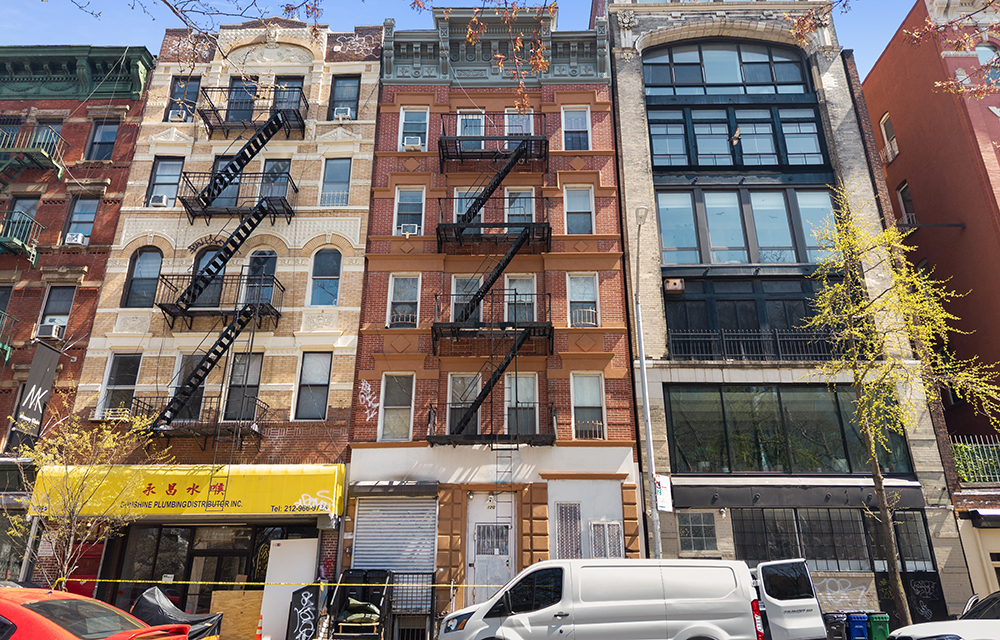
Investment Property Realty Group sells 120 Forsyth St. for $1.35 million
Manhattan, NY Investment Property Realty Group (IPRG) closed the sale of 120 Forsyth St., a mixed-use building located in the Lower East Side section of the city, for $1.35 million.





Quick Hits
 (2).gif)

Columns and Thought Leadership

Positive forecast for New York’s pro-housing push? - by Philip Butler
New York’s housing crisis remains a hot button topic despite growing consensus that varied and affordable housing is desperately needed statewide. Governor Hochul has recently introduced several initiatives to overcome N.Y.’s anti-housing

Hunt commercial real estate question and answer: Fortune 500 wisdom - by David Hunt
Yes, there are lessons to be learned from the largest companies in America when comes to managing your real estate. But the decision to buy or lease real estate may not be one of

New York’s streets are full again, and the retail numbers prove it - by Noam Aziz
Walk down any New York block this year and you can feel it. The sidewalks are crowded, the storefronts are lit, and the energy that defines this city is back at full volume.

A guide to finding the right NYC property management company - by Sanjay Gandhi
Being a small to midsize landlord in NYC is an increasingly demanding endeavor. From navigating complex regulations, increased compliance demands to dealing with tenant issues and remediating violations. It is wise to enlist the assistance of a partner, a professional
.gif)