




Manhattan, NY Meridian’s Amit Doshi and Shallini Mehra closed on the sale of three contiguous, mixed-use buildings located at 1256, 1258 and 1260 Lexington Ave. The contiguous three buildings have a wraparound frontage of 129 s/f, on a corner of Lexington Avenue, encompassing a total of 14,632 s/f. The package, which sold for north of $13 million, features eight residential units as well as four commercial spaces with both national and regional tenants, including Subway and Taco Bell.
“This highly visible and heavily trafficked corner is a major retail thoroughfare on the Upper East Side, which allowed us to achieve a high price-per-s/f of just under $900 and a low cap rate of under 5%,” said Mehra. “In addition, the restaurant tenants continued their operations throughout the pandemic due to strong consumer demand.”
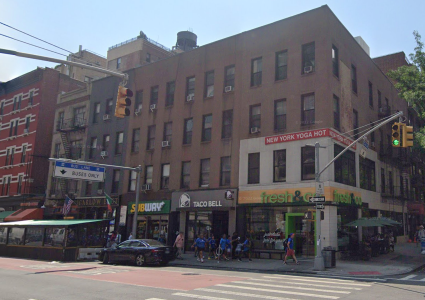
“We’ve been diligently working on this asset for over two years and at one point had the point has the properties in contract, which did not materialize. This is truly a covered land play, as the assets have over 40,000 s/f of air rights,” said Doshi. “Extell’s glass tower, the Lucida, is diagonally across the street with luxury condos that sell for $1,800+ per s/f. The seller was thrilled to sell into this market as they felt it was time to divest after owning and managing this asset since mid-1980’s.”
Tucked into the Upper East Side, the Historic District of Carnegie Hill is contestably one of the most sought-after and desirable residential neighborhoods in New York City. The prestigious area is home to notable landmarks including Central Park, Guggenheim Museum, Jewish Museum, and Smithsonian. In addition, Carnegie Hill boasts some of the finest pre-war buildings and beautiful mansions in Manhattan and is surrounded by restaurants, shopping and neighborhood amenities that attract residents for the long-term.
Meridian’s Doshi and Mehra represented both the seller, 1256-60 Lexco LLC, Howard 601 LLC, Harvey 601 LLC and the purchaser, Coombes Properties, Inc. Attorney Steve Uffner and Neil Albsteinof Goldberg, Weprin, Finkel & Goldstein LLP represented the seller and Brian Beller ofTarter Krinsky & Drogin LLP represented the purchaser.







.gif)