



News:
Brokerage
Posted: March 6, 2009
McGowan Bldrs. completes tenant fill outs at medical ctr.: $3m project; Optimus Architecture designed interiors
Mc Gowan Builders, Inc. (MGB), a general contracting and construction management firm based in East Rutherford, N.J., served as general contractor for three tenant fit-outs at the St. Francis Medical Arts Pavilion. Rendina Companies is the owner/developer of the building, located on the St. Francis Hospital Campus.
MGB president, Patrick Mc Gowan said, "The three projects, valued at $3 million, and totaling 11,000 s/f, included medical, office, and retail facilities for Valley Obstetrics & Gynecology, P.C., Molloy Pharmacy, and Dr. Sims Podiatry." Optimus Architecture designed the interiors of all three tenants.
The 5,600 s/f Valley Obstetrics & Gynecology office houses a waiting room, reception desk and office, sonogram room, private offices, medical examination rooms, and storage areas.
The 4,000 s/f Dr. Sims Podiatry suite features a waiting room, reception desk, private offices, medical examination rooms, X-Ray room, X-Ray control room, administrative office, personnel cafeteria, bathrooms, and storage and utility areas. The suite's finishes include VCT flooring in common areas, carpet in private offices, painted sheetrock walls, suspended acoustical ceilings, custom millwork and cabinetry, and luminescent lighting fixtures. Medical equipment includes an X-Ray machine and footbaths.
* The 1,400 s/f Molloy Pharmacy serves both the adjacent St. Francis Hospital and patients and medical providers at the pavilion building. The pharmacy's sales floor features retail shelving, a sales counter, prescription fulfillment area, enclosed examination room, and back office and storage facilities.
The finishes in all three tenant spaces include VCT flooring in common areas, carpet in private offices, painted sheetrock walls, suspended acoustical ceilings, custom millwork and cabinetry, and luminescent lighting fixtures. The MGB team installed new HVAC ductwork that feeds into the building's air distribution system. MGB also installed new electrical systems, electrical distribution panels, and plumbing.
The elevators were not functional in the initial phase of the three projects, as the base building was still under construction. The construction team addressed this situation by removing glass panels from one of the windows and hoisting all materials with a boom.
Tags:
Brokerage
MORE FROM Brokerage
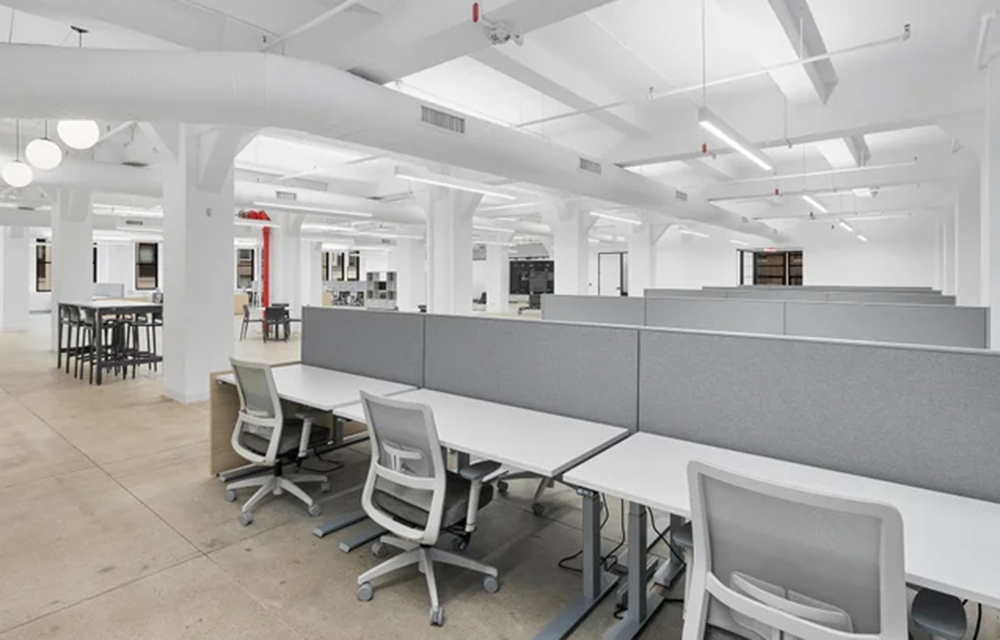
Lee & Associates NYC arranges 14,000 s/f Midtown office lease for Julie Vos
Manhattan, NY According to Lee & Associates NYC, fashion jewelry brand Julie Vos has signed a 14,000 s/f office lease at 218-232 W. 40th St. in Midtown.


Quick Hits

Columns and Thought Leadership

Positive forecast for New York’s pro-housing push? - by Philip Butler
New York’s housing crisis remains a hot button topic despite growing consensus that varied and affordable housing is desperately needed statewide. Governor Hochul has recently introduced several initiatives to overcome N.Y.’s anti-housing

New York’s streets are full again, and the retail numbers prove it - by Noam Aziz
Walk down any New York block this year and you can feel it. The sidewalks are crowded, the storefronts are lit, and the energy that defines this city is back at full volume.

Hunt commercial real estate question and answer: Fortune 500 wisdom - by David Hunt
Yes, there are lessons to be learned from the largest companies in America when comes to managing your real estate. But the decision to buy or lease real estate may not be one of

A guide to finding the right NYC property management company - by Sanjay Gandhi
Being a small to midsize landlord in NYC is an increasingly demanding endeavor. From navigating complex regulations, increased compliance demands to dealing with tenant issues and remediating violations. It is wise to enlist the assistance of a partner, a professional
.gif)
September Promotion
