



News:
Brokerage
Posted: September 24, 2012
Mayor Bloomberg unveils plans for new healthcare facility and nursing school
Mayor Michael Bloomberg, the New York City Economic Development Corp., Memorial Sloan-Kettering Cancer Center, and the City University of New York unveiled plans to build two new science and medical facilities on the Upper East Side. The plans include an agreement to sell a 66,000 s/f city-owned site at 525 East 73rd St. for the purchase price of $215 million. Under the agreement, Memorial Sloan-Kettering Cancer Center will construct an up to 750,000 s/f cancer care facility that will allow for the development of innovative outpatient treatment programs. Currently, Memorial Sloan-Kettering plans to use the facility to provide care for patients with lung, head, neck and hematological cancers. The building, which is within walking distance of the main Memorial Sloan-Kettering campus, will include state-of-the-art outpatient bone marrow transplantation and other services. Additionally, CUNY Hunter College will build up to 336,000 s/f Science and Health Professions building to upgrade its science and nursing facilities and enabling its faculty, researchers and students to benefit from close proximity to its main campus on the Upper East Side as well as from the neighborhood's world-renowned medical and research institutions. The mayor was joined by Memorial Sloan-Kettering president and CEO Dr. Craig Thompson, CUNY vice chancellor for Facilities Planning, Construction & Management Iris Weinshall, New York City Economic Development Corp. president Seth Pinsky, New York City Department of Sanitation commissioner John Doherty, Memorial Sloan-Kettering's chief of the Adult Bone Marrow Transplant Service Dr. Sergio Giralt and Hunter College president Jennifer Raab.
"Thanks to our innovative approach to economic development, today's announcement is yet another step towards making New York City home to the world's most talented workforce," said Bloomberg. "Not only will these two great institutions play a critical role in creating great jobs in one of the city's growing industries, but they usher in the innovators and medical advancements of tomorrow."
"Under mayor Bloomberg's leadership, New York's medical and academic institutions are thriving and expanding, creating jobs and activating neighborhoods all throughout the city," Steel said. "The 'Eds and Meds' sector is an economic engine that are driving the future of New York's economy."
According to an analysis conducted by the New York City Economic Development Corp., the project is expected to create more than 3,200 construction jobs and nearly 830 permanent jobs. The new facility will enable Memorial Sloan-Kettering Center, routinely ranked among the top cancer hospitals in the country, to develop innovative outpatient treatment programs, extend its high-quality care to a greater number of cancer patients, improve clinical outcomes, and reduce the cost of cancer care while meeting the growing demand for services as the population ages.
"This new facility will play a critically important role in our overall cancer care delivery system," said Thompson. "It will have a patient-oriented physical design - equipped with almost everything patients will need under one roof - making their experience as streamlined and easy as possible. It will also offer our physicians and other healthcare professionals an inspiring and efficient environment in which to provide care. And because of the physical proximity with our main hospital, there will be cohesiveness among all our departments. We are fortunate to live in a time of enormous opportunities to bring novel and more-effective treatments to patients with cancer. This new component of our clinical enterprise will touch many lives and extends Memorial Sloan-Kettering's historic commitment to the control and eventual cure of cancer."
Currently, CUNY Hunter's health sciences and basic sciences are located at two different campuses: basic sciences are located on Hunter's main campus at East 68th St. and Lexington Ave. in facilities that date back to 1939; and health sciences and nursing are located on East 25th St. and First Ave. in a physical plant inherited from Bellevue Hospital in 1967. The new site enables Hunter to create consolidated, efficient, and science and nursing facilities, and eliminates the need for duplicate eating halls, libraries and other facilities at the current 25th St. campus.
"Educating the next generation of innovators is critical to our nation's ability to flourish and compete in the decades ahead," said Chancellor of the City University of New York Matthew Goldstein. "The City University of New York designated the years 2005 to 2015 the 'Decade of Science' at CUNY, renewing the University's commitment to creating a healthy pipeline to science, math, technology, and engineering fields by advancing research and training at the highest levels. Now Hunter College's premier nursing and physical therapy programs will move into a state-of-the-art space. Its top science researchers will have labs appropriate for the cutting edge, groundbreaking work they are doing in their fields. Hunter's nurses and researchers will have the opportunity to develop new collaborations and expand on existing ones with Memorial Sloan-Kettering - an institution with an inspiring and crucial mission."
"The relationship between Hunter College and Memorial Sloan-Kettering underscores mayor Bloomberg's unwavering support for STEM and for public education, and highlights the great importance of public and private collaborations," said President of Hunter College Jennifer Raab. "We are proud of the many contributions Hunter College is making to science and will continue to make, expanding its work in neuroscience and cancer research, as we train the next generation of scientists, particularly minorities and women, in conjunction with Memorial Sloan-Kettering. In addition, we will be able to grow our exceptional nursing school, which already offers undergraduate and graduate degrees, including a new doctorate in nursing practice, to our very diverse student population. These men and women will be well prepared to take on a greater role in our changing health care landscape."
In May 2011, NYCEDC on behalf and at the request of the New York City Department of Sanitation issued a Request for Proposals (RFP) for the sale and development of a site at 525 East 73rd Street. Sanitation operated a garage facility at the site until 2008 when it was demolished to make way for a new facility that had been postponed due to budget constraints. The RFP called for redevelopment proposals that used the site for the expansion or creation of a health care, education or scientific research facility while also providing a way to finance a replacement DSNY garage. The current home of the Hunter-Bellevue School of Nursing at CUNY's Brookdale campus at 25th Street and First Avenue will ultimately be vacated, and ownership will revert to the City of New York. The City will initiate a public planning process to re-develop the site, including a garage facility to meet Manhattan's sanitation needs, as well as potential residential development and public space.
"The Department of Sanitation is pleased to be a part of this unique economic development plan that will enhance medical care, create jobs and very importantly help my Department find a permanent home for essential Sanitation refuse and recycling collection, snow removal and street cleaning services for the east side of Manhattan," said Sanitation Commissioner John J. Doherty.
"With the creation of these two new, world-class medical facilities, we in the Bloomberg Administration are again demonstrating our unwavering commitment to expanding science and research activity in New York City, building on the enormous success of our Applied Sciences NYC initiative," said New York City Economic Development Corporation President Seth W. Pinsky. "These projects will be economic engines in and of themselves, generating thousands of construction and permanent jobs, while also helping us to overcome some of the major challenges facing humanity in the twenty-first century and building a stronger and more diverse economy for our City's future."
New York City has unparalleled talent, entrepreneurism, and capital to fuel growth in health care, research and education. These new facilities, along with Applied Sciences NYC will capitalize on the considerable growth presently occurring within the science, technology and research fields in New York, and build on the Bloomberg Administration's record of creating a diversified and more competitive economy for the future. Currently there are nearly 400 venture capital firms investing over $560 million in healthcare and biomedical innovation with a New York City metro area and almost 100 companies based here in the biotech, medical device, and biomedical IT industries.
"Soon our city will house yet another state of the art healthcare center helping us solidify New York's place as the nation's leader in quality healthcare," said City Council Speaker Christine C. Quinn. "Today's announcement is a testament to the City's commitment to education, job creation and to making sure we're always on the forefront of emerging industries such as bio and med tech."
Memorial Sloan-Kettering Cancer Center is the world's oldest and largest private institution devoted to prevention, patient care, research, and education in cancer. Its scientists and clinicians generate innovative approaches to better understand, diagnose, and treat cancer. Its specialists are leaders in biomedical research and in translating the latest research to advance the standard of cancer care worldwide.
Hunter College is the largest college in the CUNY system. Founded in 1870, it is also one of the oldest public colleges in the country. Currently, over 22,000 students attend Hunter, pursuing both undergraduate and graduate degrees in more than 170 different programs of study. Hunter College is famous for the diversity of its student body, which is as diverse as New York City itself. For over 140 years, it has provided educational opportunities for women and minorities, and today, students from every walk of life and every corner of the world convene at Hunter in pursuit of the American Dream.
Tags:
Brokerage
MORE FROM Brokerage
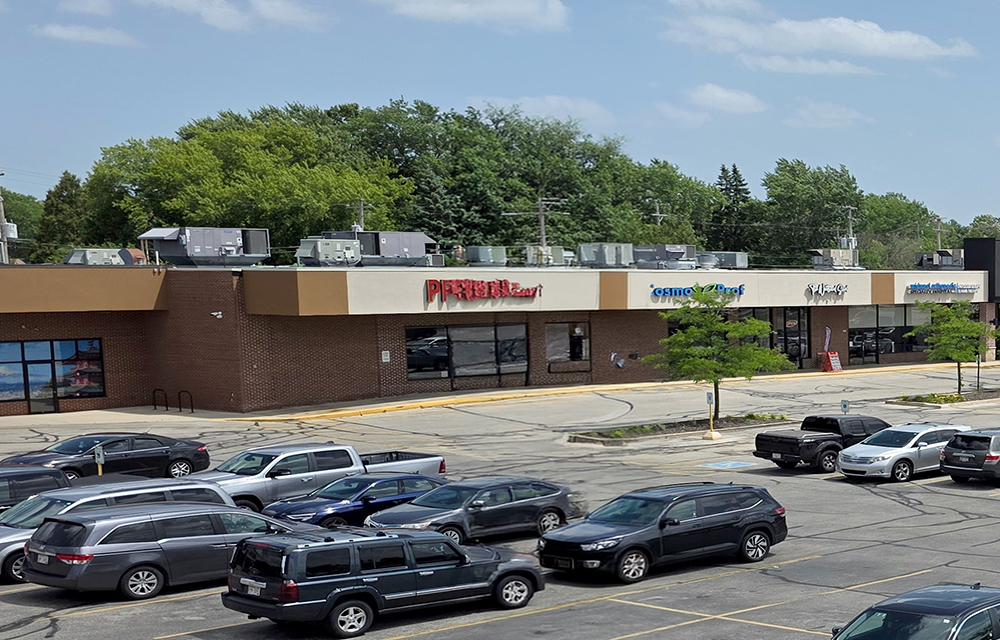
United Properties Corp. expands Wisconsin and Illinois retail presence adding 200,000 s/f
West Allis, WI United Properties Corp. completed two retail acquisitions totaling $27.4 million across Illinois and Wisconsin, adding 205,000 s/f of shopping center space to its portfolio






Quick Hits

Columns and Thought Leadership

A guide to finding the right NYC property management company - by Sanjay Gandhi
Being a small to midsize landlord in NYC is an increasingly demanding endeavor. From navigating complex regulations, increased compliance demands to dealing with tenant issues and remediating violations. It is wise to enlist the assistance of a partner, a professional

New York’s streets are full again, and the retail numbers prove it - by Noam Aziz
Walk down any New York block this year and you can feel it. The sidewalks are crowded, the storefronts are lit, and the energy that defines this city is back at full volume.

Hunt commercial real estate question and answer: Fortune 500 wisdom - by David Hunt
Yes, there are lessons to be learned from the largest companies in America when comes to managing your real estate. But the decision to buy or lease real estate may not be one of

Positive forecast for New York’s pro-housing push? - by Philip Butler
New York’s housing crisis remains a hot button topic despite growing consensus that varied and affordable housing is desperately needed statewide. Governor Hochul has recently introduced several initiatives to overcome N.Y.’s anti-housing
.gif)