



News:
Brokerage
Posted: November 19, 2019
Maximizing 1031 Exchanges: Exploring top-tier QSR brands in the franchise real estate market - by Ridder and Schonfeld

Maximizing your 1031 Exchange: Exploring top-tier QSR brands in the franchise real estate market
Real estate investors, developers, and REITs are very familiar with the tax-deferred advantages of a 1031 Exchange. However, you may not have considered how the strategy could be beneficial in other ways including, diversifying, moving markets, and increasing income.
If you are contemplating a 1031 Exchange, or have recently transacted a deal, making the next investment step could seem daunting. After all, the real estate market is in a state of perpetual, cyclical motion, with unique opportunities arising every day. The reality is that these opportunities are created by others with similar objectives – sell to acquire.
Quick service could mean a long-lasting investment
As with most investments, the objective is to have a sustained, consistent return over time, preferably, a long time. With nearly 200,000 quick service restaurant (QSR) franchise locations in the U.S.* and increasing each year, the segment is particularly appealing. No business is completely recession proof, but quick service restaurants have a lower average check, greater convenience, and increased food choices that resonate well with financially stressed consumers.
Growing franchisees who own real estate will often find themselves in the predicament of wanting to expand locations, but not having the capital to do so. Among the possibilities to gain liquidity, they will pursue a sale/lease back. In this circumstance, the franchisee (the seller) upon sale of the property, becomes a tenant of the buyer. Clearly, the benefit to the franchisee is the immediate profit from the sale. The buyer (investor), however, acquired a 20-year cash flow stream that typically has extension options and escalations available.
Landowners are only as successful as their tenants, so how can you determine which is the best investment for you?
It goes without saying, location comes first. Ensure the real estate is well positioned in an area that promotes customer traffic and is in an area poised for development. Look for a franchise that is part of a mature brand. Choose a sizable franchise. Larger franchises are typically more appealing. Confirm that the franchisees location has positive year-over-year results.
The value of choosing the right franchise tenant could result in as much as 20 years of perpetual lease income. With cap rates presently stable in the mid 5s to low 6s, the initial investment poses nominal risk.
Whether you are a novice or an expert dealing in franchise real estate, you can benefit from M&T Bank’s more than 30 years of franchise experience. The M&T Franchise Team specializes in providing research on potential franchise tenant brands, as well as operating company and property company financing to franchisees.
*Statista, number of quick service restaurants in the U.S., www.statista.com/statistics
Blair Ridder is the New York City regional president and Karen Schonfeld is the managing director of franchise banking at M&T Bank, with a NYC headquarters at 350 Park Ave.
Ridder can be reached at [email protected] or (212) 350-2480. Schonfeld can be reached at [email protected] or (410) 244-4252.
Learn more about M&T’s Commercial Banking at mtb.com/commercial

Member FDIC
This article is for informational purposes only. It is not designed or intended to provide financial, tax, legal, investment, accounting, or other professional advice since such advice always requires consideration of individual circumstances. Please consult with the professionals of your choice to discuss your situation.
Tags:
Brokerage
MORE FROM Brokerage
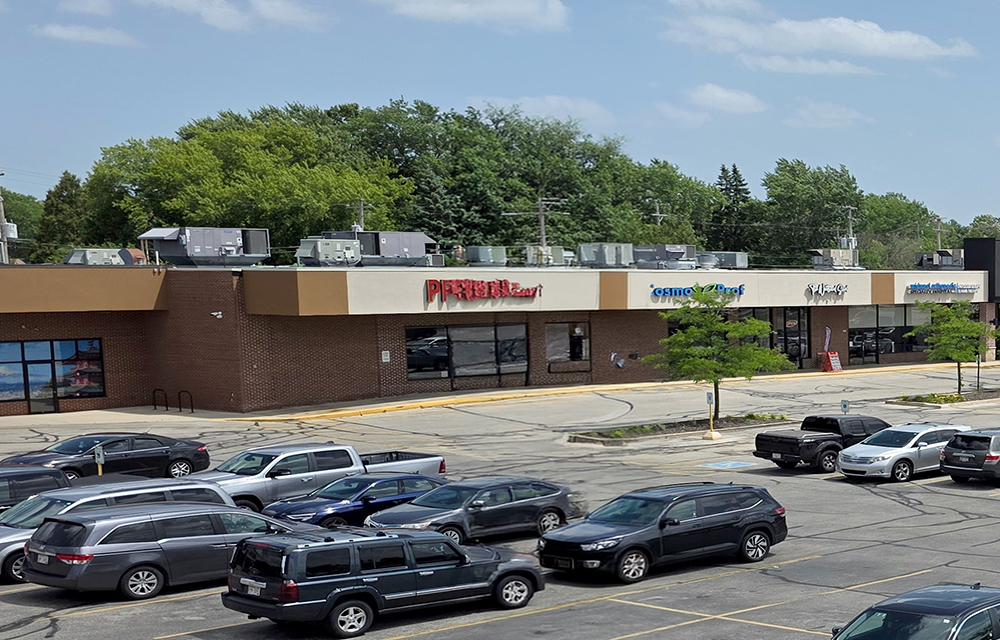
United Properties Corp. expands Wisconsin and Illinois retail presence adding 200,000 s/f
West Allis, WI United Properties Corp. completed two retail acquisitions totaling $27.4 million across Illinois and Wisconsin, adding 205,000 s/f of shopping center space to its portfolio





Quick Hits
 (2).gif)

Columns and Thought Leadership

Hunt commercial real estate question and answer: Fortune 500 wisdom - by David Hunt
Yes, there are lessons to be learned from the largest companies in America when comes to managing your real estate. But the decision to buy or lease real estate may not be one of

A guide to finding the right NYC property management company - by Sanjay Gandhi
Being a small to midsize landlord in NYC is an increasingly demanding endeavor. From navigating complex regulations, increased compliance demands to dealing with tenant issues and remediating violations. It is wise to enlist the assistance of a partner, a professional

New York’s streets are full again, and the retail numbers prove it - by Noam Aziz
Walk down any New York block this year and you can feel it. The sidewalks are crowded, the storefronts are lit, and the energy that defines this city is back at full volume.

Positive forecast for New York’s pro-housing push? - by Philip Butler
New York’s housing crisis remains a hot button topic despite growing consensus that varied and affordable housing is desperately needed statewide. Governor Hochul has recently introduced several initiatives to overcome N.Y.’s anti-housing
.gif)