



News:
Brokerage
Posted: January 8, 2019
Massachusetts Ave. Project unveils new Farmhouse & Community Food Training Center in Buffalo
Buffalo, NY According to governor Andrew Cuomo, the Massachusetts Avenue Project (MAP) has unveiled its new Farmhouse & Community Food Training Center. Located at 387 Massachusetts Ave., this new $2.4 million facility will be a hub for community residents to access food and agriculture-based education and resources, create new markets for local growers, increase healthy food access for thousands of residents and provide jobs and leadership training for future community youth leaders. The project was a Western New York Regional Economic Development Council (WNYREDC) Priority Project.
The Farmhouse & Community Food Training Center will house MAP’s offices and include many new amenities that will aid current and future programming. The state-of-the-art teaching kitchen is a centerpiece of the new Farmhouse and will be used for cooking classes, nutrition education and cooperative food prep training. The addition of 3,000 s/f of cold and dry storage will afford MAP’s Mobile Market and Farm Manager a space to expand procurement and adequately store fresh local fruits and vegetables throughout the growing season. The third floor includes two studio apartments which will be affordable for households with incomes at or below 90% of the area’s median income.
This project has received $2.4 million in funding from a diverse base of private and public donors, including more than $1.3 million in incentives from New York State — $930,000 from Homes and Community Renewal and a $385,000 Western New York Regional Economic Development Council grant.
Other donors include the Junior League of Buffalo, Rich Family Foundation, Wegmans, Patrick Lee Foundation, James Cummings Foundation, NYS assembly member Sean Ryan, the city of Buffalo, Peter Cornell Trust, city council member David Rivera, Simple Gifts Fund, Children’s Foundation of Erie County, United Way of Buffalo & Erie County, M&T Bank and many other organizations and individual donors.
“Every community should have access to quality, fresh food and this partnership with MAP is part and parcel with New York State’s ongoing efforts to end food insecurity once and for all,” governor Cuomo said. “This urban food hub in Buffalo will provide new markets for small farmers, greater access to affordable and nutritious food and job training and resources for the next generation of community leaders.”
Massachusetts Ave. Project executive director Diane Picard said, “This project would not be possible without the unwavering commitment and support we have received from our state, city and private funders. Our new Farmhouse will allow us to expand the work MAP does in the city to build food equity and economic opportunities with those most affected by food insecurity. MAP’s farmhouse is the first of its kind in Western NY and we hope it can serve as a regional model towards building just and equitable food systems.”
Empire State Development president, CEO & chairman Howard Zemsky said, “MAP’s project is creating a neighborhood-based, sustainable food system that will serve as a key component of community revitalization on Buffalo’s West Side.”
Kevin Aman, communications director for Rich’s and Rich Family Foundation, said, “Rich’s has always been dedicated to innovation and continual learning, so this partnership with MAP allows us to co-develop programming to foster a new generation of youth leaders from the neighborhood.”
Western New York Regional Economic Development Council co-chair and president of SolEpoxyInc. Jeff Belt said, “This multi-use, community food hub is so vital for our urban core and has the potential to serve as a model for neighborhood-based, sustainable agricultural systems development. I’m pleased that the WNYREDC recognized the importance of this project and awarded it accordingly.”
Western New York Regional Economic Development Council co-chair and president of the State University of New York at Fredonia Dr. Virginia Horvath said, “Providing a diverse and equitable food system is key to promoting economic opportunity in our communities. The WNYREDC has identified agriculture as one of its ‘strategies for prosperity’ and is working to grow local food systems, as well as preserve agricultural land and create more healthy communities.”
Mayor Byron Brown said, “The MAP Farmhouse and Community Food Training Center is a community hub that will create jobs for young people, new markets for farmers and food entrepreneurs, and improve nutrition in the city of Buffalo. Thank you to governor Cuomo, the Western New York Regional Economic Development Council, the State Office of Homes and Community Renewal, and the many private donors who made this innovative, healthy resource possible here on Buffalo’s West Side.”
MAP is a 501(c)3 not-for-profit with a mission to nurture the growth of a sustainable and equitable community food system to promote local economic opportunities, access to affordable, nutritious food and social change education. It imagines a community in which all youth and families have access to fresh, healthy and culturally appropriate food, where people of all incomes have economic opportunities to enrich their lives and support their communities, where vacant lots are transformed into productive green spaces, growing food to supply local residents and beautify neighborhoods, where youth and their families are engaged in policy development and planning for the restoration of land and their communities. MAP’s Growing Green program employs up to 50 youth annually and trains them in urban agriculture and food justice issues. The goal of Growing Green is to create innovative and meaningful, training jobs and entrepreneurship opportunities for disadvantaged youth and to increase healthy food access in Buffalo’s low-income neighborhoods.
Tags:
Brokerage
MORE FROM Brokerage
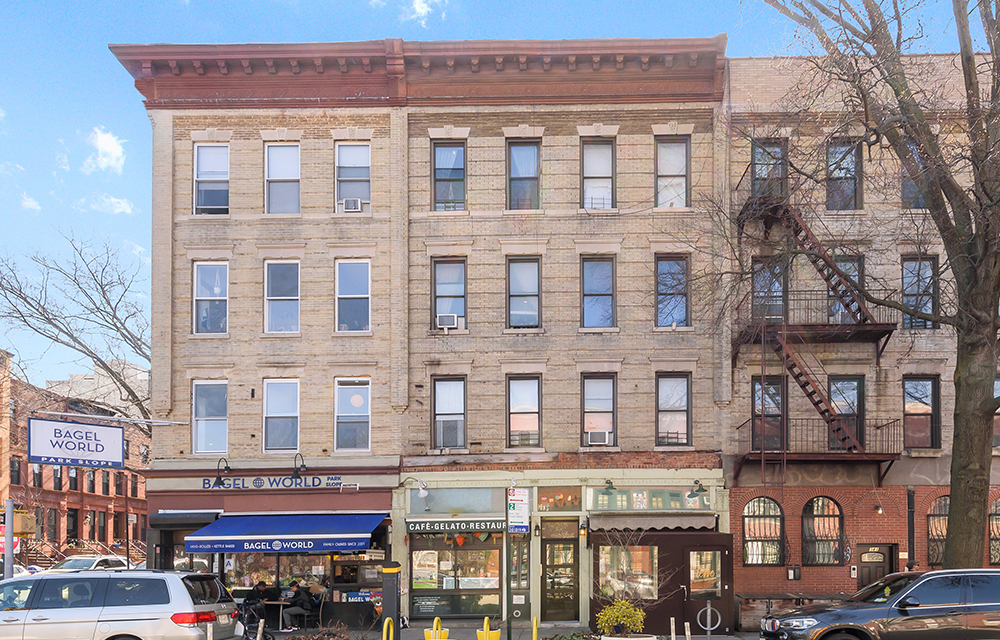
Investment Property Realty Group brokers $2.81 million sale of 341 5th Ave. in Park Slope
Brooklyn, NY Investment Property Realty Group (IPRG) closed the sale of 341 5th Ave., a mixed-use building located in Park Slope for $2.81 million. The transaction was negotiated by Derek Bestreich, Luke Sproviero,




Quick Hits

Columns and Thought Leadership

Hunt commercial real estate question and answer: Fortune 500 wisdom - by David Hunt
Yes, there are lessons to be learned from the largest companies in America when comes to managing your real estate. But the decision to buy or lease real estate may not be one of

New York’s streets are full again, and the retail numbers prove it - by Noam Aziz
Walk down any New York block this year and you can feel it. The sidewalks are crowded, the storefronts are lit, and the energy that defines this city is back at full volume.

A guide to finding the right NYC property management company - by Sanjay Gandhi
Being a small to midsize landlord in NYC is an increasingly demanding endeavor. From navigating complex regulations, increased compliance demands to dealing with tenant issues and remediating violations. It is wise to enlist the assistance of a partner, a professional

Positive forecast for New York’s pro-housing push? - by Philip Butler
New York’s housing crisis remains a hot button topic despite growing consensus that varied and affordable housing is desperately needed statewide. Governor Hochul has recently introduced several initiatives to overcome N.Y.’s anti-housing
.gif)