



News:
Brokerage
Posted: March 12, 2026
Marcus & Millichap publishes 2026 NYC Retail Investment Forecast Report
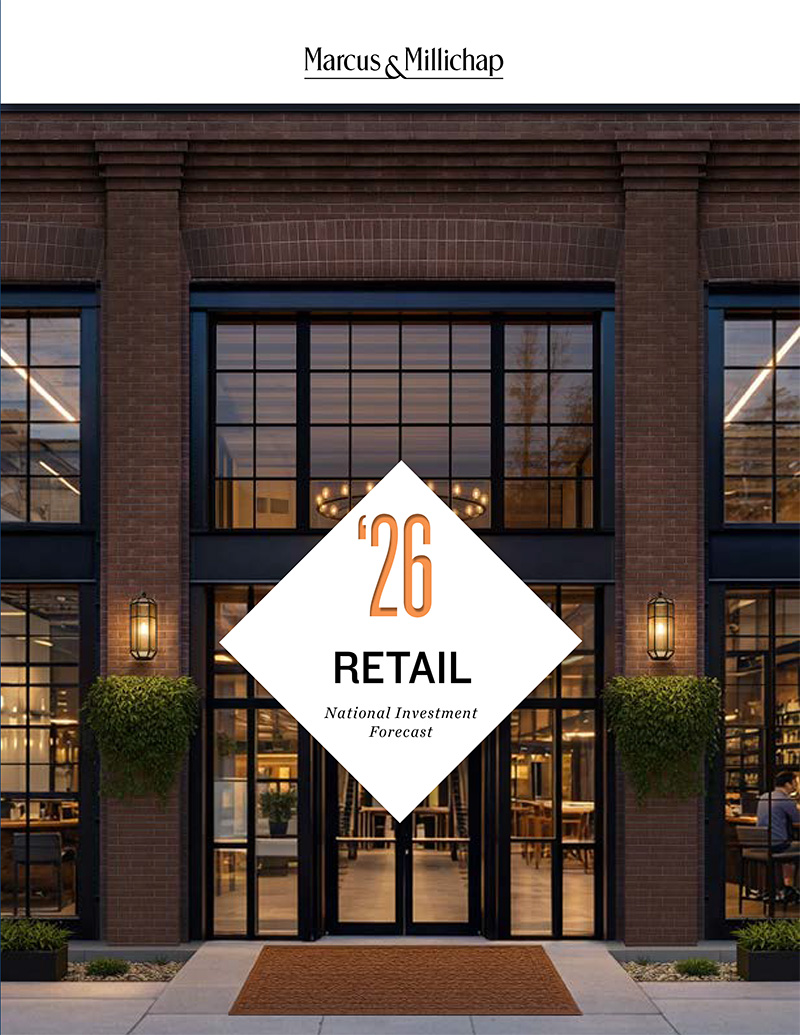 Manhattan, NY Marcus & Millichap has published its 2026 New York City Retail Investment Forecast Report.
“What continues to set New York City apart is the strength of its core retail corridors,” said John Horowitz, senior managing director and chief revenue officer, northeast division. “Retailers still want to be in places like SoHo and Williamsburg because that’s where the foot traffic is. When space opens up in those corridors, it usually doesn’t stay available for long.”
Key findings include:
• Job growth is expected to moderate. Payrolls in New York City are projected to expand by approximately 19,000 positions in 2026, marking the metro’s smallest annual gain since 2010 outside of the pandemic period.
• Retail construction will remain extremely limited. Development is forecast to expand inventory by only 0.1 percent in 2026, the second-lowest annual total since at least 2007.
• Vacancy is projected to increase slightly. Elevated availability among big-box and department store formats could push the metro’s retail vacancy rate to around 4.4% by year-end.
• Retail rents remain the highest in the nation. Average asking rent is expected to reach approximately $60.63 per s/f, the highest level among major U.S. markets.
• Demand remains strongest in dense, high-traffic districts. Smaller-format urban retail in supply-constrained areas such as SoHo and Union Square is expected to outperform, supported by tourism and steady population inflows.
“Even with shifts in tenant demand across the boroughs, New York’s limited development pipeline and global retail profile continue to support strong rents and long-term investor confidence,” Horowitz said.
MORE FROM Brokerage

Residential real estate consultancy and brokerage firm Nancy Packes, Inc. rebrands as NPI
Manhattan, NY The NYC-based premier residential real estate consultancy and brokerage firm, Nancy Packes Inc., has rebranded as NPI. Helmed by Seth Rosner, most recently the firm’s managing partner and now president, the company has been intricately involved in hundreds of Tri-State new developments and conversions, spearheading the full project life cycle, from assessment/pre-dev.







Columns and Thought Leadership

A guide to finding the right NYC property management company - by Sanjay Gandhi
Being a small to midsize landlord in NYC is an increasingly demanding endeavor. From navigating complex regulations, increased compliance demands to dealing with tenant issues and remediating violations. It is wise to enlist the assistance of a partner, a professional

New York’s streets are full again, and the retail numbers prove it - by Noam Aziz
Walk down any New York block this year and you can feel it. The sidewalks are crowded, the storefronts are lit, and the energy that defines this city is back at full volume.

Hunt CRE question and answer: Choosing a real estate agent - by David Hunt
First, we will only work with one agent exclusively. The primary reason is that we want that agent to legally represent our client’s interests. In New York State, a real estate agent has a fiduciary

Hunt commercial real estate question and answer: Fortune 500 wisdom - by David Hunt
Yes, there are lessons to be learned from the largest companies in America when comes to managing your real estate. But the decision to buy or lease real estate may not be one of
.gif)