







News: Brokerage

Marcus & Millichap brokers four sales totaling $12.98 million

John Brennan,
Marcus & Millichap


Samuel Finkler,
Marcus & Millichap


Shaun Riney,
Marcus & Millichap


Michael Salvatico,
Marcus & Millichap


Jakub Nowak,
Marcus & Millichap


Jon Eshaghian,
Marcus & Millichap


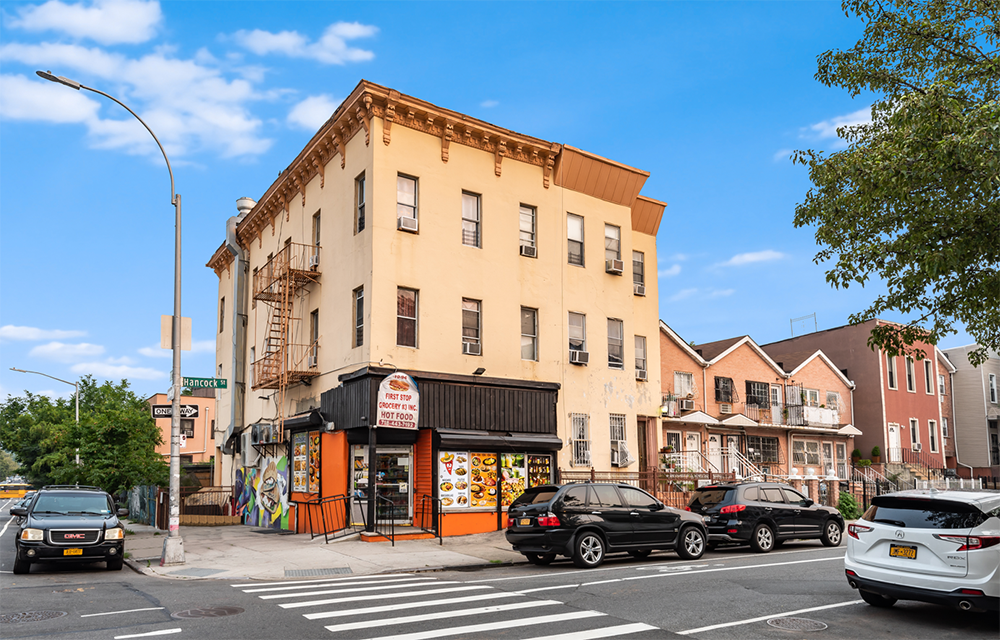
206 Bushwick Avenue - Brooklyn, NY

Brooklyn, NY According to John Horowitz, first vice president – regional manager of Marcus & Millichap’s Brooklyn office, the firm closed four sales totaling $12.98 million. The deals include the following:
• The $1.28 million sale of 1001 39th St., a 3,500 s/f mixed-use property. John Brennan and Samuel Finkler, in Marcus & Millichap’s Brooklyn office, had the exclusive listing to market the property on behalf of the seller, a private investor. The buyer, a private investor, was also secured and represented by the team.

• The $2.65 million sale of 206 Bushwick Ave., a 6,000 s/f mixed-use property. Shaun Riney and Michael Salvatico, in Marcus & Millichap’s Brooklyn office, had the exclusive listing to market the property on behalf of the seller, a private investor. The buyer, a private investor, was also secured and represented by the team.

• The $6.45 million sale of 45-24 Pearson St., a 2,700 s/f development site with 13,500 building s/f in Long Island City. Jakub Nowak and Jonathan Eshaghian, in Marcus & Millichap’s Brooklyn office, had the exclusive listing to market the property on behalf of the seller, a private investor. The buyer, a private investor, was also secured and represented by the team having worked with them previously in 2017. “Setting a new price record for 300 per buildable s/f, the sale of 45-24 Pearson St. shows the continued strength of the LIC condo market. Buyers are bullish on these property types, both before and after the announcement of Amazon HQ2 to LIC,” said Eshaghian. 

• The $2.6 million sale of 59 Graham Ave., a 5,428 s/f mixed-use property. Riney and Salvatico had the exclusive listing to market the property on behalf of the seller, a private investor. The buyer, a private investor, was secured and represented by the team.

READ ON THE GO
DIGITAL EDITIONS
Subscribe
Columns and Thought Leadership
Artificial intelligence in lending - by Lindsay Mesh Lotito

Artificial intelligence in lending - by Lindsay Mesh Lotito

Artificial intelligence (AI) is beginning to help transform lending by enhancing decision-making, improving risk management and streamlining operations. With AI-powered tools that analyze vast amounts of data, lenders are able to assess borrower creditworthiness more accurately and efficiently. AI can evaluate a wide range of factors,
The death of the generic offering memorandum: What buyers expect in 2025 - by Kimberly Zar Bloorian

The death of the generic offering memorandum: What buyers expect in 2025 - by Kimberly Zar Bloorian

There was a time when an offering memorandum (OM) was pretty bare bones, some photos, a few bullet points on income, and a rent roll thrown in at the back. That used to get the job done. Not anymore. In 2025, buyers are sharper, faster, and more selective. They’re looking
Multi-generational multifamily owners - who’s in and who’s out - by Shallini Mehra and Amit Doshi

Multi-generational multifamily owners - who’s in and who’s out - by Shallini Mehra and Amit Doshi

Many long-time property owners are divesting from their rent stabilized properties at an increasingly rapid pace. This trend has gained momentum primarily due to the unyielding permanence of rent laws over the past six years and the increasing operating costs that continue to outstrip rent growth. In addition, the judiciary’s elongated timeline in processing evictions and tenant rent challenges,
Navigating the changing landscape of hotel Property Improvement Plans and conversion brands - by Andrew Cameron

Navigating the changing landscape of hotel Property Improvement Plans and conversion brands - by Andrew Cameron

When owners are due for a significant Property Improvement Plan (PIP), they must carefully evaluate what the best course of action is. Over the past five years, major hotel brands have become significantly more flexible with their PIP schedules.