



News:
Brokerage
Posted: October 7, 2013
Manhattan office market heading in right direction
The Manhattan office market continued to gain momentum in the third quarter, as all market indicators are heading in the right direction. Demand remains strong, as another 1.3 million s/f of positive absorption was recorded in the third quarter, bringing the 2013 total to 1.9 million s/f. One of the main reasons is the demand for big blocks of space. In the first quarter, there were 83 blocks of available contiguous space,100,000 s/f and greater, but an increase in activity has pulled that number down to 68. The availability rate dropped 20 basis points to 11.2%, its lowest level since 2008. Asking rents continue to climb, however class B rental increases are still out-pacing class A. Class B average asking rents soared another $2.50 per s/f to $53.28, while class A rents went up only $0.68 to $69.97 per s/f.
Midtown followed its strong second quarter with a modest third quarter, as the availability rate dropped 20 basis points to 11.2%. Demand has picked up in Midtown over the last six months and another 393,426 s/f of positive absorption occurred in the third quarter. Overall average asking rents are up $0.80 per s/f to $70.62.
Even with the addition of a new 400,000 s/f building at 51 Astor Place to Midtown South's inventory, the availability rate remains below 9% in the tightest of the three Manhattan markets. Despite this causing a third quarter rise in availability by 40 basis points to 8.7%, overall average asking rents jumped $3.60 per s/f to $62.92.
Downtown posted a strong third quarter, as the availability rate dropped 110 basis points to 13.5%. Asking rents downtown remained stable in the third quarter as the overall asking rent edged up $0.44 to $47.74 per s/f. With downtown pricing discounted compared to Midtown and Midtown South, it remains a value option for tenants with 94 tenants moving south of Canal St. since January 2012.
Richard Persichetti is VP, research, marketing, and consulting of Cassidy Turley, New York, N.Y.
Tags:
Brokerage
MORE FROM Brokerage
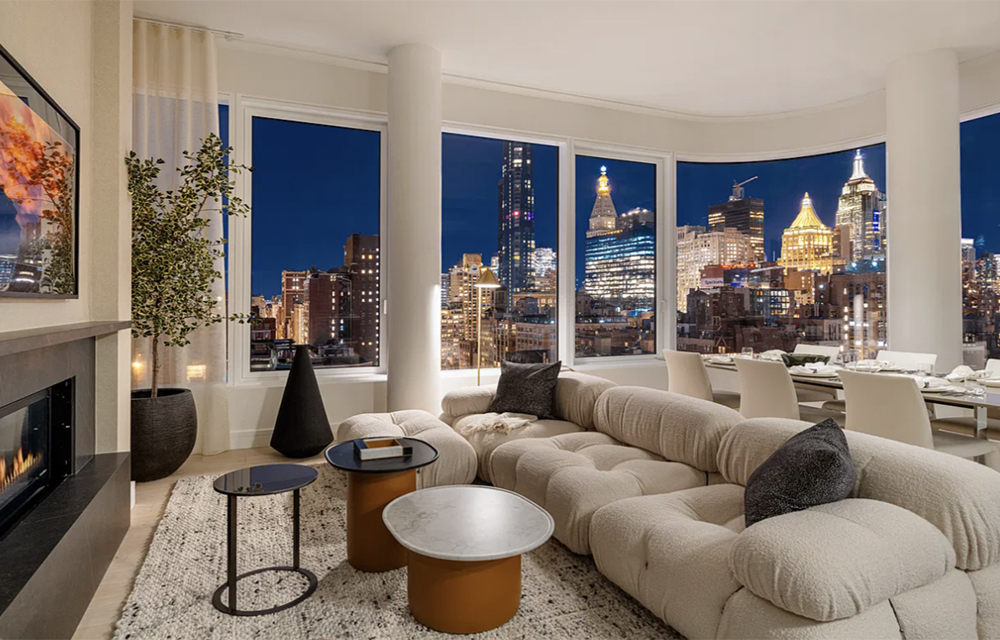
200E20TH sells out in Gramercy, penthouse A closes out sales at the CetraRuddy-designed condominium residences
Manhattan, NY 200E20TH, the CetraRuddy-designed architectural masterwork that brought a curved, contemporary sensibility to Gramercy’s Beaux-Arts streetscape, has



Quick Hits

Columns and Thought Leadership

Hunt CRE question and answer: Choosing a real estate agent - by David Hunt
First, we will only work with one agent exclusively. The primary reason is that we want that agent to legally represent our client’s interests. In New York State, a real estate agent has a fiduciary

Hunt commercial real estate question and answer: Fortune 500 wisdom - by David Hunt
Yes, there are lessons to be learned from the largest companies in America when comes to managing your real estate. But the decision to buy or lease real estate may not be one of

New York’s streets are full again, and the retail numbers prove it - by Noam Aziz
Walk down any New York block this year and you can feel it. The sidewalks are crowded, the storefronts are lit, and the energy that defines this city is back at full volume.

The art of investing in real estate - by Thomas Donovan
Real estate investing is as much an art as it is a skill. No one can time the market, or the factors that drive it, perfectly. Location, zoning, size, transportation, and neighborhood density give you a baseline for
.gif)