



News:
Brokerage
Posted: September 17, 2019
Little Italy: It’s time for New Yorkers to re-visit this fascinating neighborhood - by Joe Aquino
 JAACRES-new2019.jpg" width="180" />
JAACRES
When was the last time you heard a New Yorker say, “Last night we went to this fabulous Italian restaurant in Little Italy?” Right, I don’t remember either. Over the past decades, Little Italy has gotten a reputation it doesn’t deserve: That of a tourist trap that real New Yorkers learned to ignore long before Billy Joel wrote that song. But it’s time for the natives to re-visit what has always been a fascinating neighborhood.
This summer, I had the pleasure of spending my entire afternoon on Mulberry St.—in the heart of Little Italy—and I saw more pedestrian traffic than West Broadway in SoHo and almost as much as Times Square.
Little Italy is much smaller than what I remember as a child—it really was, and is, a small neighborhood—but it’s just as vibrant, surprisingly so. So many different developments—new restaurants, new shops, renovated buildings—appear to be happening on Mulberry St. Most of the ground-floor retail spaces feature wonderful Italian restaurants, usually with a host greeting you outside, welcoming you with a big “Benvenuto! Please join us for lunch!” To walk past, after seeing the wonderful plates on the tables, takes a lot of will power!
Over the years, North of Little Italy (NoLIta) i.e., Mott, Mulberry, and Elizabeth were largely taken over by fashion stores and a few restaurants that were hipper than the more basic, family-style Italian restaurants you used to find there. The apartments upstairs, that once housed mostly Italians from Sicily and their succeeding generations, slowly got renovated and prettified; the new tenants tended to be millennials and hipsters migrating in from Chinatown and the Lower East Side. These families have been multiplying—and expanding the borders of the neighborhood. Today, those streets feature a mutually beneficial mix of fashion retailers and restaurants—featuring Italian and other cuisines.
The Bowery—basically the downtown part of Third Ave., East of Little Italy—was never an upscale residential or retail district. In the latter half of the 20th century and into the 21st, the retail was almost all kitchen equipment and lighting for both residential and commercial applications. Now, few of these establishments remain there. Replacing them, in large part are fashion forward retailers and a variety of cuisines aimed at a younger customer.
This area is still basically Italian-American. You hear a lot of workers and passersby on the street—New Yorkers and visitors both—speaking Italian. That’s part of the charm of the neighborhood. You will even hear the local accordion player play old Neapolitan tunes. Rents are fairly at market by Manhattan standards: About $60 per s/f for residential space; $50 per s/f for office space in an older building, topping out at about $75 per s/f in the newer ones. Ground-level retail/restaurant rents average, when you can find one, about $250 per s/f. This is a strong and stable neighborhood with great opportunities for emerging fashionable, upscale retailers—and for office users who want a central, accessible location in a colorful part of the city.
Joseph Aquino is the president of Joseph Aquino Commercial Real Estate Services (JAACRES), New York, N.Y.
Tags:
Brokerage
MORE FROM Brokerage
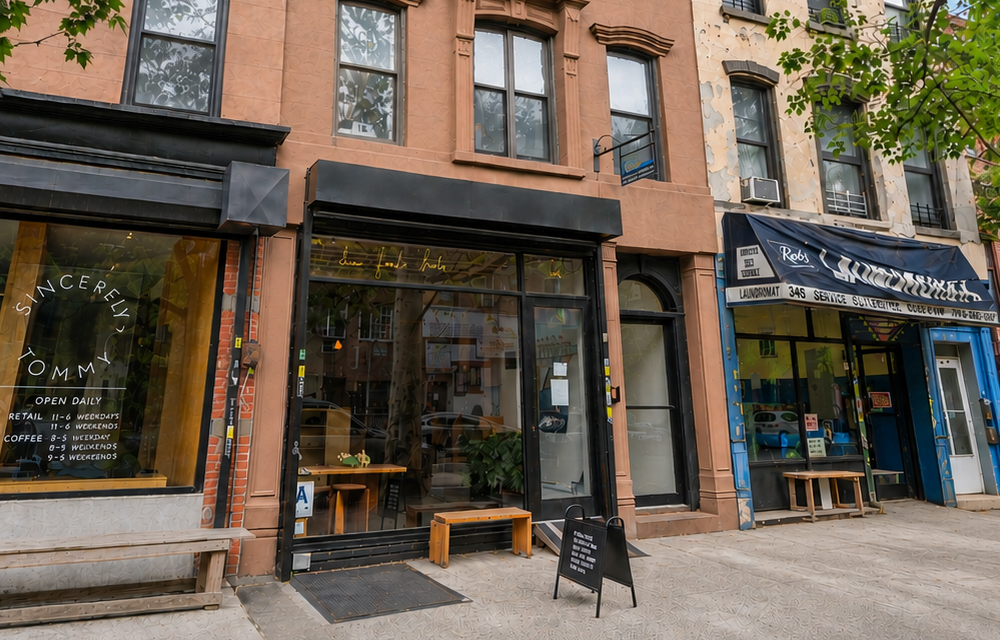
Bestreich, Reynolds, Davila, and Flaherty of Investment Property Realty Group close $1.97 million sale of 343A Tompkins Ave. in Bed-Stuy
Brooklyn, NY Investment Property Realty Group (IPRG) closed the sale of 343A Tompkins Ave., a mixed-use building located in the Bed-Stuy section of the borough, for $1.97 million.



 (2).gif)

Columns and Thought Leadership

Hunt CRE question and answer: Choosing a real estate agent - by David Hunt
First, we will only work with one agent exclusively. The primary reason is that we want that agent to legally represent our client’s interests. In New York State, a real estate agent has a fiduciary

Hunt commercial real estate question and answer: Fortune 500 wisdom - by David Hunt
Yes, there are lessons to be learned from the largest companies in America when comes to managing your real estate. But the decision to buy or lease real estate may not be one of

A guide to finding the right NYC property management company - by Sanjay Gandhi
Being a small to midsize landlord in NYC is an increasingly demanding endeavor. From navigating complex regulations, increased compliance demands to dealing with tenant issues and remediating violations. It is wise to enlist the assistance of a partner, a professional

New York’s streets are full again, and the retail numbers prove it - by Noam Aziz
Walk down any New York block this year and you can feel it. The sidewalks are crowded, the storefronts are lit, and the energy that defines this city is back at full volume.
.gif)