



News:
Brokerage
Posted: October 5, 2021
Lightstone Capital refinances Westchester County project - $18 million loan to The Confluent Group
Harrison, NY Lightstone Capital, Lightstone’s real estate debt platform, has provided an $18 million loan to The Confluent Group to refinance a substantially completed boutique multifamily complex in Westchester County. The $18 million first mortgage will refinance an existing construction loan and fund the balance of the remaining work, which is expected to be completed by Q4 of 2021.
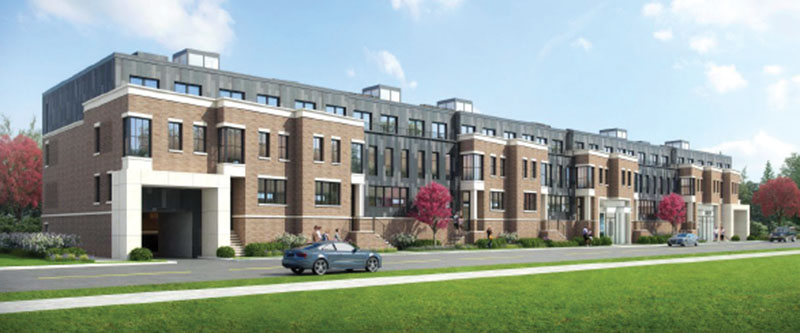
The project, 33 Calvert St., is a four-story 24-unit complex. It is comprised of 15 townhomes with private entrances and balconies, along with nine penthouse units on the upper floor with private rooftop cabanas. The property also contains a 40-space, covered parking garage and 600 s/f of commercial space.
It sits adjacent to the Harrison train station, just a 40-minute ride from Manhattan.
Lightstone Capital provides sponsors with flexible, creative, and immediate financing solutions. Loans range in size from $5 million up to $100 million and are secured by real estate assets located in gateway markets.
The Confluent Group, led by CEO David Gross and head of development Taylor Klemm, includes former NBA stars Luol Deng and Charlie Villanueva as investors.
“We’re excited to partner with Lightstone on this project, and hopefully future projects,” said Gross. “Their deep insight into the Westchester market, along with their ability to immediately grasp our vision for the project and to structure a solution to support it made for an incredibly fluid process.”
“This will be an incredible building, and a successful project for Confluent and Lightstone,” said Deng. “I view this as the start of a long-term relationship and look forward to working with the Lightstone team on an ongoing basis.”
“This is such a unique project catering to an underserved multifamily market in a highly desirable location,” said Eugene Rozovsky, senior managing director of Lightstone Capital. “The COVID-19 pandemic led to various delays and setbacks that hindered the sponsors’ ability to move forward efficiently. We were able to step in quickly to provide a much more palatable financing solution, allowing the team to finish all remaining work along with a further runway to lease up and stabilize the property.”
Tags:
Brokerage
MORE FROM Brokerage

The Brooklyn way…Harlem Shake to open new Williamsburg franchise location at 153 Grand St.
Brooklyn, NY Harlem Shake welcomes its first local franchisee, Cody Spearman to Williamsburg. Harlem Shake has secured a new home for its planned franchise restaurant at 153 Grand St. (Bedford Ave. and Berry St.)



Quick Hits

Columns and Thought Leadership

Positive forecast for New York’s pro-housing push? - by Philip Butler
New York’s housing crisis remains a hot button topic despite growing consensus that varied and affordable housing is desperately needed statewide. Governor Hochul has recently introduced several initiatives to overcome N.Y.’s anti-housing

New York’s streets are full again, and the retail numbers prove it - by Noam Aziz
Walk down any New York block this year and you can feel it. The sidewalks are crowded, the storefronts are lit, and the energy that defines this city is back at full volume.

Hunt commercial real estate question and answer: Fortune 500 wisdom - by David Hunt
Yes, there are lessons to be learned from the largest companies in America when comes to managing your real estate. But the decision to buy or lease real estate may not be one of

A guide to finding the right NYC property management company - by Sanjay Gandhi
Being a small to midsize landlord in NYC is an increasingly demanding endeavor. From navigating complex regulations, increased compliance demands to dealing with tenant issues and remediating violations. It is wise to enlist the assistance of a partner, a professional
.gif)